


Performance evaluations have evolved from assessing outcomes to understanding behaviors and collaboration.
As organizations aim to develop high-performing teams and resilient leaders, traditional top-down reviews are proving inadequate to capture the full picture.
This shift has fueled the growing adoption of 360-degree feedback, a method that gathers insights from managers, peers, direct reports, and even external stakeholders to evaluate performance more comprehensively and fairly.
Yet, running 360-degree feedback without the right technology can be chaotic, time-intensive, and difficult to translate into meaningful action.
Modern 360 degree feedback software eliminates these barriers by structuring feedback, protecting anonymity, automating review cycles, and delivering analytics that drive development not discomfort.
In this article, we explore twelve proven tools that help organizations conduct smarter performance reviews, empower employee growth, and build sustainable internal talent strategies.
What Is 360 Degree Feedback?
In the modern workplace, performance assessments must evolve beyond simple job outputs. Organizations now seek deeper understanding of not only what employees deliver, but how they contribute within teams.
Feedback that originates from a single manager can no longer capture the full reality of employee behavior, leadership, or collaboration.
This is why 360-degree feedback has become a preferred method for forward-thinking companies.
By collecting evaluations from supervisors, peers, direct reports, and at times external stakeholders, businesses gain a balanced view of employee performance.
To manage this effectively at scale, companies now depend on dedicated 360 Degree Feedback Software to ensure anonymity, structure, and actionable data insights.
Key Features to Look for in 360 Degree Feedback Software
Selecting the right 360 Degree Feedback Software requires more than just gathering responses, it demands a solution that can convert multi-source input into structured insights that support development, fairness, and strategic HR decisions.
A powerful platform should ensure anonymity, automate review cycles, provide clear analytics, and integrate with broader HR systems so feedback results can directly drive personalized growth plans and long-term organizational improvements.
Customizable Feedback Templates
Each organization requires a different set of competencies and evaluation formats. The best 360-feedback platforms offer flexibility in building tailored templates, enabling HR customize questions, rating scales, and competency clusters based on job levels and business priorities.
Custom templates ensure that feedback aligns with leadership expectations and company culture. They also help managers pinpoint specific behavioral or performance-based improvement areas without the limitations of generic survey formats.
Multi-Rater Feedback Collection
The essence of 360 feedback lies in its multi-prespective approach. High-quality platforms allow automated reviewer nominations, invitations, and submission tracking, giving HR teams full visibility of participation progress without manual follow-ups.
Automation not only improves feedback completeness but also minimizes evaluator bias. Insights gatherers from various within or beyond the organization provide more balanced analysis of workplace impact and team interaction.
Confidential and Anonymous Feedback
Trust determines feedback quality. When employees and external reviewers are assured that their responses cannot be traced back to their identities, they tend to deliver more honest and constructive insights.
Anonymous feedback systems also help organizations build long-term psychological safety within feedback practices. Over time, this encourages transparency, openness, and a stronger development-focused workplace environment.
Data Analytics and Feedback Reporting
Gathering feedback is only the first step; interpreting it strategically is the real value. The best platforms include real-time dashboards, trend analysis, and role-based scoring insights to help HR teams uncover recurring patterns or development priorities across departments.
Advanced reporting allows HR leaders to map growth across cycles and make informed talent decisions. These insights support coaching, development planning, and promotion or recruitment strategies built on evidence, not assumptions.
HR System and HRIS Integration
A unified HR ecosystem ensures accurate talent data context. Analytics platforms should connect seamlessly with HRIS platforms, Performance Management tools, and Learning Management System modules so that HR can correlate 360 feedback with employee learning progress, attendance trends, or performance KPIs.
Integrated platforms also eliminate redundant data input and manual file transfer. This enables organizations to automate comprehensive talent insights and ensure consistency from feedback collection to employee development outcomes.
12 Best 360 Degree Feedback Software Tools You Should Know
Choosing the right 360 degree Feedback Software is a strategic step toward building more balanced performance evaluations and fostering a culture of continuous growth and collaboration.
The best tools simplify multi-rater feedback collection, ensure confidentiality, provide insightful reporting, and help HR teams translate diverse perspectives into actionable development plans.
Below are 12 proven software solutions that can elevate your performance review process.
1. LinovHR
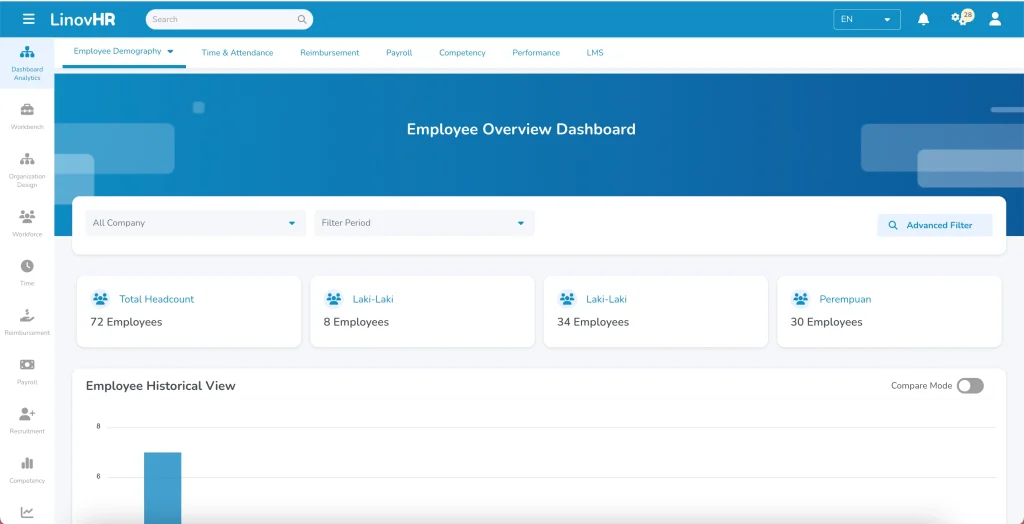
LinovHR is a regional HRIS platform built for Southeast Asian organizations, offering a deeply connected workflow across recruitment, attendance, performance, learning, and succession planning.
Its 360 Degree Feedback module allows organizations to request structured input from supervisors, peers, direct reports, and external partners, supporting a more balanced and transparent feedback process.
One of LinovHR’s biggest advantages lies in its analytical ecosystem. Feedback data flows directly into customizable dashboards, enabling HR teams to interpret themes and competency trends in real time.
Because the system integrates with Performance Management and Learning modules, HR leaders can connect feedback outcomes with employee goals, training progress, or leadership readiness, making talent development planning more strategic and measurable.
LinovHR also prioritizes usability and operational efficiency. The platform automates reviewer invitations, submission reminders, and cycle scheduling, allowing HR to manage organization-wide feedback at scale.
With strong local compliance support and responsive regional assistance, LinovHR is ideal for companies that want to transition from manual feedback evaluations into structured, secure, and development-centered 360-review cycles.
| Pros | Cons |
| Integrated with HRIS modules | Market focus mainly Indonesia |
| Local support available | Needs structured early setup |
| 360° feedback included | Deployment requires planning |
| 9-Box Readiness view | |
| KPI auto-tracking + reminders | |
| Centralized talent pool | |
| Scalable for large organizations |
2. SurveySparrow
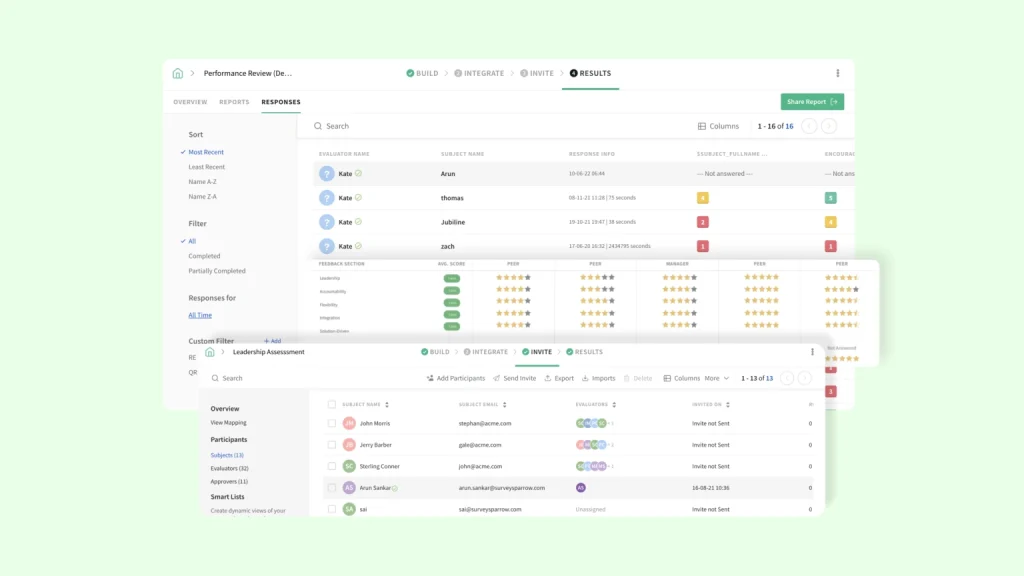
SurveySparrow delivers feedback in a conversational and interactive survey format, helping organizations improve engagement and response rates.
HR teams can build flexible forms that support input from supervisors and peers with automated campaign setup.
Its strength lies in employee experience rather than complexity. With sentiment analysis and integration to collaboration apps, SurveySparrow helps HR run recurring feedback cycles suitable for organizations building an open feedback culture.
| Pros | Cons |
| Conversation interface | Limited without premium |
| Integrates to Teams/Slack | internet-dependent |
3. Culture Amp
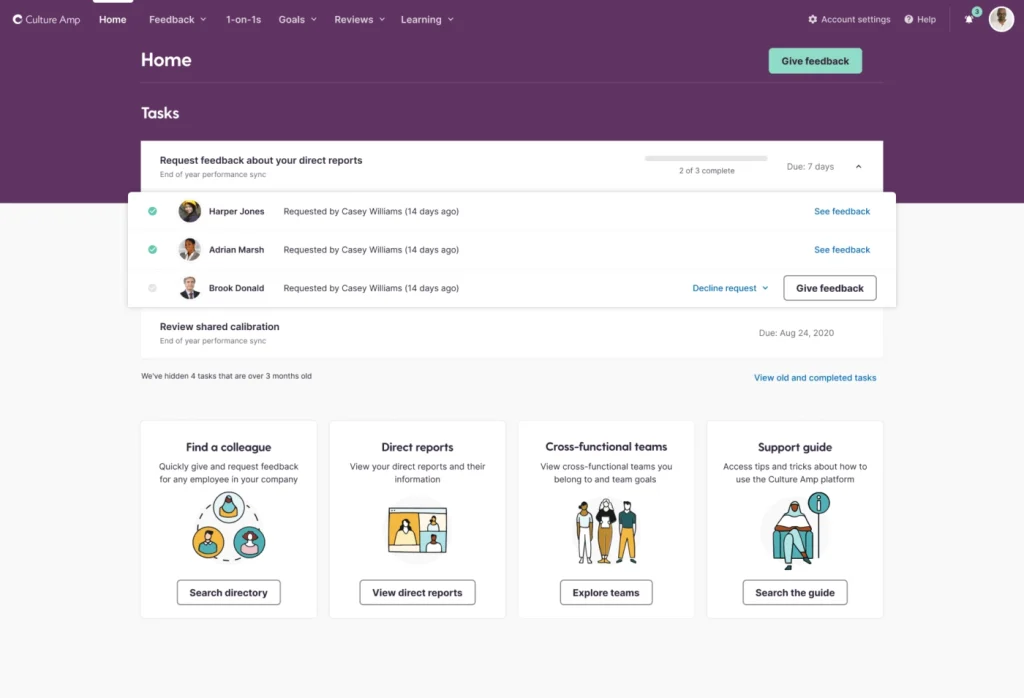
Culture Amp brings strong employee-centric benchmarking and organizational behavior analytics into the 360 review process. HR teams can roll out structured insights to managers and executives to track behavior trends.
Industry benchmarking allows HR leaders to compare engagement or collaboration levels with external datasets. This makes it a strategic choice for companies that want people-culture insights beyond feedback averages.
| Pros | Cons |
| Benchmark insights | Costly for small teams |
| UI intuitive | Setup takes time |
4. Qualtrics 360
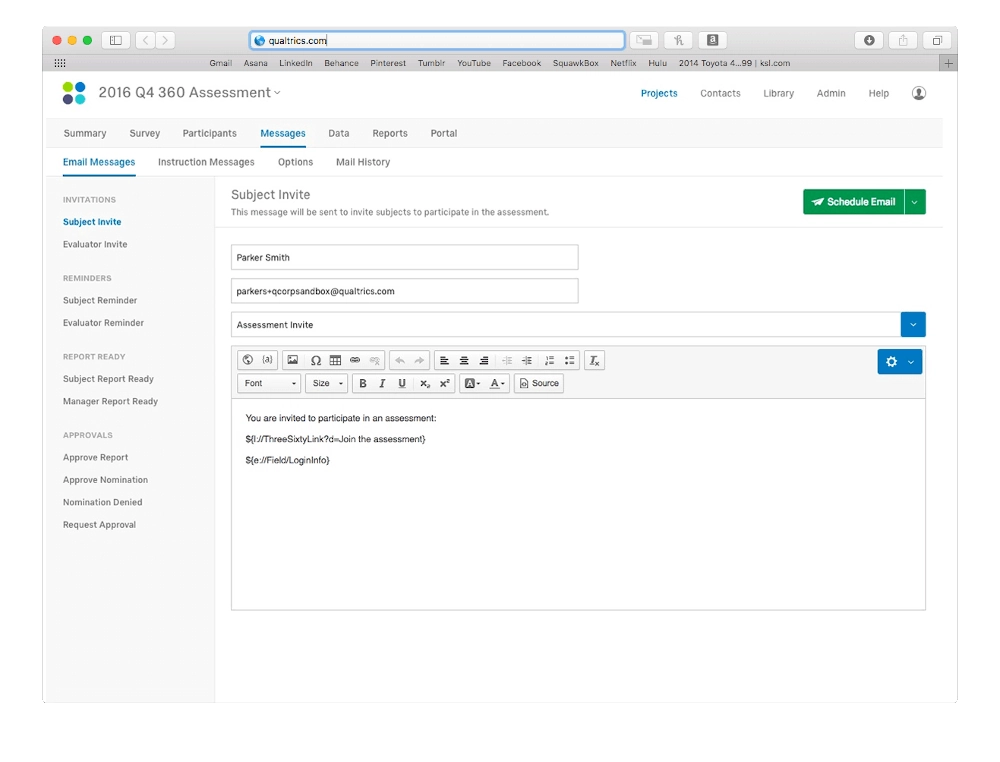
Qualtrics 360 offers full enterprise-scale feedback orchestration with AI supported text and sentiment insights. HR leaders use this tool to run feedback cycles with structured behavioral metrics.
The system also excels at open ended insight analysis, giving HR teams deeper understanding of cultural or leadership patterns. This makes it suitable for large enterprises requiring feedback governance and insight-based modeling.
| Pros | Cons |
| Enterprise-grade | Price high for SMEs |
| Deep insights | Overpowered for small teams |
5. Engagedly
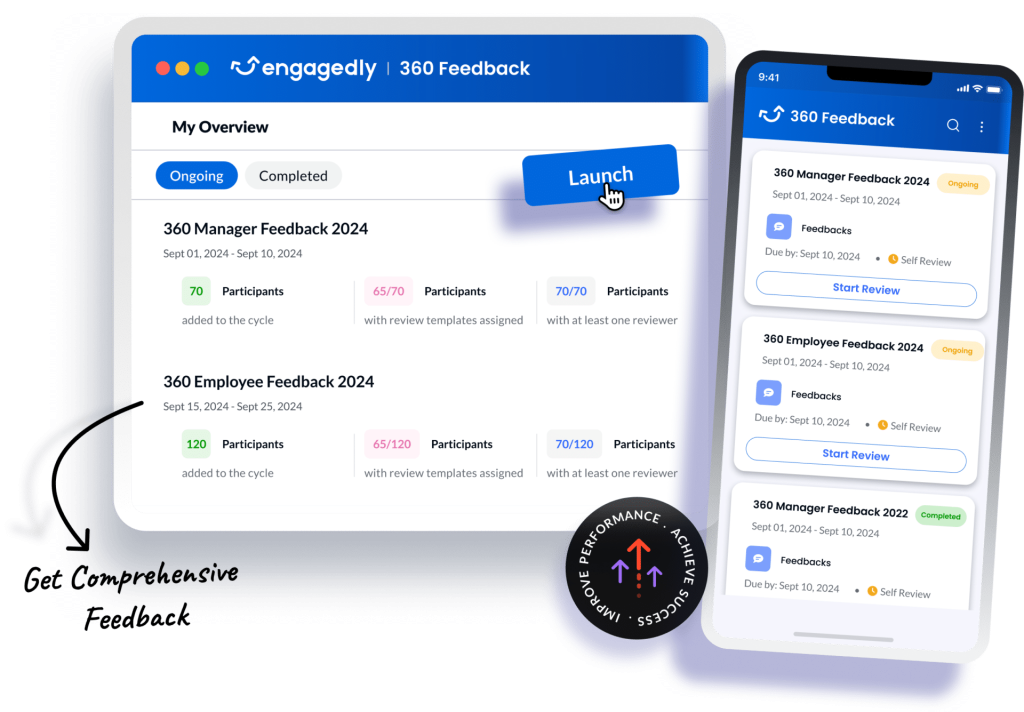
Engagedly combines goal achievement insights and feedback within one performance environment. It supports HR teams running competency-based feedback seamlessly along side performance workflows.
The platform also includes OKR tracking and E-Learning linkage, ensuring feedback support growth planning. Best suited for organizations that want simplified analytics and development cycles linkages.
| Pros | Cons |
| Goals + feedback | Limited in basic plans |
| Integrations strong | Need user onboarding |
6. Spidergap
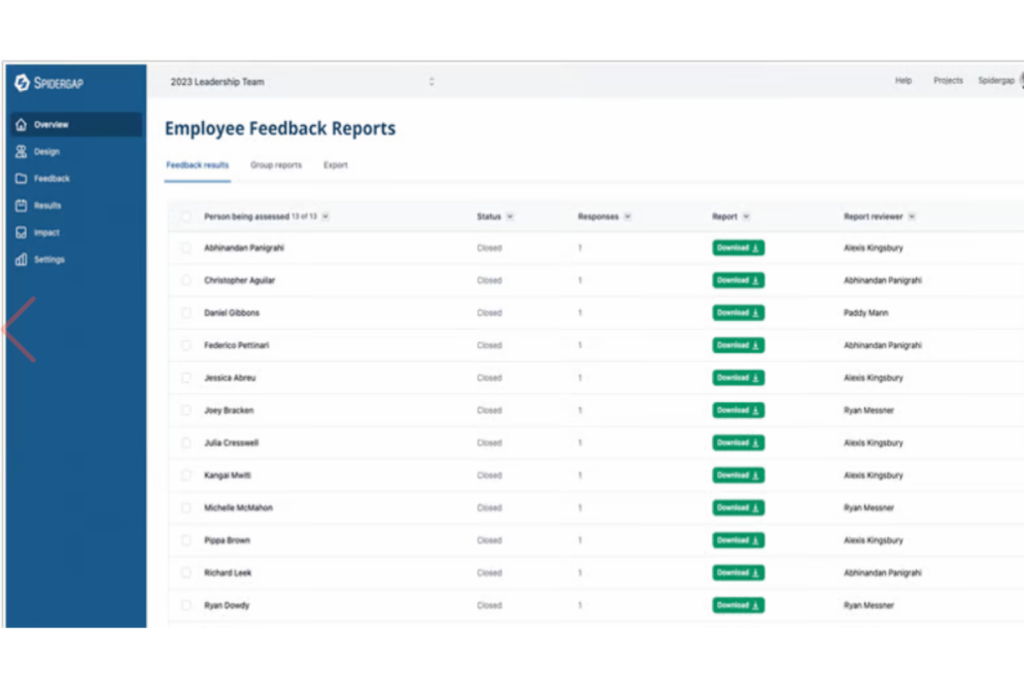
Spidergap helps HR teams roll out feedback cycles with ready-made competency templates for leadership and soft-skill reviews. The system delivers simple but impactful development-focused 360 reports.
The platform also supports multilingual surveys, making it accessible for global or hybrid teams. Its core value is development clarity rather than advanced analytical complexity.
| Pros | Cons |
| Prebuilt templates | Limited advanced reporting |
| Multilingual surveys | Integrations basic |
7. PerformYard
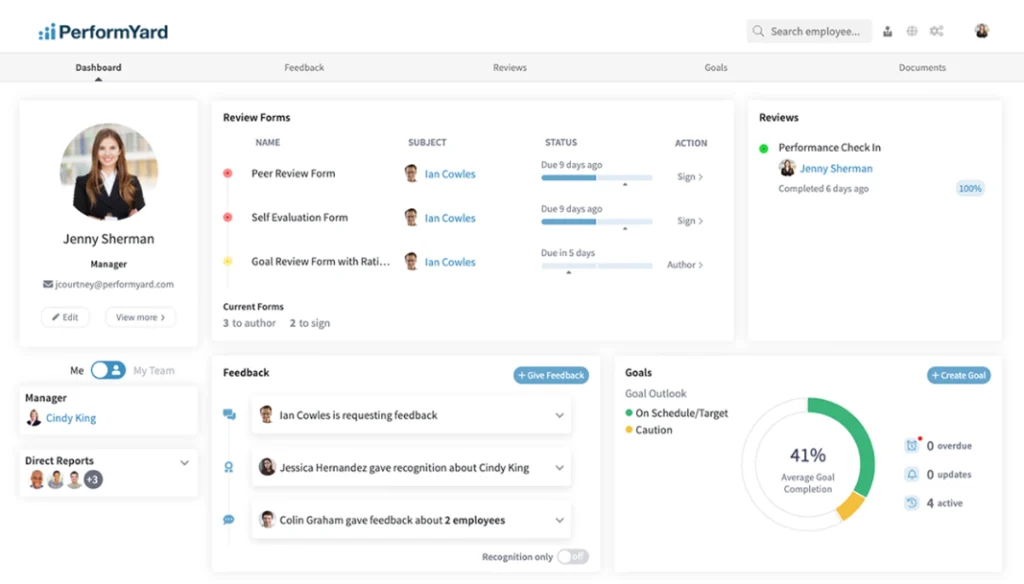
PerformYard prioritizes simplicity while ensuring feedback cycles integrate to broader team analytics and data accessibility. Managers can easily track feedback data and performance trends per team.
HR teams benefit from automated workflows, making it reliable for review deployment. Ideal for companies with clear feedback cycles seeking minimal technical friction.
| Pros | cons |
| Auto workflows | Less ideal for small teams |
| Reports clean | UI too formal for some |
8. PeopleGoal
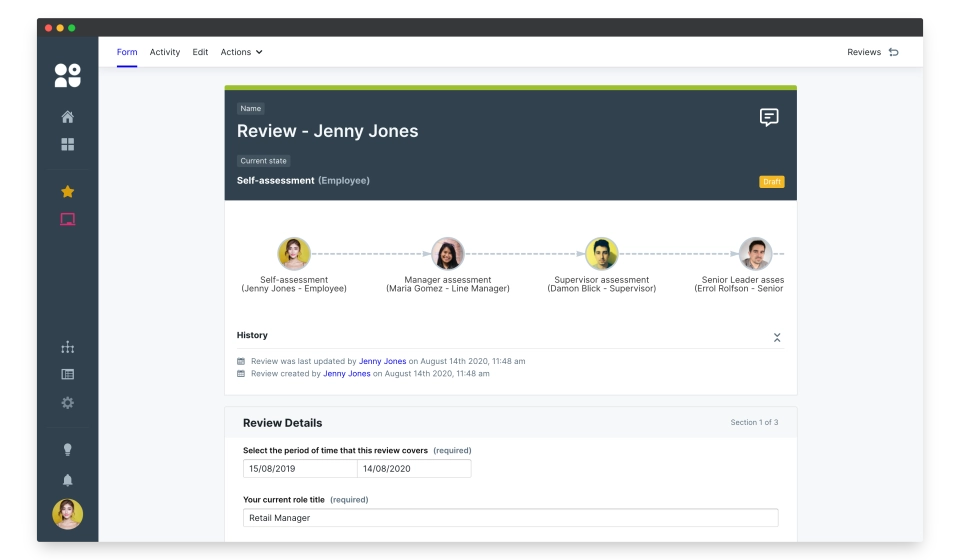
PeopleGoal gives full flexibility in reviewer selection and competency-based scoring in the 360 process. HR can design feedback weightage based on job priorities, making feedback more structured by design.
Its reporting system helps HR teams observe strengths centralizations across teams. Suitable for companies requiring modular feedback workflows that are fast to design and customize.
| Pros | Cons |
| Template + scoring | Customer support slower |
| Flexible reviewer | Integrations require setup |
9. Leapsome
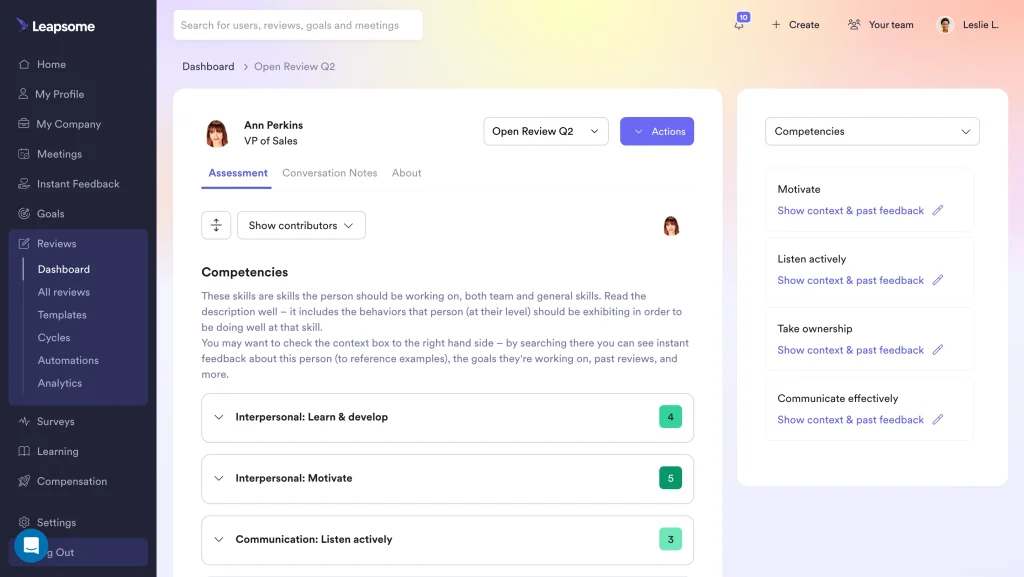
A people-development-first platform that captures 360 insights while linking them to learning and engagement recommendations. The platform supports automated reminders and cyclical survey setup.
Leapsome turns feedback data into development action plans easily through analytics. Ideal for companies emphasizing learning-driven improvements.
| Pros | Cons |
| Feedback + learning | Price high for small team |
| Reminders automated | Setup complex |
10. SurveyMonkey
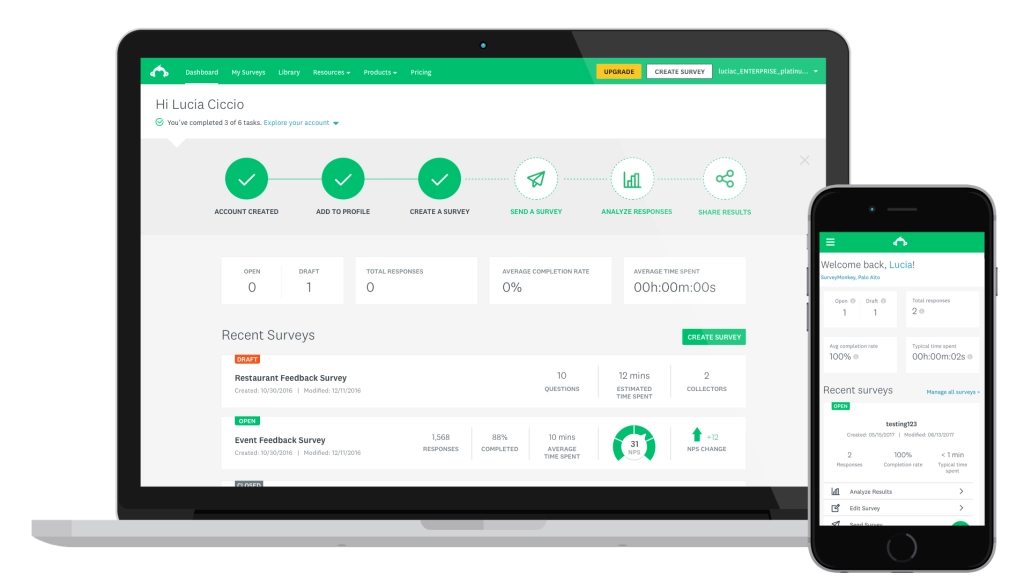
A widely recognized survey tool that HR teams can customize for distributed feedback cycles. It helps companies capture peer-and-team insight data with adaptable survey scalability.
Survey links can be deployed via email invitations or short links. Suitable for companies already comfortable using survey-based HR tools.
| Pros | Cons |
| Templates ready | Not a 360-specific tool |
| Integrates 200+ apps | Requires add-ons |
11. iSpring Learn
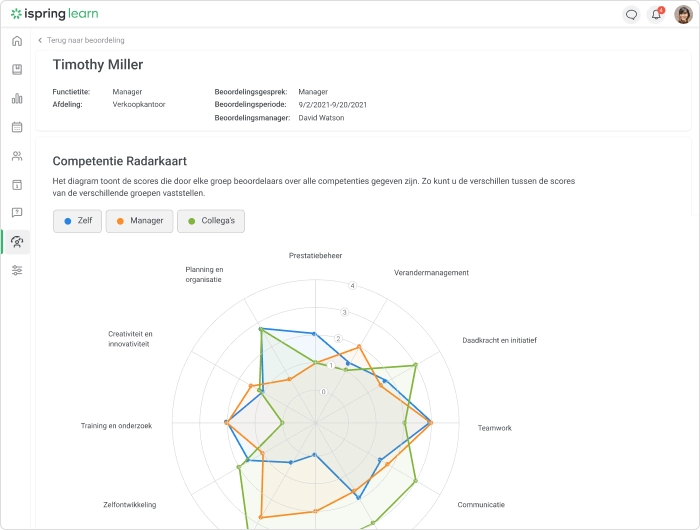
iSpring Learn connects 360 feedback directly into training paths within the LMS, helping companies build feedback-based learning development planning.
Mobile accessible and simple cycle-based reminders help HR automate core feedback deployment.
| Pros | Cons |
| Feedback to LMS | Less ideal as analytics tool |
| UI clean | Templates basic |
12. Rippling
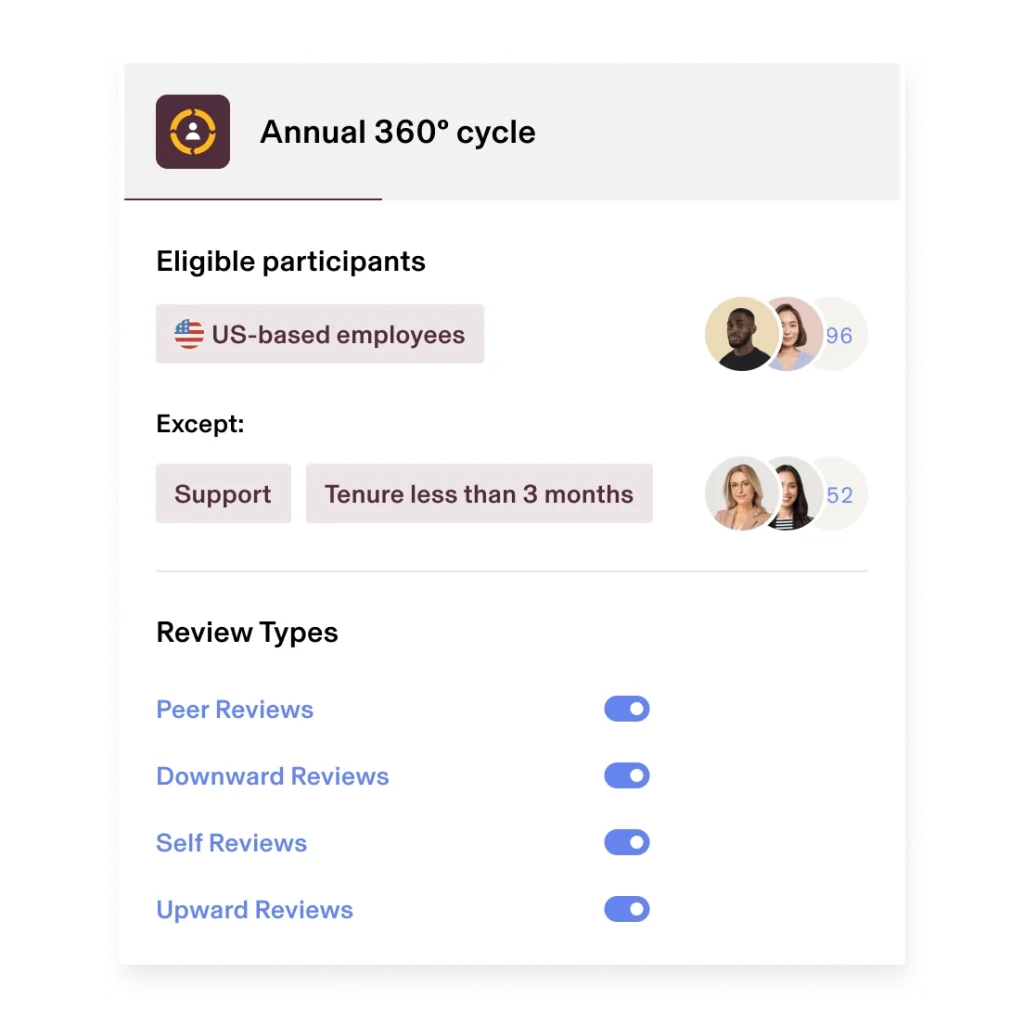
Rippling centralizes feedback and HRIS data within one unified system, enabling deeper correlation analysis across goals, payroll, and team feedback metrics.
HR teams can explore behavioral and KPI patterns across departments suitable for complex organizational insight modeling.
| Pros | Cons |
| Feedback to goals | Price high for SMEs |
| Modules unified | Adoption complex |
Optimize Your Feedback Process with LinovHR’s 360 Degree Feedback
Organizations in 2025 require more contextual performance insight that reflects leadership, teamwork, and collaboration impact.
LinovHR enables HR teams to conduct cyclical 360 feedback securely and at scale while linking feedback to structured learning development planning.
Built for the Southeast Asian region, LinovHR helps HR teams automate feedback invitations, reminders, and visual insights without losing compliance alignment. This system transforms HR review into structured development action.
Empower you 360 feedback cycles with LinovHR, and request a free demo today!


