


In today’s hyper-digital workplace, businesses are expected to run performance evaluations that are measurable, unbiased, and fast to execute.
Traditional review methods, such as paper-based forms or spreadsheet tracking are increasingly ineffective due to limited visibility, manual effort, and inconsistent measurement standards.
To support a modern and agile performance culture, organizations are adopting employee appraisal software platforms that centralize goal tracking, feedback collection, performance scoring, and development insights.
This article explains the meaning of appraisal software, the core capabilities every business should look for, and curated a list of the best solutions to use as a benchmark in 2025.
What Is Appraisal Software?
Appraisal software is an HR-focused digital system that enables companies to plan, execute, and measure employee performance reviews through an automated platform.
The system equips HR teams and managers with tools to track target completion, run structured assessment, and deliver feedback instantly without relying on manual documentation.
For modern organizations, appraisal tools are essential to enable a transparent and high-accuracy performance review process.
These platforms help businesses measure contributions objectively, support promotion and compensation planning, and identify development priorities early.
By integrating performance data into a single environment, appraisal systems reduce administrative bottlenecks while delivering deeper insights into employee productivity, leadership potential, and long-term competency growth.
Key Features to Consider in Appraisal Software
Before selecting an appraisal solution, companies must understand the essential components that should be present in the system.
A powerful appraisal platform does more than score performance; it connects individual goals to broader business outcome and supports ongoing employee development.
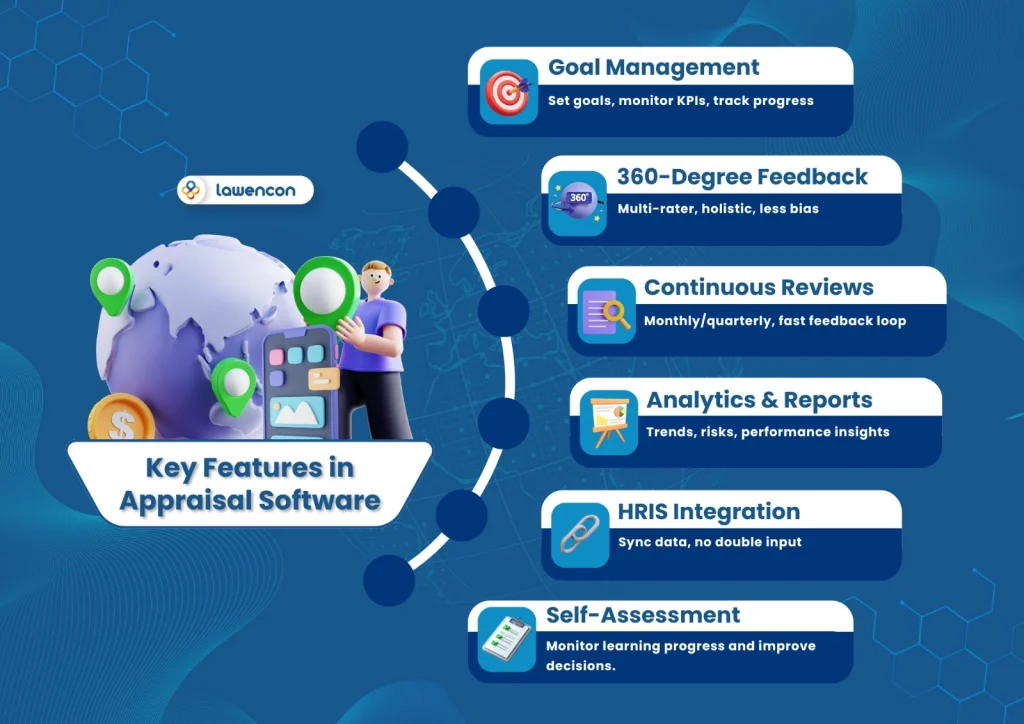
Below are the primary capabilities to look for in reliable appraisal system:
1. Goal Management
Set and monitor measurable objectives, linked directly to OKRs or company KPIs, so employees and business targets remain aligned.
2. 360-Degree Feedback
Collect multi-source evaluations from supervisors, peers, and subordinates to reduce bias and gain a holistic view of performance and behavior.
3. Continuous Performance Reviews
Run review periodically, monthly or quarterly so companies can deliver feedback quickly and adapt growth plans efficiently.
4. Data Analytics & Reporting
Generate automatic performance summaries along with visual dashboards that highlight trends, risks, and top-performing individuals or teams.
5. HRIS Integration
Sync performance data with other HR modules such as payroll, attendance, and learning systems to minimize double input and keep HR decisions consistent.
6. Self-Assessment Tools
Enable employees to reflect on their own performance and prepare a development-focused discussion framework with their managers.
Key Benefits of Appraisal Software Implementation
Adopting appraisal software delivers a strategic edge for organizations that want to accelerate performance reviews, minimize engagement risks, and strengthen workforce planning.
However, businesses that aim to grow sustainably must also choose a platform that supports internal talent development not just assessment.
Here are the strongest advantaged appraisal tools can offer companies:
- Maintain performance clarity across teams
- Improve retention by recognizing top performers
- Strengthen leadership readiness tracking
- Reduce hiring dependency and recruitment expenses
- Automate and standardize evaluation workflows
- Support transparent promotion planning
- Improve knowledge transfer and skill development visibility
- Enable faster data-based decision-making
In short, the right appraisal platform is one that measures reliably, develops proactively, and scales with organizations as they grow.
Must-Have Features of a Reliable Succession-Ready Appraisal Platform
Effective appraisal systems should also support companies in preparing future leaders. Businesses need visibility into leadership readiness, growth plans, and talent risk mitigation to ensure long-term continuity.
Modern organizations expect their evaluation platform to become a foundation for workforce sustainability, not a one-cycle assessment tool.
A succession-aligned appraisal system must enable:
- Early leadership potential identification
- Competency-based development planning
- Promotion readiness transparency
- Cross-team and cross-level feedback capture
- Automation of review timelines
- Scalable talent pipeline-building
Top 10 Appraisal Software Recommendations for 2025
Below are the most trusted appraisal software platforms in 2025 that helps organizations evaluate employees accurately, support internal development, and strengthen workforce stability.
1. LinovHR
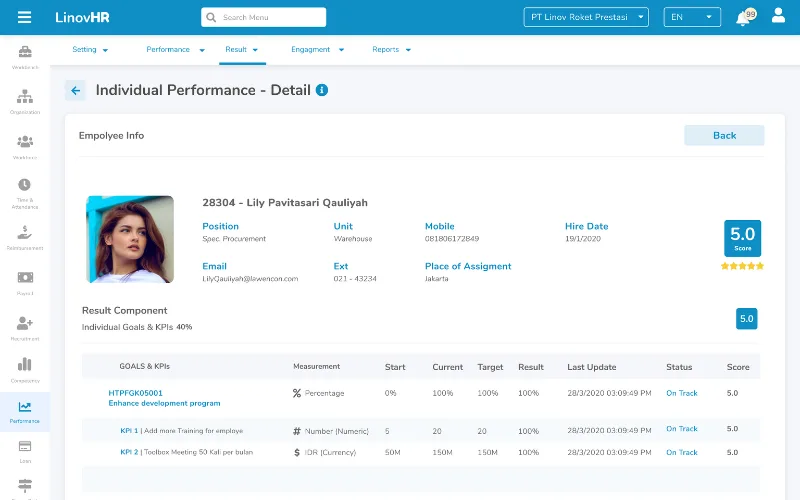
LinovHR delivers a full spectrum performance appraisal solution embedded within a unified HRIS environment.
This performance appraisal module allows HR teams to define measurable KPIs, monitor real-time goal completion, collect structured feedback, and generate automated performance reports.
This enables companies to shift from fragmented manual review to a transparent and centralized digital assessment ecosystem.
Beyond evaluation, LinovHR differentiates itself through its strong integration with leadership and learning tools including Succession Management and Learning Management System modules.
This allows organizations not only to assess employees but also to actively support their long-term competency growth.
The system is also developed to align with Indonesian labor compliance, making it suitable for local organizational structures without limiting its potential to scale into enterprise-grade workforce strategies.
Key Features:
- Goals & KPI Achievement: LinovHR enables companies to set and track employee goals and KPIs in a measurable and transparent way. Each target is aligned with organizational objectives to ensure every achievement contributes directly to business success.
- 360 Degree Feedback Assessment: this feature allows performance evaluations from multiple perspectives, supervisors, peers, and subordinates, for more objective results. It provides a holistic view of both employee performance and workplace behavior.
- Employee Performance Dashboard: LinovHR’s interactive dashboard displays real-time performance data, making it easier for HR and managers to monitor team achievements. Clear data visualization supports faster and more accurate decision-making.
- HRIS Integrated: as part of LinovHR’s integrated HRIS, the appraisal module connects seamlessly with payroll, attendance, and training systems. This integration ensures performance reviews, compensation, and development processes run efficiently and consistently.
| Pros | Cons |
| Integrated with other HRIS modules | Market focus limited to Indonesia |
| Local support and HR consulting available | Requires initial implementation planning |
| User-friendly interface | |
| Feedback multi-level, termasuk 360 degree | |
| 9-Box & visual readiness talent | |
| Tracking KPI otomatis |
2. Mekari Talenta
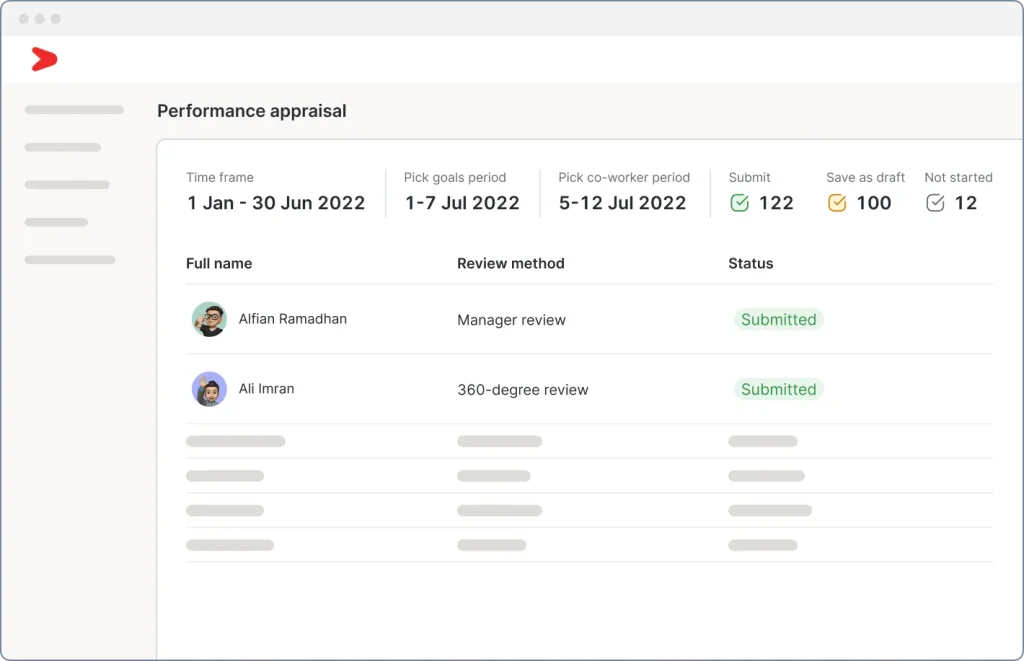
Mekari Talenta offers an enterprise-friendly performance management and appraisal solution integrated into a broader HRIS framework.
Its performance module supports KPI-based goal measurement, multi-directional feedback, and AI-assisted performance summaries.
This allows HR and leadership teams to improve appraisal accuracy, reduce subjectivity, and increase overall process efficiency.
The platform also equips companies with customizable review cycles, calibration tools, and direct integration with payroll and attendance data.
This enables organizations to standardize performance policies, monitor trends more effectively, and maintain consistency between appraisal outcomes and compensation decisions.
Key Features:
- Goals & KPIs
- Performance Evaluation
- AI-generated Review Summary
- Report and Calibration
| Pros | Cons |
| Fully integrated with payroll and HRIS | Higher pricing range |
| User-friendly interface | Appraisal features depend on add-on modules |
3. HashMicro
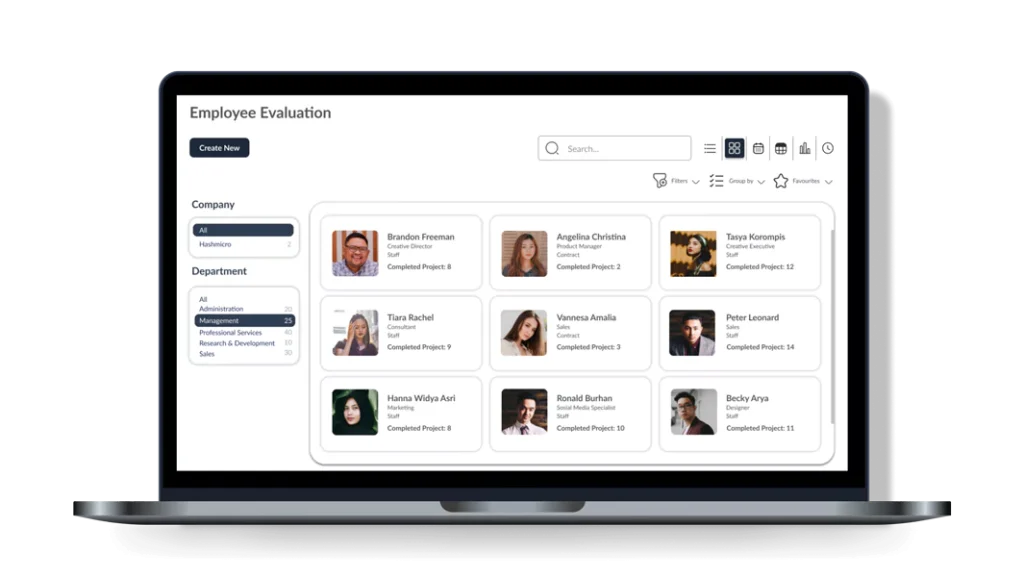
HashMicro provides a powerful performance appraisal engine within a cloud-based ERP and HRM ecosystem.
The platform automates competency-based evaluation, KPI measurement, and workforce insight powered by AI analytics.
This system is built for organizational structures that require large-scale workforce performance visibility and strong backend data unification.
The software is highly adaptable across industries including retail, manufacturing, logistics, and distribution enabling better workforce segmentation, productivity analysis, and strategic role transition planning.
Key Features:
- Payroll Management
- Employee Database
- Expense Management
- Attendance Management
- Employee Contract Management
- Leaves Management
| Pros | Cons |
| AI-driven performance insights | Longer implementation timeline |
| Built for enterprise scalability | Less optimal for small organizations without dedicated IT support |
4. Gadjian
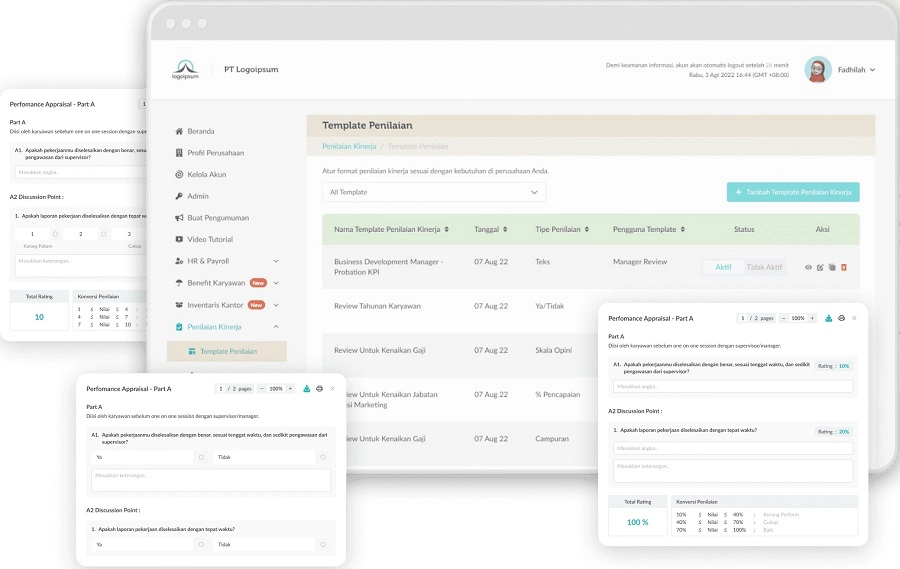
Gadjian offers a cost-efficient, beginner-friendly appraisal system tailored for SMEs that want to centralize payroll, attendance, and performance measurement in one platform.
The system supports essential KPI-based reviews, performance scoring, and rewards alignment, making it practical for early HR digital transformation.
The tool helps HR standardize basic evaluation workflows, offer custom form templates, track performance results, and connect rewards or recognition to measurable outcomes.
Key Features:
- Customizable Evaluation Templates
- Cloud-based Performance Review System
- Performance Score and Summary Report
- Appreciation & Reward Integration
- Integration with HRIS Data
| Pros | Cons |
| Affordable pricing | Limited appraisal features |
| Easy to use | Not suitable for large enterprise |
5. GreatDay HR
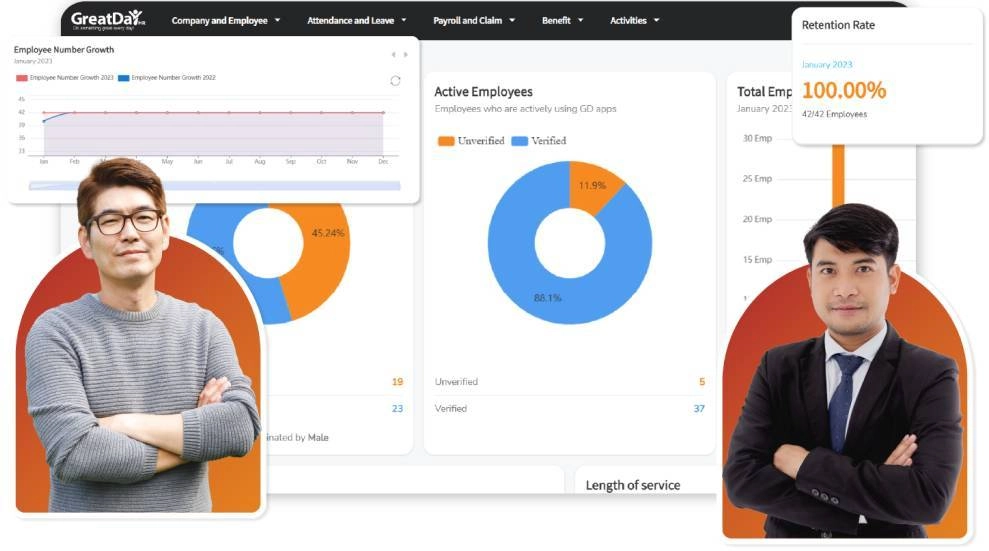
GreatDay HR focuses on mobility-first performance appraisals, offering accessibility through both desktop and mobile environments.
The platform supports KPI tracking, cloud-stored review records, and automatic notifications to keep review timelines on track. This helps remote-heavy companies maintain discipline in performance evaluation.
With secure cloud storage and built-in payroll integration, GreatDay HR supports HR teams and managers in coordinating review faster for distributed and hybrid teams.
Key Features:
- Cloud-based Performance Review
- Mobile-friendly Design
- Payroll Integration
| Pros | Cons |
| Convenient mobile access | Basic appraisal functionality |
| Easy implementation | Requires stable internet connection |
6. PerformYard
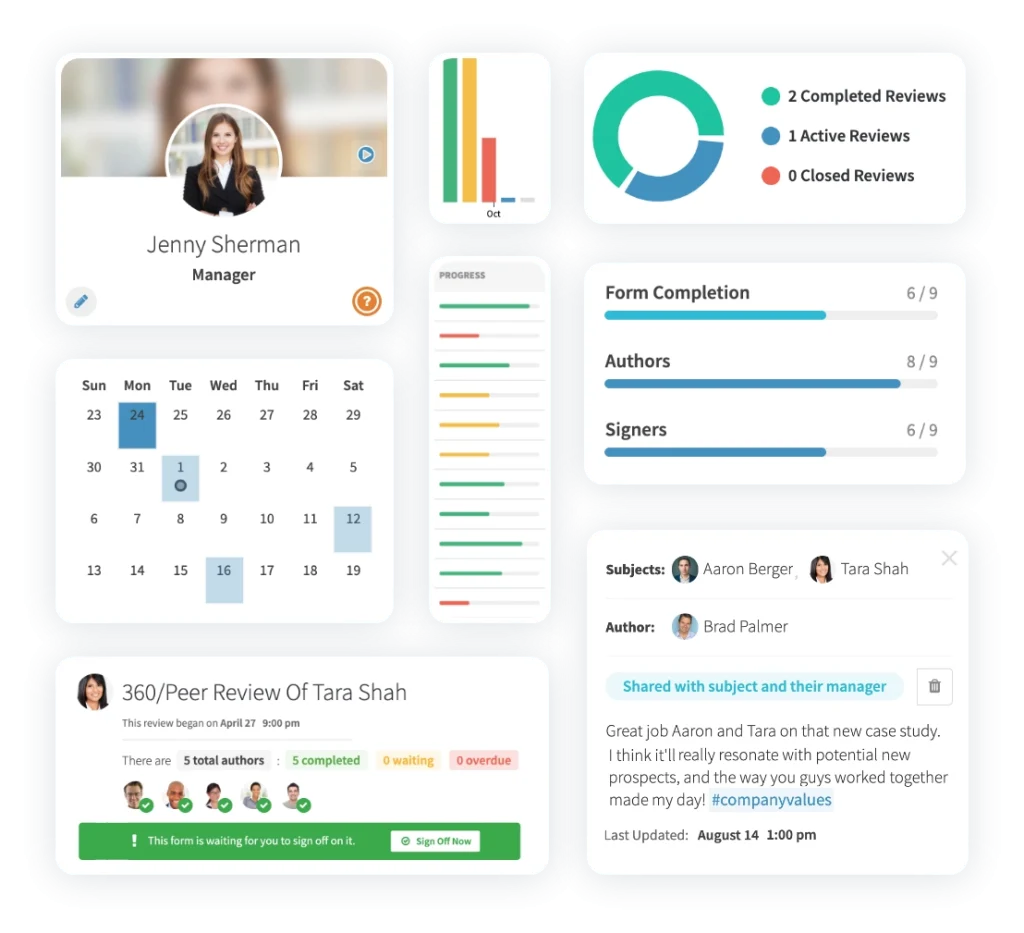
PerformYard supports highly configurable performance workflows, including 360 feedback, external review, and competency-based assessments.
The tool focuses on structured data collection and clean administration workflows to ease HR’s performance timeline coordination.
Its customization power allows HR teams to define weighting, rating scales, question types, and talent indicators without procedural restrictions.
Key Features:
- Review Cycles & Check-ins
- Custom Form & Question Types
- 360 Degree Feedback/External Feedback
- AI Review Assist
- Reporting & Analytics
- Engagement Surveys & Pulse Surveys
- Meeting
- HRIS Integration
| Pros | Cons |
| Highly customizable | Less optimal for very small businesses |
| Interactive response reports | Interface may feel too structured for early-stage SMEs teams |
7. 15Five
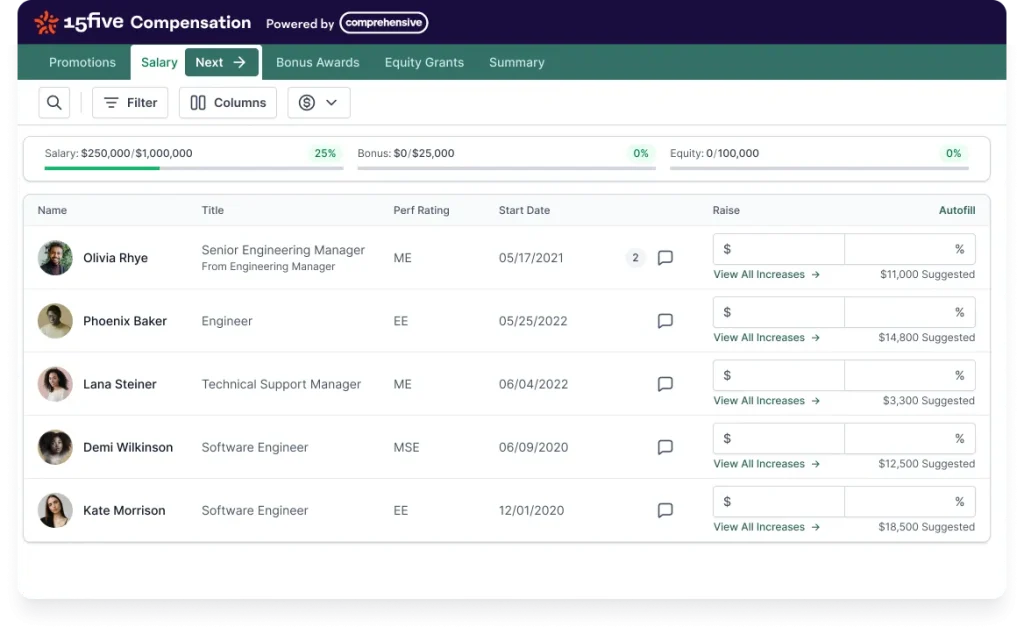
15Five emphasized continuous performance dialogue through automated weekly check-ins, engagement surveys, and AI-assisted development feedback.
The platform allows HR to align OKRs, cultural insights, and internal mobility trends into structured performance reviews.
With integrations across Slack, Jira, and productivity analytics, 15Five creates a transparent environment for feedback sessions and ongoing coaching alignment.
Key Features:
- Review Cycles
- Multi-source & External Feedback
- Goal and OKR tracking
- Engagement & Pulse Surveys
- HRIS Integration
| Pros | Cons |
| Encourages real-time feedback culture | Requires premium subscription for advanced review insights |
| Strong integration with collaboration tools | Less optimized for very large hierarchical companies |
8. Small Improvements
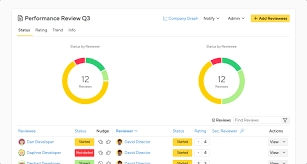
Small Improvements centers on transparent 1:1 discussion, peer-driven evaluations, and simple goal tracking structures.
It supports documentation of challenges and progress regularly without administrative complexity.
The platform’s integrations with major workspace connectors help employees and managers communicate directly in feedback sessions.
Key Features:
- Peer Feedback
- 1:1 Performance Documentation
- Goal Tracking
- Integration with Slack and Google Workspace
| Pros | Cons |
| Simple and intuitive | Less structured for formal enterprise reviews |
| Supports growth dialogue | Some evaluation components require third-party integration |
9. Trakstar
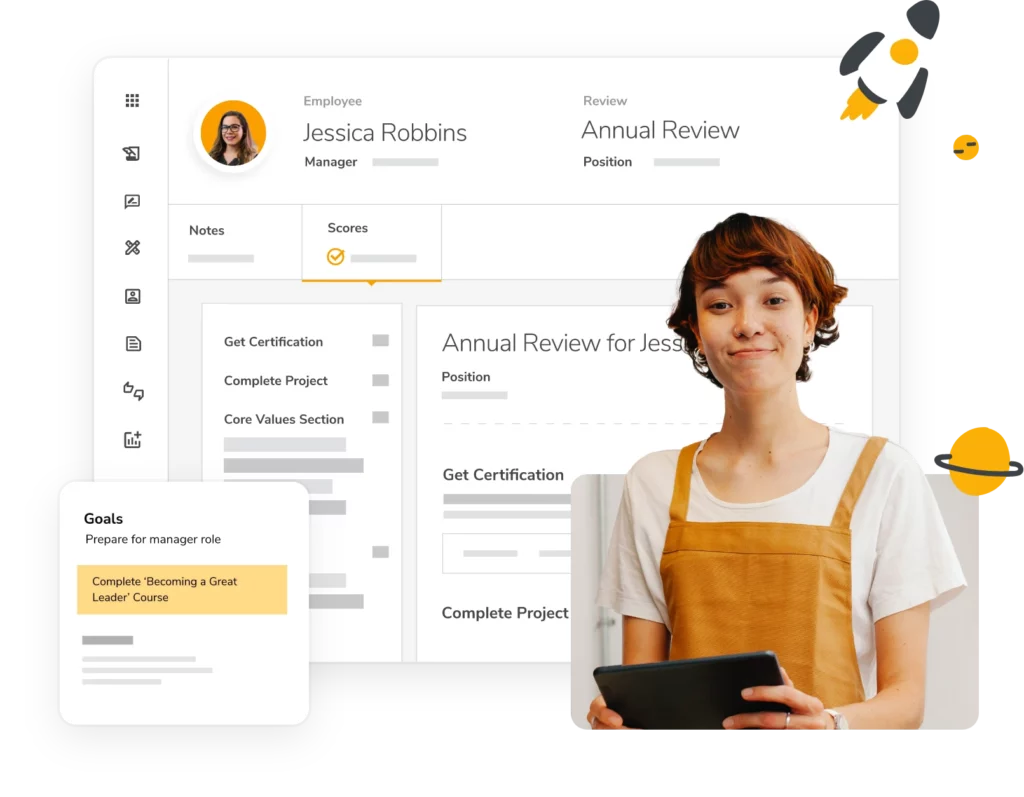
Trakstar is a performance and hiring-enable HR platform with appraisal, 360 feedback, and engagement measurement.
Its dashboard-driven analytics help HR teams understand productivity patterns and managerial coaching impact.
Through built-in goal planning and feedback chats, Trakstar helps managers document employee progress consistently.
Key Features
- 360-Degree Reviews
- Goal & KPI Tracking
- Performance Review Workflows
- Employee Development Programs
- Engagement Insights
| Pros | Cons |
| Strong visual and feedback tools | Higher pricing tier |
| Competency & engagement evaluation | Integration setup may require IT assistance |
10. AssessTEAM
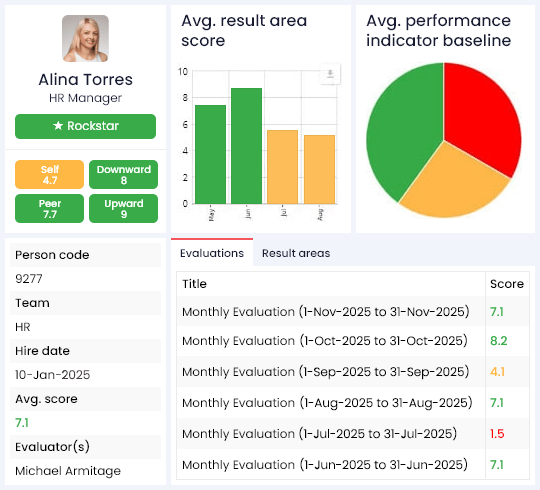
AssessTEAM is built for outcome-driven KPI measurement, mobile feedback execution, and review templates designed for SMEs and startups.
It also connects performance targets to measurable business outcomes. The software focuses on agility, multi-source feedback, self-assessment, and dashboard-supported coaching approaches.
Key features:
- Goal Setting & Tracking
- Continuous Feedback
- 360 Reviews
- Mobile Review Cycles
- Self-assessment Tools
- HRIS Integration
- Development Plans
| Pros | Cons |
| Very mobile-optimized | Advanced dashboards may require paid subscription |
| SME-friendly interface | UI may feel limited for complex corporate scoring |
Boost Strategic Appraisal Accuracy and Leadership Development with LinovHR
Companies today need more than a digital tool, they need an integrated system that evaluates performance precisely while enabling long-term employee development.
LinovHR ensures that every appraisal cycle measures business impact, guides successor readiness, and aligns learning priorities into a single workflow foundation.
With modules like KPI measurement, 9-Box talent mapping, 360 feedback, career readiness visibility, and self-assessment, LinovHR becomes a long-term strategic backbone for HR and leadership teams.
Request a free demo of LinovHR today available as a demo trial for benchmarking HR needs!


