


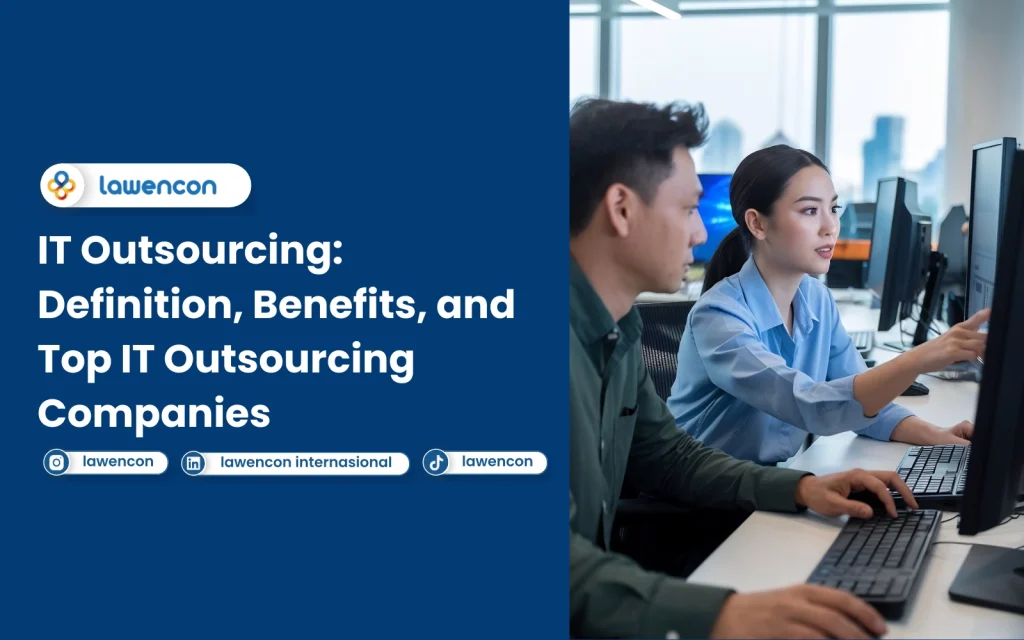
In 2025, IT Outsourcing continues to transform how companies operate, scale, and innovate in an increasingly digital-first world.
As organizations face rising customer expectations, talent shortages, and the pressure to accelerate technology adoption, outsourcing IT becomes a strategic advantage rather than just a cost-saving tactic.
Businesses of all sizes from startups to large enterprises are turning to outsourcing partners to maintain agility, reduce operational burdens, and access specialized expertise that might not be available in-house.
The growing maturity of the IT outsourcing ecosystem, especially with advancements in cloud computing, cybersecurity, AI, and remote collaboration tools, enables companies to delegate critical functions with confidence.
This trend is reflected in the rising number of global and Indonesian IT outsourcing providers offering high-quality, scalable, and secure development services.
Before selecting the right partner, it’s essential to understand what IT outsourcing truly means and how it supports your long-term business goals.
Definition of IT Outsourcing
IT outsourcing refers to the practice of delegating specific information technology functions, processes, or entire projects to external service providers.
These functions can range from software development, infrastructure management, technical support, cybersecurity, cloud operations, and more.
By outsourcing, companies gain access to specialized expertise without needing to build, hire, or maintain large IT teams internally.
In 2025, IT outsourcing has evolved from simple offshoring to a highly collaborative model centered on partnership and shared business goals.
Modern outsourcing providers do more than just execute tasks, they offer strategic guidance, best practices, and end-to-end support across the technology lifecycle.
This shift allows companies to leverage domain expertise, industry insights, and scalable technical capabilities from seasoned professionals.
The rise of remote work, digital tools, and global talent networks has made outsourcing more accessible and efficient.
Businesses can now work with providers across time zones, giving them continuous development cycles and faster turnarounds.
This global access allows companies to tap into niche skills such as AI engineering, DevOps, and cybersecurity that may be difficult or expensive to hire internally.
Overall, IT outsourcing is no longer just a workaround for resource limitations, it is a strategic enabler for innovation, operational efficiency, and long-term business growth.
By collaborating with the right outsourcing partner, companies can focus on their core competencies while ensuring their technology foundation is strong, secure, and future-ready.
Key Benefits of IT Outsourcing for Companies
As technology becomes increasingly essential to business operations, many organizations struggle to balance innovation with the practical constraints of cost, talent, and time.
IT outsourcing helps bridge this gap by giving companies access to scalable expertise and resources without the long-term burden of building large internal teams.
Whether a business aims to modernize its systems, accelerate development, or improve security, outsourcing offers a strategic path forward.
By partnering with the right IT outsourcing provider, companies can reduce operational complexity and stay focused on what matters most delivering value to customers.
Here are the key benefits that make outsourcing a powerful solution for modern businesses in 2025.
Access to Specialized Talent and Expertise
Many companies, especially those outside the tech sector, struggle to hire and retain IT specialists due to talent shortages and competitive compensation demands.
Outsourcing partners solve this by providing access to highly skilled professionals such as software developers, data engineers, cybersecurity specialists, or UX designers roles that can be expensive and time consuming to recruit internally.
Beyond individual skill sets, outsourcing firms also bring industry-specific experience and mature technical methodologies.
This means companies benefit not only from advanced capabilities but also from best practices in architecture, development workflows, quality assurance, and project management.
As a result, businesses gain higher-quality outcomes without needing to invest heavily in training or internal capability building.
For rapidly evolving technologies, like AI, cloud engineering, or automation, outsourcing becomes even more valuable.
Companies can leverage cutting-edge expertise instantly, rather than waiting months to find the right talent or upskill existing teams.
Cost Efficiency and Reduced Operational Burden
One of the primary reasons companies outsource IT is to reduce new-hire expenses, infrastructure investments, and long-term operational overhead.
Instead of recruiting a full internal IT department, businesses pay only for the services they need, making financial planning more predictable and efficient.
This is especially useful for startups or mid-sized companies that want enterprise-level capabilities without enterprise-level spending.
Outsourcing also eliminates many hidden costs associated with maintaining an in-house team, such as employee benefits, training, turnover, hardware, and software licensing.
Outsourcing providers typically have their own well-established toolsets, cloud environments, and development frameworks offering high-quality infrastructure at a fraction of the cost.
These cost savings allow companies to redirect their budgets toward core business functions, growth initiatives, or customer experience improvements. Over time, outsourcing becomes a strategic financial decision rather than merely a tactical one.
Faster Project Delivery and Scalability
Outsourcing enables companies to accelerate development timelines by leveraging teams that operate efficiently with defined processes, agile workflows, and robust collaboration systems.
Many outsourcing providers work across multiple time zones, allowing continuous progress on projects and faster turnaround times compared to in-house teams’ limited capacity.
Scalability is another critical advantage. Businesses can quickly scale teams up or down based on workload, without going through lengthy hiring or layoff cycles.
This level of flexibility is especially beneficial for companies dealing with seasonal demand, product launches, or digital transformation projects that require temporary yet intensive technical support.
With outsourcing, organizations can adapt more quickly to changing market conditions, technological trends, or customer needs.
This agility helps companies stay competitive and responsive, especially in industries where time-to-market determines long-term success.
Improved Security and Risk Management
Cybersecurity remains one of the biggest challenges for modern companies, particularly those without dedicated IT security teams.
Outsourcing providers, especially those specializing in security operations, offer advanced monitoring tools, compliance expertise, and robust risk management frameworks designed to protect systems from emerging threats.
These providers stay updated with the latest cybersecurity trends, vulnerabilities, and attack techniques, something many internal IT teams may not have the time or breadth of experience to keep up with.
Outsourcing allows companies to instantly elevate their security posture without needing to invest in costly in-house security technologies.
Additionally, outsourcing reduces risks associated with system downtime, data loss, or operational failures.
With experienced teams handling your IT environment, businesses benefit from proactive maintenance, continuous monitoring, and rapid incident response, ensuring stable and secure operations.
Ability to Focus on Core Business Growth
Managing IT functions often consumes significant time, attention, and resources that could otherwise be allocated to business strategy and innovation.
Outsourcing removes this burden, allowing leadership teams to focus on product development, customer engagement, revenue-generating activities, and long-term planning.
When technical operations are handled by experienced professionals, businesses gain the freedom to enhance their competitive advantage.
This shift not only improves internal efficiency but also helps companies innovate faster and respond more effectively to new opportunities or market demands.
Ultimately, outsourcing IT becomes a strategic enabler for sustainable business growth. By delegating non-core technical tasks, companies achieve better alignment between their resources, goals, and long-term vision helping them stay ahead in today’s technology-driven marketplace.
How to Choose the Right IT Outsourcing Partner
Choosing the right IT outsourcing partner is one of the most important strategic decisions a company can make, one that directly affects project success, long-term scalability, and overall business performance.
With hundreds of providers offering various specializations, pricing models, and service structures, distinguishing the right partner from the rest can be challenging.
That is why companies must evaluate outsourcing vendors not only based on technical skills, but also on reliability, communication, adaptability, and industry alignment.
A strong outsourcing partner should feel like an extension of your internal team. They must understand your business objectives, operate transparently, and demonstrate a proven ability to deliver results consistently.
Below are five essential factors to consider when selecting an IT outsourcing partner who can meet your needs both today and in the long run.
1. Evaluate Technical Expertise and Industry Experience
Before partnering with any outsourcing company, it’s essential to assess whether their technical capabilities match your project requirements.
Review the technologies, tools, and frameworks they specialize in, and verify their experience through case studies, portfolios, certifications, or technical interviews.
Companies with broader exposure to modern tech stacks such as cloud computing, cybersecurity, AI, or mobile development often deliver higher-quality results and more scalable solutions.
In addition to technical capabilities, industry experience matters just as much. A provider that has previously handled projects within your sector will better understand compliance needs, user expectations, and common operational challenges.
This reduces onboarding time, enhances collaboration, and ensures they can anticipate potential obstacles that may affect your project.
2. Assess Communication Quality and Project Management Approach
Clear, timely, and structured communication is crucial for any outsourcing relationship. When evaluating potential partners, observe how they communicate during the initial stages whether they are responsive, organized, and able to explain technical concepts clearly.
Companies with strong communication practices typically offer better transparency throughout development, reducing misunderstandings and ensuring project goals stay aligned.
A reliable outsourcing company should also have a solid project management ecosystem. This includes defining workflows, setting milestones, assigning dedicated managers, and maintaining documentation throughout the project lifecycle.
Whether they use Agile, Scrum, or hybrid methodologies, the right partner must show that they can manage timelines effectively and provide you with visibility into every stage of the process.
3. Review Security Standards and Compliance Capabilities
Given the growing complexity of digital threats, your outsourcing partner must demonstrate strong security practices.
This includes adherence to recognized standards such as ISO 27001, SOC 2, GDPR, or industry-specific frameworks depending on your business.
A trustworthy vendor should be transparent about their data handling procedures, access controls, encryption policies, and disaster recovery plans.
Beyond technical security measures, evaluate whether the provider understands your regulatory environment.
Companies operating in finance, healthcare, logistics, or government sectors require strict compliance, and working with a partner unfamiliar with these requirements can lead to serious risks. Ensure they can maintain both operational security and legal compliance throughout the project.
4. Consider Scalability, Flexibility, and Long-Term Support
As your business grows, your IT needs will evolve sometimes rapidly. A strong outsourcing partner should not only be able to meet your current demands but must also accommodate future expansions.
This includes scaling team size, adjusting delivery timelines, and providing access to additional expertise when required. Flexibility ensures your projects don’t stall when needs change unexpectedly.
Long-term support is another critical factor. The best outsourcing providers don’t just deliver a project and walk away; they offer continuous maintenance, updates, performance monitoring, and technical assistance.
This long-term partnership approach helps companies maintain system stability, manage new features, and stay aligned with evolving business goals.
5. Compare Pricing Models and Overall Value for Money
Costs are often one of the main reasons businesses consider outsourcing, but choosing the lowest price can lead to significant risks.
Instead of focusing solely on cost, evaluate the overall value each provider offers. Look at what is included in their pricing structure, the quality of their deliverables, and whether they offer transparency around additional fees or scope adjustments. A clear, well-defined pricing model helps prevent financial surprises later.
It’s also helpful to compare the provider’s cost-to-benefit ratio with others in the market. Some vendors may charge more but offer better communication, security, senior talent, or long-term support elements that often justify the investment.
The right outsourcing partner is one that aligns with your budget but also brings reliable expertise and measurable business outcomes.
15 Top IT Outsourcing Companies in 2025
As the demand for modern digital solutions continues to accelerate, the IT outsourcing landscape in 2025 is more competitive than ever.
Companies now seek partners that offer more than just cost efficiency; they expect technical depth, transparent collaboration, and the ability to support long-term innovation.
Choosing the right outsourcing vendor has become a strategic decision that shapes the success of software initiatives, digital transformation plans, and overall business scalability.
Below is a curated list of the top IT outsourcing companies both in Indonesia and globally that have proven their expertise, reliability, and consistent performance.
1. Lawencon
Lawencon stands out as one of Indonesia’s most advanced IT outsourcing and technology consulting firms, offering end-to-end services that include software development, IT managed services, enterprise solutions, digital transformation consulting, and cloud implementation.
With a proven track record supporting major enterprises and government organizations, Lawencon brings the level of technical maturity and project discipline typically found in global-tier outsourcing companies.
Their teams specialize in modern technologies from cloud-native development to AI-driven automation making them a reliable partner for complex digital initiatives.
Beyond technical excellence, Lawencon differentiates itself with strong governance, structured project management frameworks, and transparent communication throughout the entire engagement lifecycle.
Clients benefit from dedicated teams, consistent reporting, and high delivery accountability. These strengths make Lawencon an ideal choice for companies seeking stability, clarity, and predictable project outcomes.
Lawencon’s long-term partnership approach is another key advantage. Instead of delivering one-time projects, Lawencon focuses on building continuous collaboration through maintenance, system enhancements, and strategic advisory support.
This makes it especially well-suited for enterprises looking for a partner that grows with their digital strategy and adapts to evolving business needs.
| Pros | Cons |
| Comprehensive end-to-end IT outsourcing capabilities | Limited global office presence |
| Strong experience in enterprise-grade solutions | High demand may affect project queue |
| Proven track record in digital transformation | Advanced solutions may require higher investment |
| Highly skilled and certified tech talent | |
| Excellent project governance & communication | |
| Customizable SLA & agile delivery | |
| Deep understanding of Indonesian business landscape |
2. Sagara Technology
Sagara technology is known for its focus on digital product development, offering services from UI/UX design to custom software engineering.
The company supports clients across multiple sectors, with a strong reputation for building modern, user-friendly applications.
Their team is experienced with web and mobile development and often partners with startups looking to build innovative digital platforms.
In addition to technical development, Sagara provides training programs and tech academies that enhance digital capabilities for organizations.
This unique combination of services helps clients maintain a skilled workforce alongside outsourced development help.
Their agility makes Sagara a strong fit for fast-paced companies wanting accelerated product development.
For businesses seeking a provider that balanced creativity, modern design, and stable engineering output, Sagara Technology offers a compelling value proposition.
Their startup-friendly approach makes them especially attractive for companies building consumer-focused applications.
| Pros | Cons |
| Strong web & mobile development expertise | Mostly focuses on software, not full IT outsourcing |
| Good portfolio in digital product development | Limited global exposure |
| Competitive pricing | Scalability may vary by project size |
3. Accenture
Accenture is one of the world’s leading outsourcing and consulting firms, offering unmatched global capabilities across strategy, technology, and operations.
Their IT outsourcing services span cloud solutions, cybersecurity, AI integration, and enterprise modernization.
With decades of experience across industries, Accenture has earned a reputation for large-scale, high-impact digital programs.
As a global leader, Accenture brings advanced methodologies, specialized teams, and extensive resources, making them ideal for multinational companies and large enterprises.
Their solutions are designed to ensure high scalability, strong governance, and continuous innovation through advanced research and proprietary frameworks.
Accenture remains a top choice for companies needing complex digital transformation support, enterprise-grade outsourcing, and global service availability. Their breadth of expertise is unmatched among global vendors.
| Pros | Cons |
| World-leading IT outsourcing company | Premium pricing |
| Global workforce & massive capability range | Complex onboarding processes |
| Strong in ASI, cloud, cybersecurity | May be too large for SMEs |
4. Wipro
Wipro is a global IT outsourcing provider offering services in cloud engineering, AI, cybersecurity, and enterprise automation.
Their operations span dozens of countries, enabling them to support clients with large distributed teams and 24/7 delivery capabilities. Wipro is known for its process efficiency and strong technical maturity.
The company focuses heavily on innovation through modern engineering practices and advanced digital technologies.
Their solutions help enterprises streamline IT operations, reduce costs, and improve system resilience. Wipro’s broad industry experience allows them to support clients from finance to healthcare and manufacturing.
Wipro is an excellent choice for companies seeking a global-scale outsourcing provider capable of handling enterprise complexity and mission-critical systems.
| Pros | Cons |
| Deep expertise in digital engineering | Communication gaps may occur in large-scale teams |
| Large global talent pool | Delivery speed varies by region |
| Strong focus on enterprise clients | Pricing varies based on specialized skills |
5. Suitmedia

Suitmedia is a well-known Indonesia digital agency specializing in software development, website creation, and mobile app engineering.
The company has delivered a wide variety of digital projects for both corporations and government organizations.
Their expertise in branding and digital marketing also sets them apart, making them a versatile partner for businesses that need both technology and communication solutions.
Their development process places emphasis on user experience, visual appeal, and functionality resulting in polished, market-ready digital products.
Suitmedia’s team is experienced with delivering projects in tight timelines while maintaining high design standards. Their portfolio reflects strong capabilities in both enterprise and consumer markets.
Suitmedia’s blend engineering capability and creative strategy allows them to support businesses seeking to build digital products that not only work well but also deliver strong brand impact. This dual advantage positions them strongly within Indonesia’s competitive tech landscape.
| Pros | Cons |
| Strong UI/UX and digital strategy capabilities | More oriented toward digital agency services |
| Experienced in branding-driven technology | Limited focus on enterprise-grade outsourcing |
| Good for full-cycle product development | May not suit highly complex, long-term outsourcing needs |
6. GITS Indonesia
GITS Indonesia focused heavily on enterprise-grade digital solutions, including mobile applications, cloud solutions, and analytics platforms.
Their experience working with large corporations demonstrates their ability to deliver at scale, with structured processes and high-quality engineering. They are particularly strong in cloud-based architecture and Google Cloud Solutions.
The company emphasized measurable outcomes by helping clients implement digital systems that enhance data visibility, operational efficiency, and decision-making.
GITS also offers post-launch support, ensuring that solutions continue to evolve with business needs. This results in digital infrastructures that are built not just for today, but for future scaling.
Companies looking for a partner with enterprise readiness and strong cloud capabilities will find GITS Indonesia a reliable option.
Their focus on security, performance, and long-term maintenance adds to their credibility as a top-tier outsourcing vendor.
| Pros | Cons |
| Strong cloud, data, and mobile solutions | Team scaling may take time for large projects |
| Recognized Google partner | Limited global client base |
| Good enterprise project management | Focus area mainly on cloud & data service |
7. Cognizant

Cognizant is a major global IT outsourcing company recognized for its strengths in digital engineering, cloud transformation, and automation.
They deliver large-scale solutions for enterprises seeking to modernize outdated systems or accelerate digital adoption.
Cognizant’s technical teams have deep expertise across modern programming frameworks and cloud platforms.
The company focuses on building long-term partnerships through continuous improvement, advanced analytics, and strategic consulting.
Cognizant’s delivery frameworks ensure predictable timelines, thorough documentation, and alignment with global quality standards.
Cognizant remains a top outsourcing choice for enterprises that need transformation at scale, especially in industries like banking, healthcare, and retail that require advanced digital operations.
| Pros | Cons |
| Excellent in modernization & cloud service | Primarily enterprise-focused |
| Strong agile engineering teams | May require long-term contracts |
| Global delivery centers | Not the most budget-friendly option |
8. Capgemini
Capgemini is a global leader in consulting and IT services, known for its expertise in cloud integration, software engineering, and digital transformation.
Their teams operate worldwide, supporting clients through end-to-end IT outsourcing engagements that involve large-scale systems modernization.
The company combines deep industry knowledge with advanced engineering practices, helping clients adopt innovative solutions such as AI, automation, and smart cloud architecture. Their outsourcing model emphasizes efficiency, cost optimization, and long-term stability.
Capgemini is frequently chosen by enterprises seeking reliability, robust governance, and partners that can support both technical and strategic transformation initiatives.
| Pros | Cons |
| Strong in AI, cloud and consulting | Higher pricing for specialized services |
| Global network of engineers | Bureaucratic process for project changes |
| Good performance in system integration | Onboarding may take time |
9. IDStar
IDStar offers IT outsourcing and digital talent solutions targeted primarily at enterprises needing workforce augmentation.
They provide skilled developers, system analysts, and IT consultants who can integrate seamlessly into client teams.
IDStar is also known for delivering custom software development through a structured and scalable approach.
Their outsourced talents are trained in various modern programming languages and frameworks, ensuring compatibility with enterprise technology stacks.
In addition, the company provides managed services to help businesses maintain smooth operations without the need to scale their internal IT departments excessively.
IDStar is particularly appealing for companies seeking a flexible outsourcing model that blends talent augmentation with full-cycle project delivery.
Their agility allows clients to grow and adapt their teams as needed without long-term commitments.
| Pros | Cons |
| Strong IT talent outsourcing specialization | More talent-based placement vs full solution delivery |
| Fast IT talent deployment | Project ownership varies by engagement model |
| Focus on banking & enterprise sectors | May require additional management from client side |
10. Thrive

Thrive offers digital transformation, IT development, and cloud-based solutions for growing businesses.
Their services support companies in modernizing legacy systems, improving digital workflows, and implementing new applications that enhance operational efficiency. Thrive focuses on helping organizations transition into modern digital ecosystems with less complexity.
Their development methodology emphasizes collaboration and continuous improvement. Ensuring that clients remain engaged throughout each stage of the project.
Thrive’s engineers are skilled in full-stack development, cloud migration, and automation making them suitable for companies that want to modernize their digital infrastructure.
Thrive is well-known for providing customized solutions tailored to each client’s needs, making it an attractive outsourcing partner for companies seeking personalized and scalable technology support.
| Pros | Cons |
| Strong ini managed IT services | Small-to-mid business focus |
| Good cybersecurity support | Limited enterprise case studies |
| Flexible engagement model | Less known in global outsourcing market |
11. IBM
IBM is a long-standing global technology leader offering IT outsourcing services that include cloud solutions, software engineering, cybersecurity, and managed infrastructure.
Known for their enterprise-grade expertise, IBM delivers solutions that are secure, scalable, and optimized for mission-critical operations.
Their outsourcing approach integrates cutting-edge technologies such as AI through Watson, hybrid cloud architectures, and advanced analytics to help organizations improve automation and operational intelligence.
IBM provides strong post-deployment support, making them a preferred partner for long-term enterprise programs.
Businesses seeking a mature and highly secure outsourcing partner often turn to IBM, especially for projects requiring deep technical complexity and full-lifecycle service coverage.
| Pros | Cons |
| Leader in enterprise IT and cloud transformation | High cost enterprise-level services |
| Strong cybersecurity & infrastructure expertise | Limited agility compared to smaller firms |
| Trusted across highly regulated industries | Complex service structure |
12. BairesDev
BairesDev is one of the leading nearshore outsourcing providers, widely recognized for its high-quality engineering talent across Latin America.
They specialize in building dedicated development teams and delivering end-to-end software development. Their engineers are fluent in English and aligned with Western time zones, making collaboration smoother for clients in the U.S and Europe.
The company focuses strongly on quality assurance and efficient project management, ensuring that deliverables meet strict international standards.
Their clients range from startups to Fortune 500 companies illustrating strong adaptability across different project scales.
For businesses seeking strong technical capabilities with nearshore convenience, BairesDev is a compelling option with a global reputation for reliability.
| Pros | Cons |
| Skilled nearshore engineering teams | Mostly LATAM-based talent |
| Fast talent deployment | Time zone for Asia may not always align |
| Strong project delivery reputation | Premium rates compared to regional companies |
13. FORDE Indonesia

FORDE Indonesia is a technology outsourcing and consulting company specializing in software development, mobile apps, and enterprise systems.
The company supports various industries, including finance, logistic, and manufacturing, through digital applications that simplify complex workflows and improve business performance.
Their outsourcing model includes dedicated developer teams, ensuring consistent communication and faster delivery cycles.
FORDE also focuses on integrating modern technologies with strong backend infrastructures, ensuring that their solutions are both stable and scalable.
Companies seeking reliable engineering teams and structured delivery cycles often find FORDE Indonesia a strong partner.
Their technical breadth and client-centric focus make them a dependable choice for long-term collaborations.
| Pros | Cons |
| IT outsourcing + HR tech solutions | Focus more on staffing than deep engineering |
| Strong recruitment pipeline for IT talent | Limited advanced software development |
| Quick scalability for support roles | Projects may require additional technical oversight |
14. Mphasis

Mphasis is a global IT outsourcing and digital engineering company specializing in cloud modernizations, automation, and enterprise application development.
They bring decades of experience in managing large-scale digital transformation projects for enterprise worldwide.
Their engineering teams focus on scalable architectures and modern digital tools that help businesses improve agility and cost efficiency.
Additionally, Mphasis emphasizes strong governance and security, making them suitable for industries with strict compliance requirements.
With its blend of technical depth and enterprise discipline, Mphasis supports organizations looking to modernize operations through flexible and future-ready digital solutions.
| Pros | Cons |
| Focused on cloud, AI, and financial services | Limited presence in Southeast Asia |
| Strong engineering & automation capabilities | Best suited for enterprise-level budgets |
| Scalable outsourcing resources | Less flexible for small projects |
15. Genpact
Genpact is a global outsourcing leader known for its expertise in digital operations, automation, and analytics-driven transformation.
While traditionally focused on business process outsourcing, Genpact has expanded its capabilities to IT services and digital engineering.
Their approach integrates AI, cloud, and smart automation technologies to streamline and enhance IT operations for enterprise clients.
Genpact’s strong global presence allows them to support rapid deployment and continuous service availability.
Companies looking for a partner with strengths in operational efficiency and digital modernization often find Genpact to be a strong outsourcing candidate.
| Pros | Cons |
| Excellent in digital operations outsourcing | Stronger in BPO/operational outsourcing than software dev |
| Good AI-driven process transformation | Less specialized in product engineering |
| Large workforce & proven enterprise cases | May require longer contracts |
Lawencon: The Strategic Outsourcing Partner Built for Your Company’s Growth
In an era where businesses must innovate quickly and operate efficiently, choosing the right IT outsourcing partner has become essential.
Lawencon stands out as one of Indonesia’s strongest technology partners, offering end-to-end IT outsourcing services that help companies accelerate digital transformation, strengthen system reliability, and scale operations without delivering solutions that are not only technically robust but also aligned with business objectives.
Supported by a highly skilled engineering team and deep industry expertise, Lawencon provides comprehensive services ranging from software development to managed IT operations and digital modernization.
If your company is ready to enhance its technology capabilities and achieve sustainable growth, Lawencon is the partner build to support your long-term success.
Contact us to discuss your data analytics and IT outsourcing needs, and start transforming your data into a strategic advantage for your business.


