


In an increasingly competitive talent landscape, organizations are recognizing that effective workforce management is just as critical as attracting top talent.
Talent management software enables HR teams to manage the entire employee journey more efficiently, from recruitment and onboarding to performance evaluation and career development.
In this article, we’ll explore what talent management software is, key factors to consider when choosing the right solution, and 12 talent management software that can support long-term business growth.
What Is Talent Management Software?
Talent management software is an all-in-one digital solution designed to help companies manage, develop, and optimize their workforce across every stage of the employee lifecycle.
This platform enables HR teams to handle key processes such as recruitment, onboarding, learning and development, performance management, and employee retention within a single, centralized system.
By automating administrative tasks and maintaining consistent employee data, talent management software supports more efficient HR operations while helping organizations make strategic, data-driven workforce decisions.
Key Factors for Choosing the Right Talent Management Software
Below are several key factors for choosing the right talent management software to evaluate before making a decision.
1. Evaluate Core Features and Integration
An effective talent management system should cover essential functions such as recruitment, performance management, learning and development, and employee engagement.
Equally important is the system’s ability to integrate smoothly with existing HR tools, payroll systems, or communication platforms. Strong integration reduces manual data entry, prevents data inconsistencies, and improves overall operational efficiency.
2. Consider Scalability
Scalability is crucial to ensure the software can grow alongside your company. A scalable talent management software allows HR teams to add users, activate new modules, or expand functionality without replacing the entire system, keeping the platform effective as business needs evolve.
3. Prioritize User Experience
A user-friendly and intuitive interface makes it easier for HR teams, managers, and employees to access key features such as goal setting, feedback management, and learning programs. This minimizes the learning curve and reduces reliance on technical support or training.
4. Evaluate Vendor Support
Select a vendor that offers strong onboarding assistance, responsive customer support, and continuous system updates. Reliable vendor support ensures smooth implementation, long-term system usability, and helps organizations fully leverage the software’s capabilities.
Top 12 Talent Management Software for Your Company
Below are some of the most recommended talent management software solutions designed to help organizations streamline workforce administration, improve employee engagement, and drive productivity through digital HR processes.
1. LinovHR
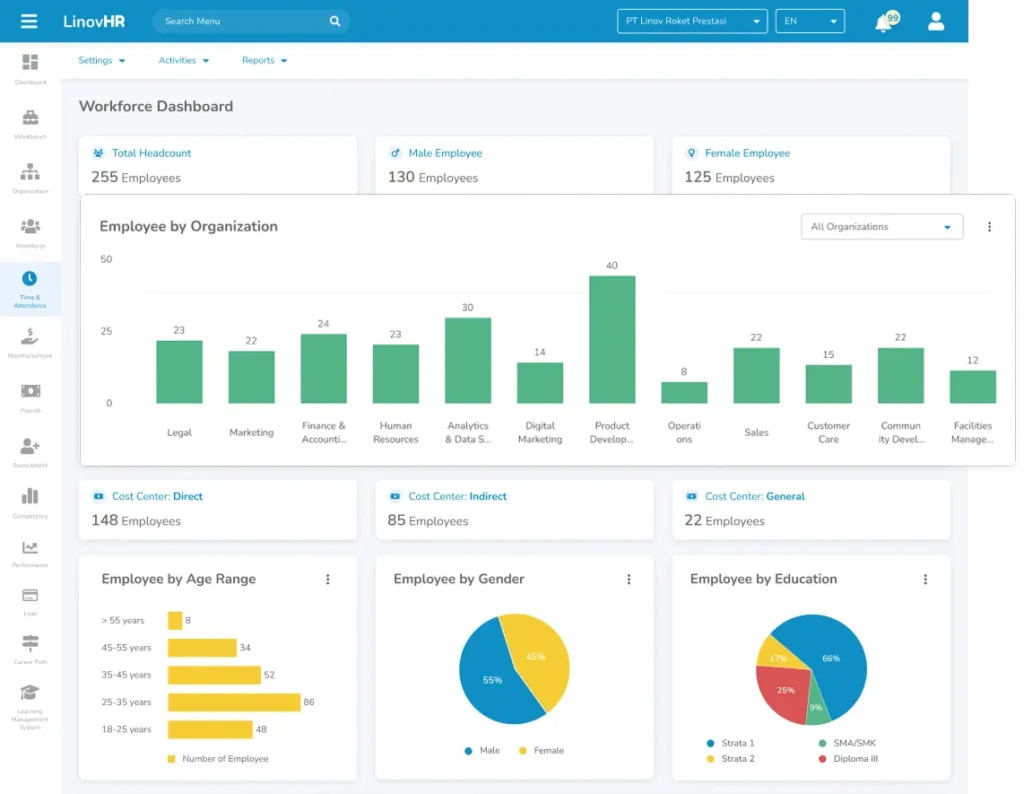
The talent management software LinovHR is widely recognized as one of the most comprehensive talent management software solutions in Indonesia, built to digitize and optimize the entire employee lifecycle.
The platform delivers fully integrated HR modules covering payroll, attendance tracking, performance evaluation, and learning management.
LinovHR’s talent management system enables HR teams to reduce manual processing, access real-time workforce insights, and foster stronger collaboration across departments. By supporting end-to-end HR automation, the platform ensures greater data accuracy and enhanced transparency.
Additionally, its employee self-service and performance management modules allow employees to monitor their own goals while helping HR teams assess performance objectively and consistently.
Key features of talent management software LinovHR:
- Organization Management: Digitizes and visualizes company structures, including divisions, positions, locations, grades, and job descriptions.
- Personnel Administration: Centralized employee database containing personal data, job history, assignments, and asset records.
- Time Management: Manages attendance, leave, overtime, shifts, timesheets, and work-hour visualization with mobile integration.
- Mobile Attendance: Smartphone-based check-in/check-out using face recognition, fingerprint, or PIN.
- Payroll: Automates salary calculations, allowances, overtime, deductions, and taxes based on attendance data.
- Reimbursement: Streamlines employee claims for expenses, benefits, BPJS, and overtime with transparent approval flows.
- Loan: Manages internal employee loan processes from application to repayment tracking.
- Employee Self-Service: Allows employees to manage personal data, submit leave, and request overtime independently.
- Recruitment: End-to-end recruitment support, from manpower planning to candidate management.
- Competency Management: Identifies skill gaps, defines competency models, and supports employee development planning.
- Performance Management: Evaluates performance using KPIs, goals, 360-degree feedback, and balanced scorecard methods.
- Career Path: Provides structured career development frameworks for transparency and motivation.
- Succession Management: Prepares internal talent for key leadership roles.
- Learning Management System: Manages employee training through e-learning and offline sessions.
| No. | Pros | Cons |
| 1. | Fully integrated HR modules | Requires onboarding for new users |
| 2. | Customizable with secure infrastructure | Broad features may feel complex initially |
| 3. | Real-time analytics and reporting | |
| 4. | Strong customer support and implementation | |
| 5. | Scalable for SMEs to enterprises | |
| 6. | Cloud and on-premise deployment | |
| 7. | Free demo available for the first 6 months |
2. Deel
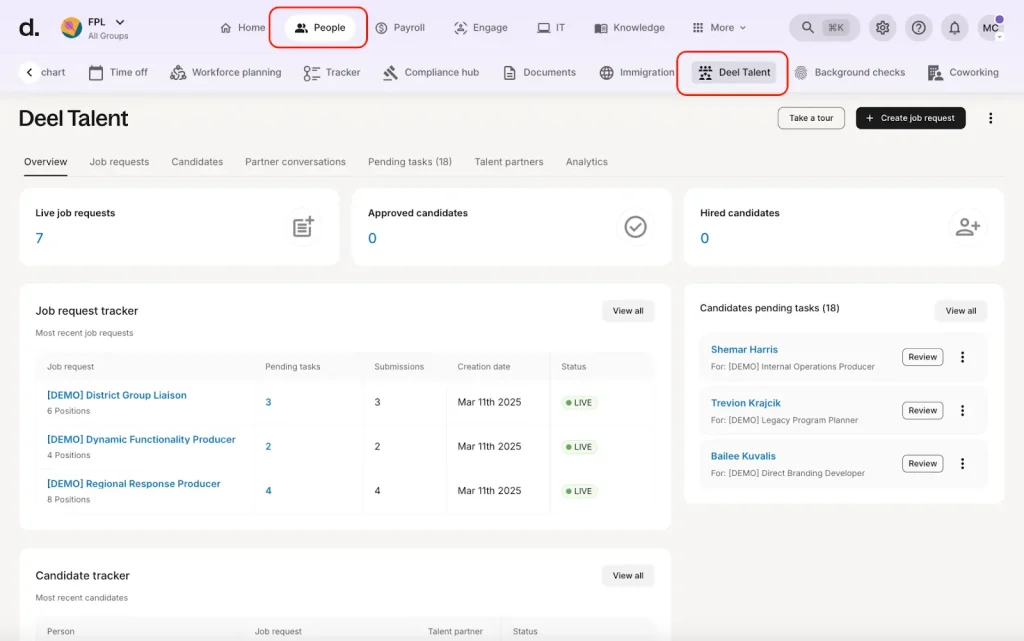
Deel is a global talent management and workforce platform that helps companies hire, onboard, and pay employees or contractors across more than 150 countries. The software is designed to simplify cross-border employment while ensuring compliance with local labor regulations.
This platform is especially beneficial for remote-first and distributed teams that require a reliable solution for managing international talent without setting up local entities.
Key features of talent management software Deel:
- Job requests
- Talent partners
- Work order management
- Employee and contractor onboarding
| No. | Pros | Cons |
| 1. | Well-suited for global and remote teams | Limited talent development capabilities |
| 2. | Strong compliance and payroll automation | Relatively expensive for early-stage startups |
| 3. | Support employment in 150+ countries | Requires additional tools for performance management |
3. Zoho People
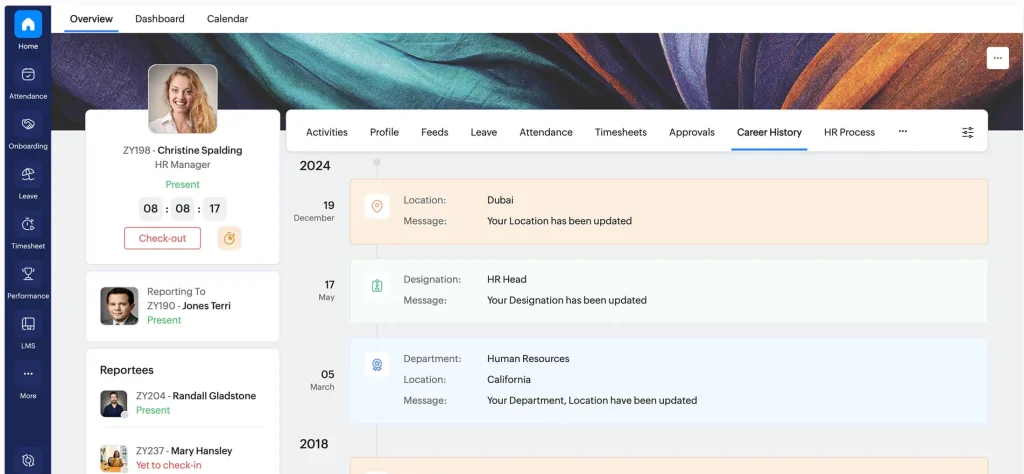
Zoho People is part of the Zoho business ecosystem and offers a cost-effective, flexible HR solution for small and medium-sized companies. It covers essential HR functions such as attendance tracking, leave management, performance evaluation, and basic learning tools.
One of its strongest advantages is its seamless integration with other Zoho applications, including Zoho Recruit and Zoho Payroll, making it an attractive option for organizations already using Zoho’s suite of products.
Key features talent management software of Zoho People:
- Attendance and time tracking
- Performance reviews and goal management
- Centralized employee database
- Workflow automation
| No. | Pros | Cons |
| 1. | Budget-friendly for SMEs | Limited advanced analytics |
| 2. | Strong integration within Zoho ecosystem | Basic customization options |
| 3. | User-friendly interface | Scalability may be limited for large companies |
4. Rippling
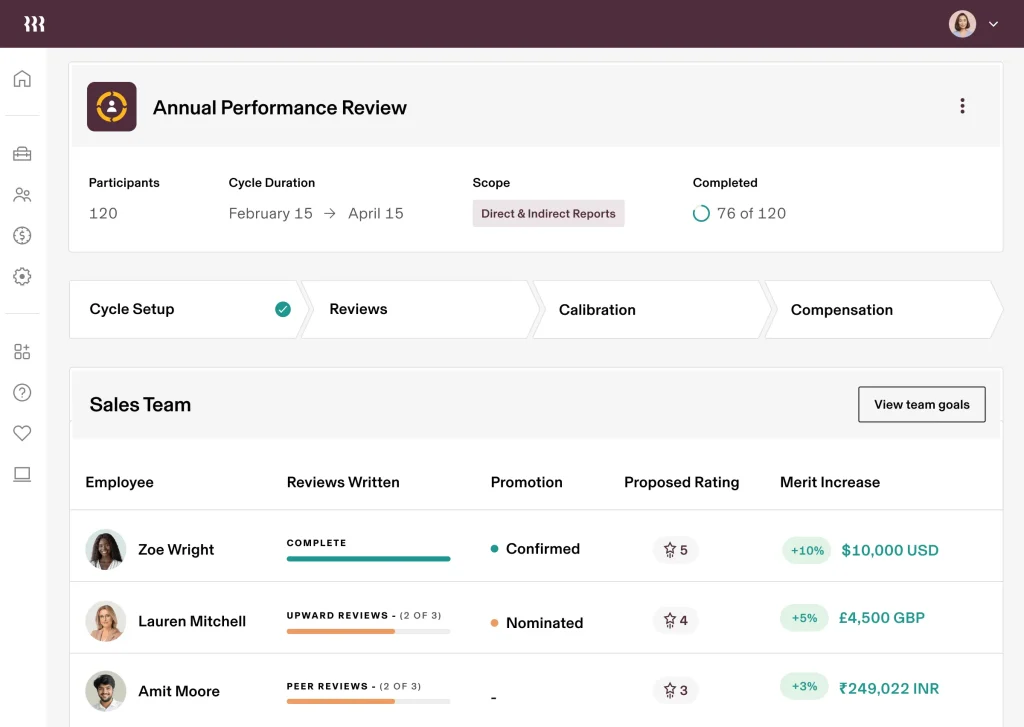
Rippling is a unified platform that combines HR, IT, and finance management into a single system. It allows companies to automate employee lifecycle processes, from recruitment and onboarding to payroll, compliance, and device provisioning.
One of Rippling’s key strengths is its ability to manage HR and IT operations simultaneously, such as automatically granting system access and setting up devices for new hires. This makes it a popular choice for fast-growing technology-driven organizations.
Key features of talent management software Rippling:
- Headcount planning
- Recruiting
- Performance management
- Employee surveys
- Learning management
| No. | Pros | Cons |
| 1. | Integrates HR, IT, and finance in one platform | Higher subscription costs |
| 2. | Strong automation and third-party integrations | Requires time to fully adopt all features |
| 3. | Secure and scalable infrastructure | Advanced tools may be excessive for small teams |
5. SAP SuccessFactors
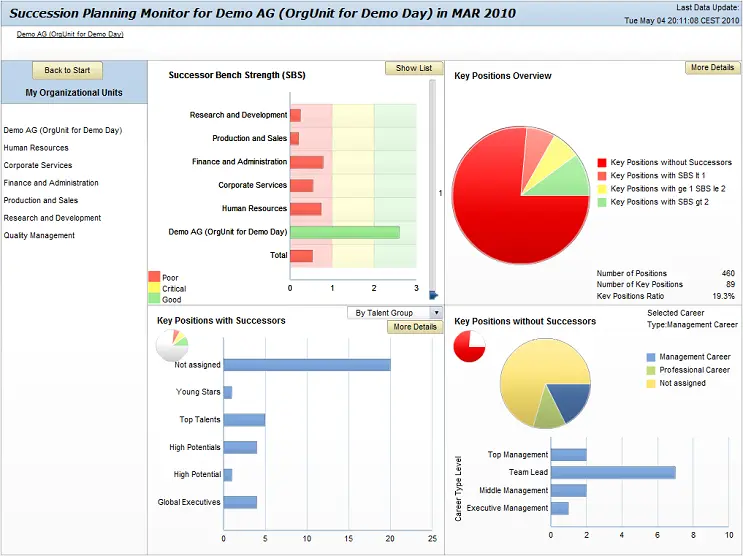
SAP SuccessFactors is a globally established cloud-based talent management solution offering comprehensive tools for employee experience, learning, performance management, and succession planning.
Its advanced analytics enable HR leaders to align workforce strategies with broader business objectives through data-driven decision-making.
Key features of talent management software SAP SuccessFactors:
- Recruiting
- Onboarding
- Career and talent development
- Learning
- Performance and goal management
- Compensation planning
| No. | Pros | Cons |
| 1. | Comprehensive HR capabilities | Complex implementation process |
| 2. | Global compliance support | High cost for SMEs |
| 3. | Strong SAP system integration | Requires technical expertise |
6. Gusto

Gusto is widely known as a payroll and benefits management platform, with additional features for onboarding and performance tracking. It is a suitable choice for startups and small businesses seeking an all-in-one HR and payroll solution.
Its core strength lies in automating payroll processing, tax filings, and benefits administration, particularly for companies operating in the United States.
Key features of talent management software Gusto:
- Performance reviews
- Performance management tools
- Learning and development support
- Payroll and compliance automation
| No. | Pros | Cons |
| 1. | Reliable payroll and tax automation | Limited talent management depth |
| 2. | Clean interface with easy navigation | Primarily U.S focused features |
| 3. | Well-suited for small businesses | Less scalable for growing enterprises |
7. BambooHR
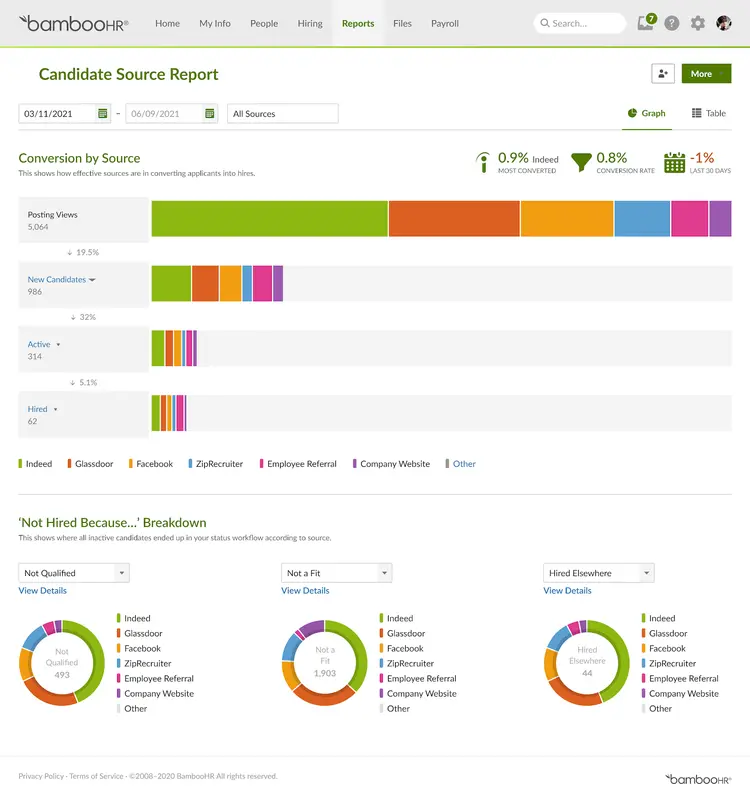
BambooHR is a well-known HR software solution designed primarily for small and medium-sized businesses. It emphasizes employee data management, onboarding, and performance tracking through a clean and intuitive interface.
While it delivers ease of use and quick setup, BambooHR offers more limited analytics and customization compared to enterprise-level HR systems.
Key features of talent management software BambooHR:
- Onboarding
- Employee experience tools
- Performance management
- Time and attendance tracking
- Payroll
| No. | Pros | Cons |
| 1. | Easy-to-use interface | Limited advanced analytics |
| 2. | Responsive customer support | Less suitable for large enterprises |
| 3. | Fast implementation | Customization options are limited |
8. HiBob
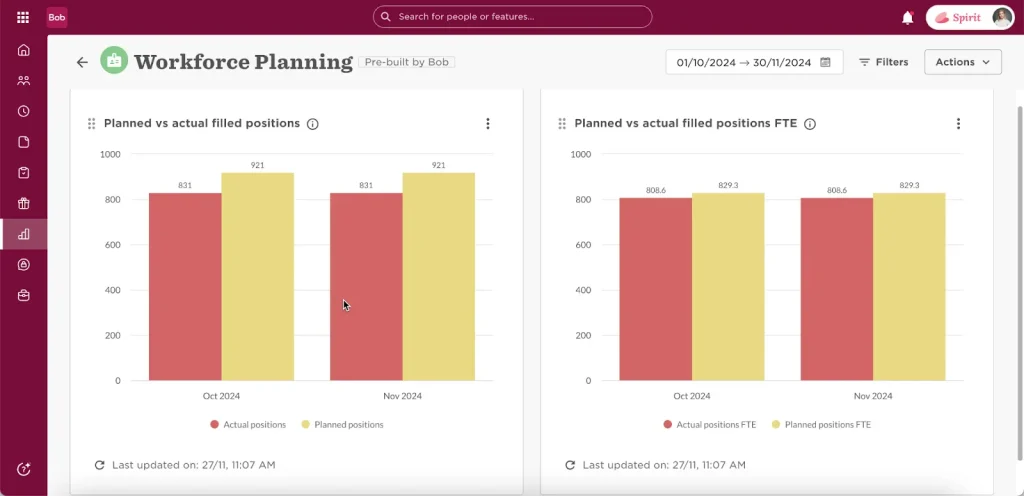
HiBob is a modern HR platform designed for fast-growing companies that prioritize employee engagement and people-centric management. The platform emphasizes transparency, performance feedback, and collaboration to strengthen workplace culture.
HiBob helps HR teams simplify administrative workflows while delivering meaningful employee experiences supported by data and analytics.
Key features of talent management software HiBob:
- Onboarding
- Time and attendance tracking
- Payroll management
- Hiring tools
- Learning management
| No. | Pros | Cons |
| 1. | Modern and intuitive user experience | Higher price for small teams |
| 2. | Strong focus on engagement and culture | May require setup support |
| 3. | Advanced analytics for HR insights | Limited offline functionality |
9. Workday
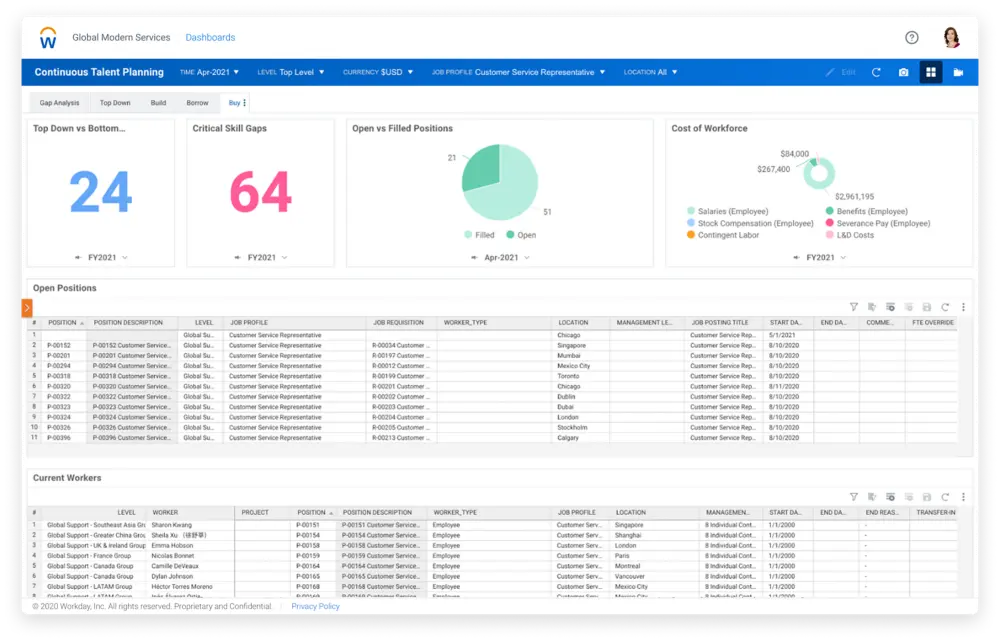
Workday is an enterprise-level talent management and HR automation platform widely used by large organizations worldwide. It delivers a robust suite of tools for human capital management, payroll, workforce planning, and employee experience.
With advanced analytics, AI-driven insights, and strong compliance features, Workday enables companies to align workforce strategy with long-term business goals at scale.
Key features of talent management software Workday:
- Learning management
- Skills journey mapping
- Employee experience tools
- Talent development
- Talent acquisition
- Onboarding
| No. | Pros | Cons |
| 1. | Highly scalable and enterprise-ready | High implementation and licensing costs |
| 2. | Advanced analytics and AI capabilities | Complex system configuration |
| 3. | Strong compliance and data security | Less suitable for small businesses |
10. Talenta by Mekari
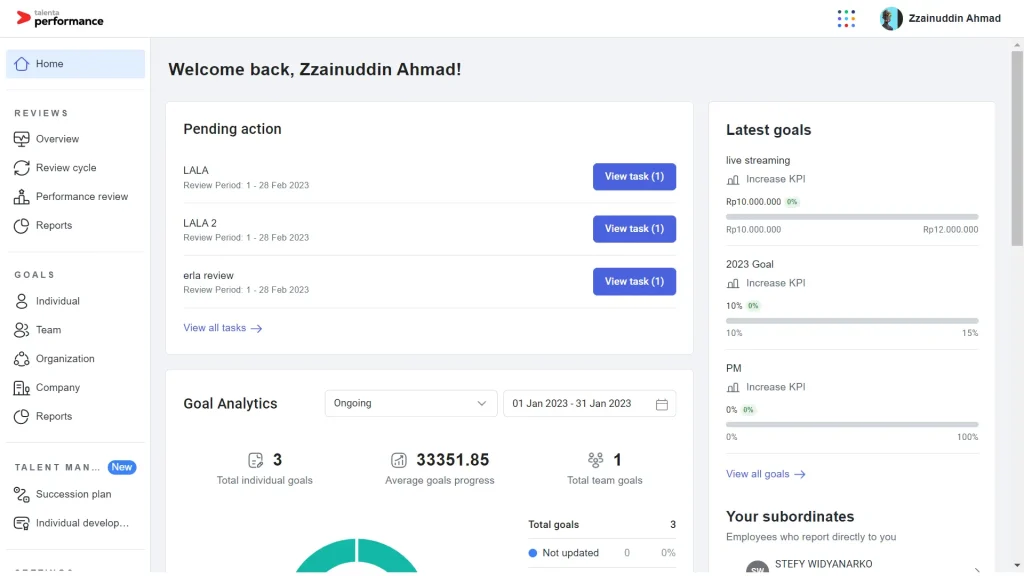
Talenta by Mekari is a talent management solution designed to help companies automate key HR processes such as payroll, attendance, and performance management. With a mobile-first approach, the platform enables HR teams and employees to manage HR activities efficiently from anywhere.
Talenta also provides workforce analytics that support HR decision-making related to productivity, manpower planning, and performance optimization.
Key features of talent management software Talenta by Mekari:
- Recruitment
- Manpower planning
- Performance management
- Talent development
- Employee benefits management
- HR helpdesk
| No. | Pros | Cons |
| 1. | Designed specifically for Indonesian businesses | Limited learning management capabilities |
| 2. | Mobile-friendly and easy to use | Less suitable for enterprises-level needs |
| 3. | Supports local tax and compliance | Reporting features can be enhanced |
11. Gadjian
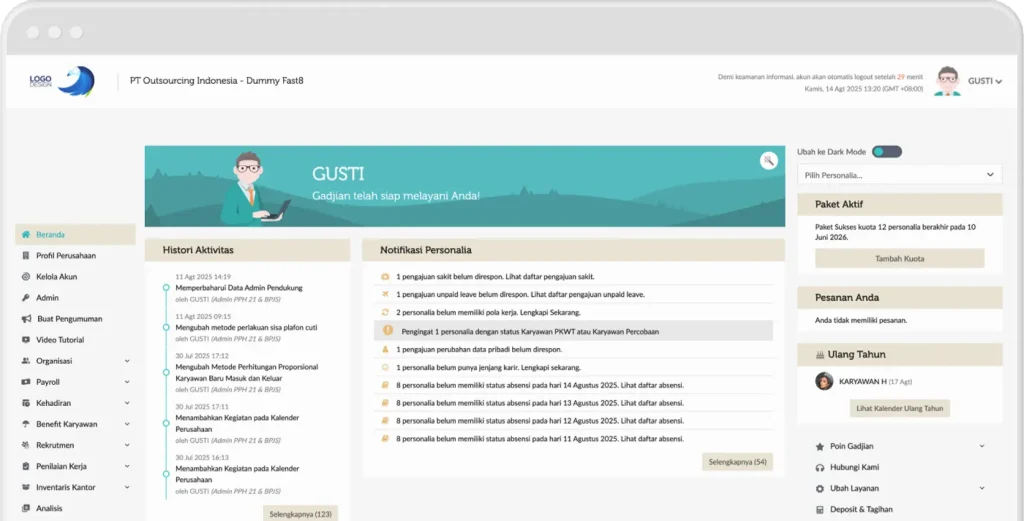
Gadjian is a cloud-based HR and payroll platform built to support Indonesian companies in managing payroll, attendance, and employee administration efficiently. It aims to simplify day-to-day HR operations through a clear dashboard and straightforward workflows.
Employees can access HR services through both web and mobile applications, making HR processes more transparent and accessible across the organization.
Key features of talent management software Gadjian:
- Employee self-service
- Asset inventory management
- QR code generator
- Asset value calculation
| No. | Pros | Cons |
| 1. | Compliant with Indonesian labor regulations | Limited performance and learning modules |
| 2. | Affordable pricing for SMEs | Basic reporting capabilities |
| 3. | Simple and intuitive interface | Not ideal for large-scale enterprises |
12. HashMicro
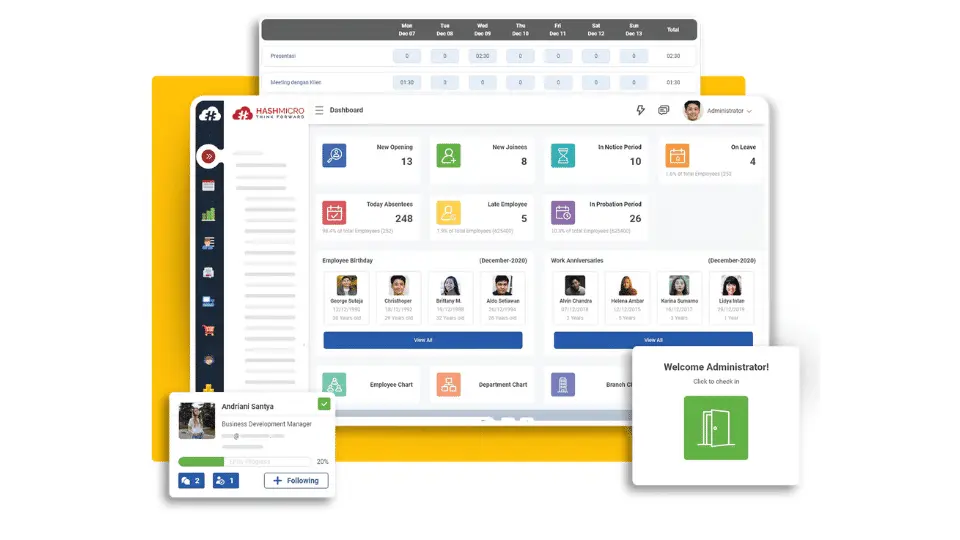
HashMicro offers an ERP-based talent management solution tailored specifically for Southeast Asian markets, making it a strong choice for companies operating in Indonesia and the surrounding region.
Unlike standalone HR tools, HashMicro’s talent management software is part of a broader ERP ecosystem that connects human resources with finance, accounting, and project management modules.
Key features of talent management software HashMicro:
- Attendance automation
- Contract management
- Multi approval
- Document management digitalization
- Timesheet management
- Automatic payslip
| No. | Pros | Cons |
| 1. | Strong localization for Southeast Asian labor regulations | System complexity may be challenging for small businesses |
| 2. | Integrated HR, finance, and ERP modules | Limited global HR support |
| 3. | High customization flexibility | User interface may feel less intuitive for new users |
Strengthen Your HR Strategy with LinovHR
The long-term success of a company is closely tied to how effectively it manages, develops, and retains its people. However, many organizations still rely on manual HR processes, disconnected data sources, and limited collaboration between teams.
LinovHR’s HRIS is designed to eliminate these obstacles by providing a fully integrated digital HR ecosystem in one unified platform.
From recruitment and onboarding to attendance tracking, performance management, and learning development, LinovHR connects every stage of the employee lifecycle.
This integration enables HR teams to automate routine tasks, maintain accurate and centralized data, and gain real-time insights to support more strategic, data-driven workforce decisions.
Don’t miss out. Try LinovHR now and transform your HR operations!
Request a free demo today and discover how LinovHR’s HRIS can simplify talent management processes, improve operational efficiency, and elevate your company’s HR strategy to the next level.


