In today’s rapidly and increasingly competitive business environment, HR is no longer confined to administrative work.
Modern HR professionals are expected to influence productivity, internal growth, and long-term business performance with evidence, not assumptions.
HR analytics software has become a critical enabler of this transformation. These platforms help HR teams unify workforce data, extract meaningful patterns, predict future risks such as turnover or talent gaps, and convert analysis into strategic actions that strengthen talent decisions.
In this article, you’ll learn the fundamentals of HR analytics technology, the essential features that define high-impact analytics platforms, and 10 of the most trusted software solutions that are shaping data-driven HR strategies in 2025.
Definition of HR Analytics Tools
HR Analytics Tools are specialized software platforms built to collect, organize, and analyze employment and workforce-related data.
They help organizations assess performance dynamics, hiring effectiveness, engagement levels, succession readiness, and retention risks using integrated data sources.
These platforms work by synchronizing multiple HR functions within one ecosystem, reducing reporting errors, eliminating fragmented data systems, and providing HR leaders with an accurate, consolidated view of workforce health. This allows companies to make strategic people-decisions rooted in verifiable analytics.
Modern HR analytics software also equips HR teams with predictive and prescriptive intelligence, transforming HR from a support function into a strategic business partner.
For companies navigating talent competition in 2025, adopting analytics technology isn’t just an advantage, it’s essential for sustainability performance, and leadership continuity.
Key Features to Look for in HR Analytics Software
HR analytics platforms vary widely in capability, technical depth, and strategic value. The best platforms combine seamless data connectivity, forward-looking workforce prediction, intuitive visualization, and enterprise-grade compliance, enabling HR leaders to move beyond historical reporting.
Top-tier HR analytics software consolidates workforce information, highlights correlations, and generates actionable recommendations that influence employee performance, talent planning, and long-term retention strategies.
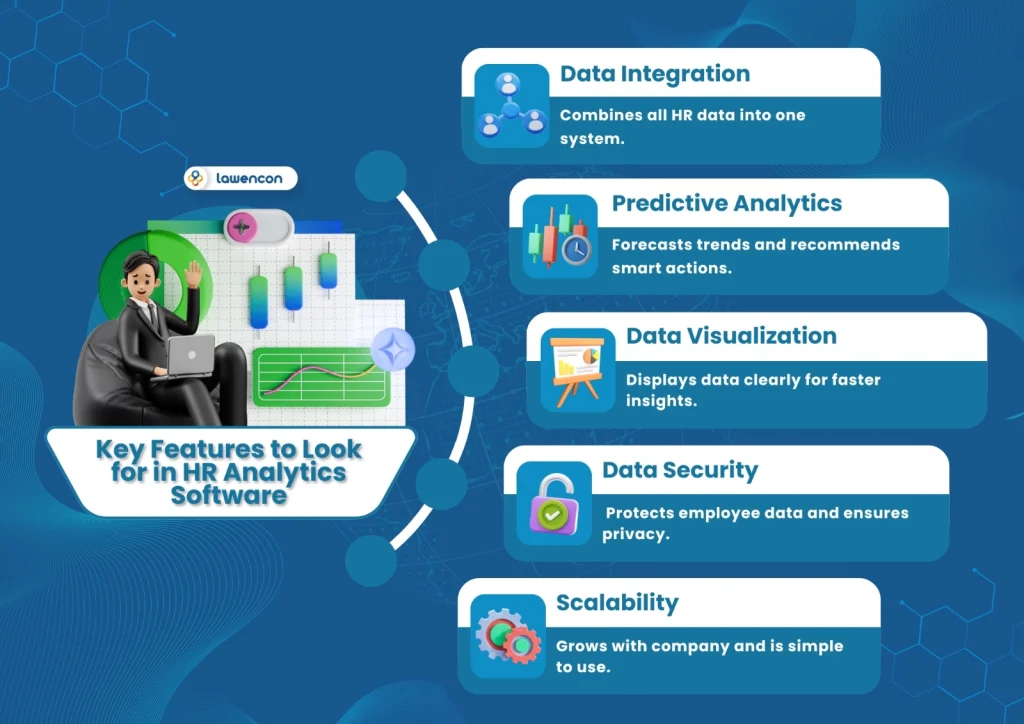
Below are the key capabilities that matter most when evaluating HR analytics technology in 2025.
1. Comprehensive Data Integration
A high-performing HR analytics platform should consolidate data from multiple HR modules, such as recruitment, attendance, payroll, performance, learning, and succession planning into a single centralized database.
When data is unified, HR professionals gain accurate reporting, clearer workforce trend-analysis, and stronger strategic alignment between HR decisions and business performance.
It also creates the foundation for predictive insights that helps companies act proactively instead of reacting to problems too late.
2. Predictive & Perspective Analytics
Unlike traditional reporting, modern HR analytics software forecasts workforce trends using machine-learning and statistical modeling.
These insights include attrition probability, hiring success, performance risks, and gaps in role-readiness.
Perspective intelligence builds on predictions by recommending corrective action whether through training, leadership development, internal mobility, or improved engagement initiatives.
By adopting these features, organizations significantly strengthen workforce planning, reduce leadership disruptions, and enhance talent-investment outcomes.
3. Dashboard & Data Visualization
Data insights are only effective when they are easy to interpret. Modern HR analytics platforms provide customizable dashboards with charts, grids, heatmaps, and performance readiness visuals that allow HR to communicate insights clearly and rapidly.
These visualization tools support faster decision-making and create better collaboration between HR and executives even without technical analytics expertise.
Clear dashboards help leaders recognize trends early, align HR priorities with business goals, and support structured workforce-development strategies.
4. Security, Scalability & User Adoption
With workforce data becoming more central to strategic operations, organizations must prioritize secure infrastructure, long-term system usability, and software that scales without compromising performance.
Modern platforms embed compliance frameworks, encrypted data protection, structured permissions, adoption-friendly UI, and the ability to support increasing data complexity as companies grow.
These features not only support operational sustainability but also ensure that HR analytics delivers measurable long-term business value.
Top 10 HR Analytics in 2025
Below are 10 of the most recognized HR analytics and workforce-intelligence platforms used by HR professionals and organizations to support data-driven talent strategy, proactive workforce planning, and organizational development in 2025.
1. LinovHR
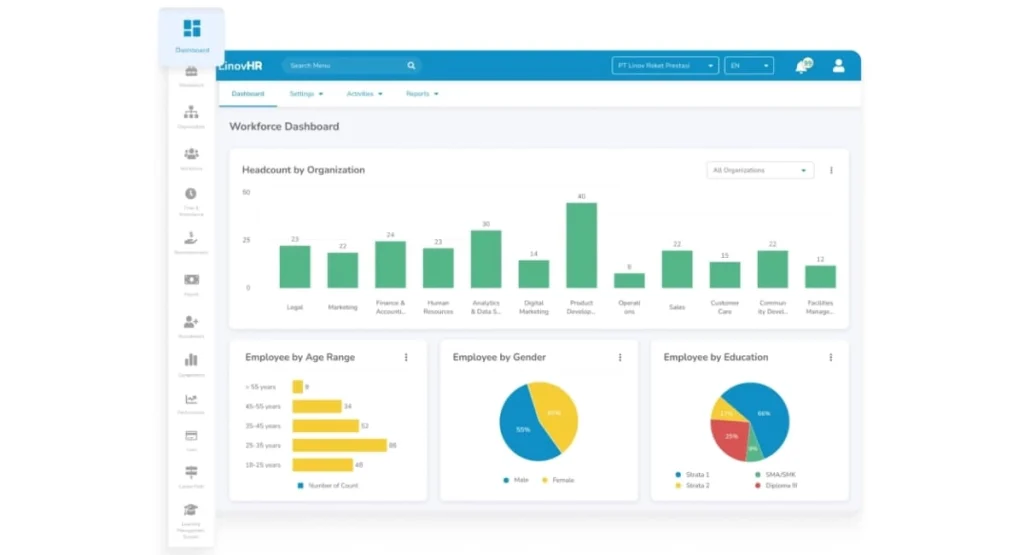
LinovHR is a cloud-based HRIS platform built to simplify and unify human resources operations including recruitment, performance evaluations, learning development, succession planning, payroll, and analytics inside one centralized ecosystem.
Its Analytics Dashboard provides a clean, customizable interface that helps HR teams track KPIs, identify workforce trends, visualize leadership-readiness, and make faster, data-driven decisions.
Every insight connects back to structured HR modules, ensuring centralized data accuracy, reduced reporting errors, and improved strategic HR alignment.
A major competitive advantage of LinovHR is its AI-assisted recruitment capability, which enables HR teams to automatically screen resumes, match candidates with job description, schedule interviews, and accelerate applicant-processing without removing the human-decision layer.
The platform also supports 360-degree and multi-level feedback, 9-Box talent mapping visuals, successor-readiness profiles, automated KPI tracking, and HR reminders all without sacrificing usability.
Unlike analytics-only tools, LinovHR links its workforce insights directly to development execution, and integrates with LMS-based training recommendations, structured readiness self-reviews, and internal talent-pooling, helping organizations build sustainable leadership continuity and stronger long-term talent-retention strategies.
This makes LinovHR a strategic fit for modern organizations especially across Indonesia and Southeast Asia that want analytics powered by localized HR compliance rather than disconnected BI reporting alone.
| Pros | Cons |
| Unified HRIS ecosystem | Market primarily centered in Indonesia |
| Local implementation & HR consulting support | Initial KPI & workflow configuration required |
| Multi-level feedback including 360 degree | Deployment needs structured early-stage planning |
| 9-Box & talent readiness visualization | |
| Automated KPI tracking + HR reminders | |
| Career & training insights via LMS | |
| Centralized talent pool | |
| Scalable analytics |
2. OneModel
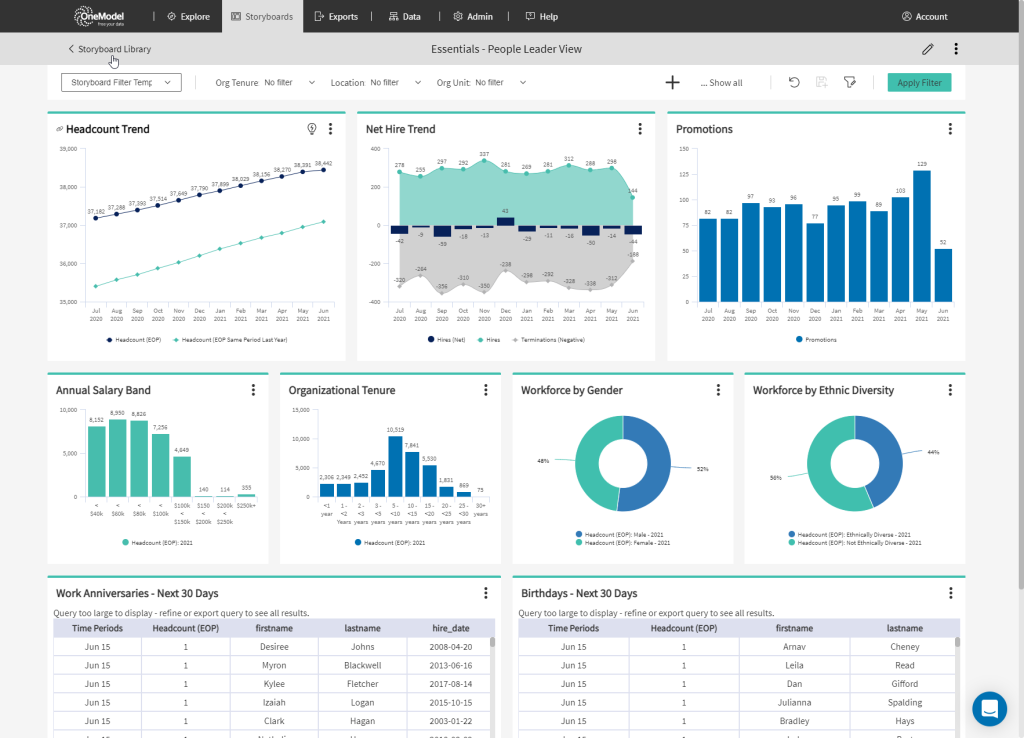
OneModel emphasizes end-to-end HR data unification across internal HR applications. It helps HR teams build SQL-grade custom dashboards, attrition forecast modeling, readiness tracking, and advanced workforce prediction inside one analytics layer.
The platform also provides transparency on how predictions are generated, promoting HR trust and structured data-governance compliance.
Designed for enterprise-level workforce planning, OneModel links HR insights directly to a broader BI dashboard if needed.
| Pros | Cons |
| Data unification | Requires experts |
| AI predictive | Premium pricing |
| Bi integration | Heavy setup |
3. Tableau
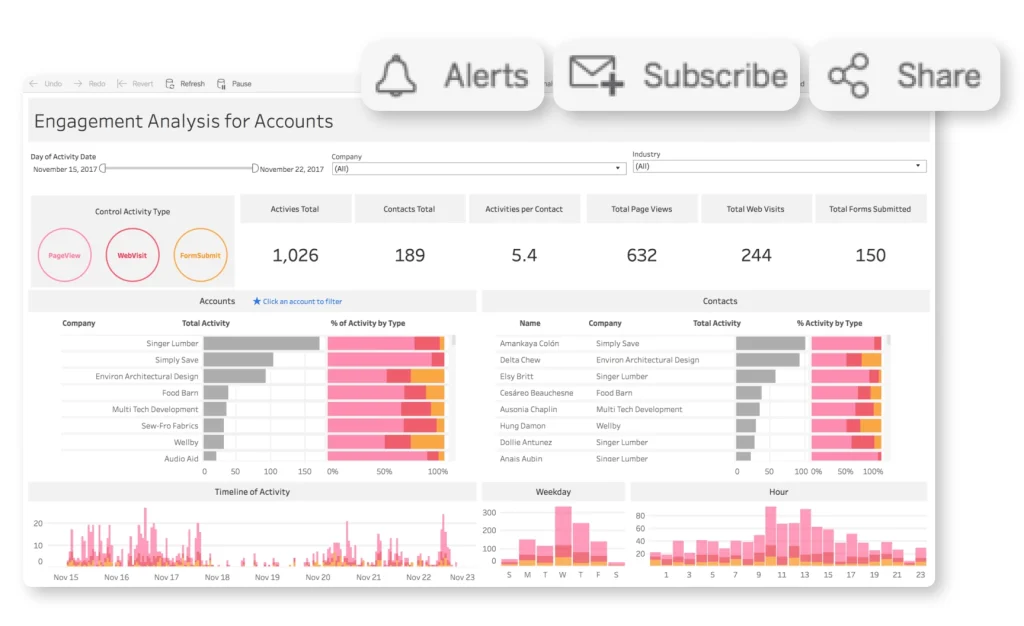
Tableau is a leading BI-grade analytics and dashboard platform that helps HR convert raw spreadsheets, HRIS exports, payroll records, and engagement sheets into interactive charts, analytics visual and KPI dashboards.
It is not HR specific software, but its open data-architecture lets HR build fully custom people-analytics interfaces without removing key metrics.
It supports companies that need maximum BI flexibility and customized visualization across departments. It requires modeling-expertise.
| Pros | Cons |
| BI flexibility | License costs |
| Spreadsheet integration | Need modeling setup |
| Custom Dashboard | Not HR-only |
4. SAP Analytics Cloud
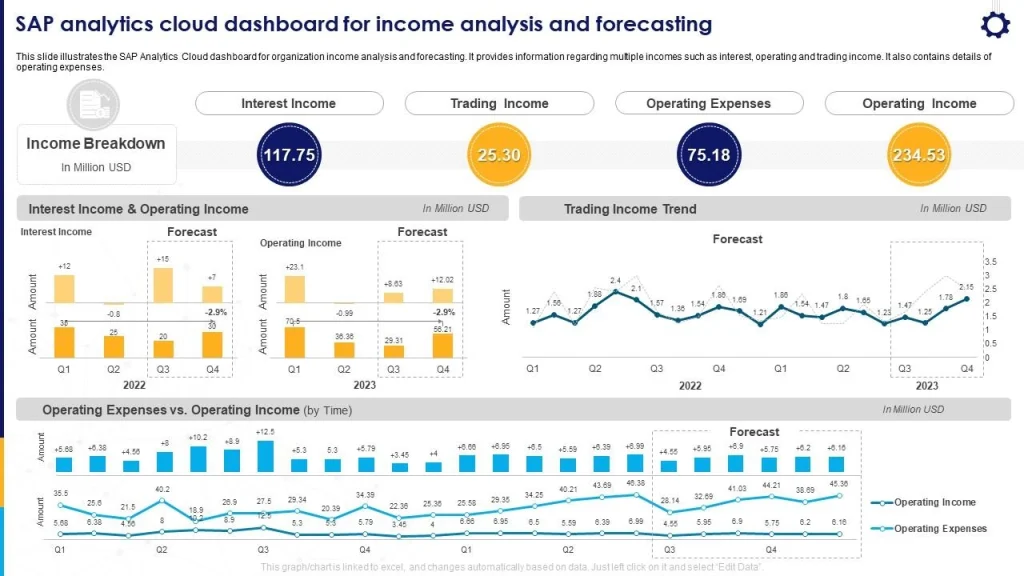
SAP Analytics Cloud (SAC) brings HR datasets into a broader enterprise BI intelligence framework with AI-based trend detection, predictive machine-learning, story dashboards, and enterprise “what-if” workforce modeling.
It supports headcount planning, engagement tracking, attrition forecasting, and multi-application BI unification for enterprise-level workforce insights.
The platform integrates deeply if organizations already use SAP ecosystems such deployment is ideal for enterprise HR-Finance alignment.
| Pros | Cons |
| Enterprise-grade analytics | High costs |
| ML predictions | IT-heavy setup |
| HR-finance BI | Needs data expertise |
5. Teramind
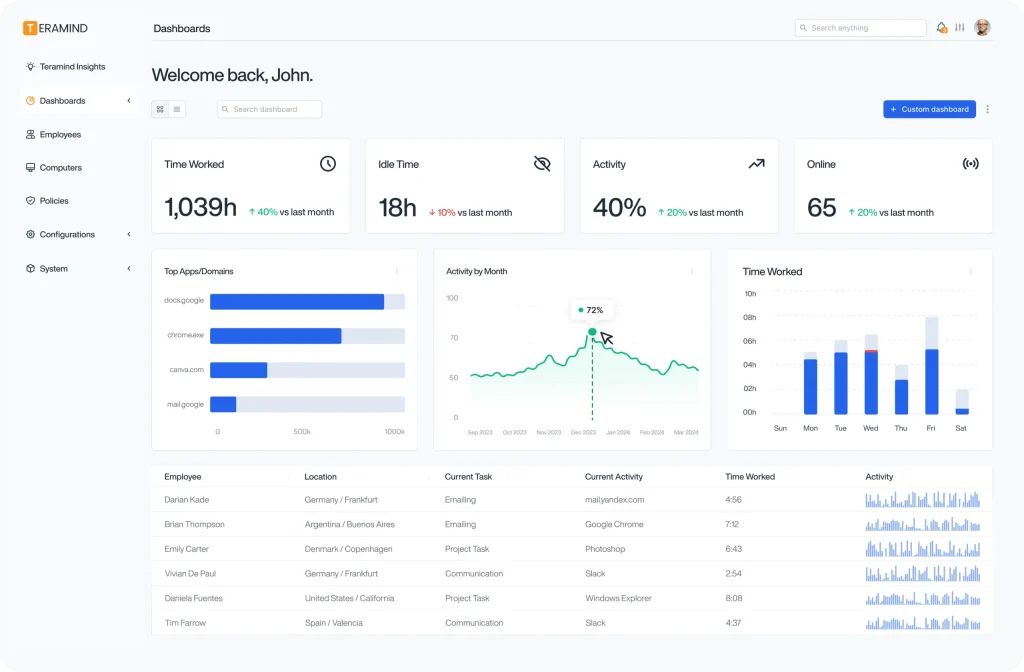
Teramind focuses on behavioral employee analytics and productivity-pattern intelligence. It helps organizations measure daily workforce behavior, monitor internal compliance, detect workforce-bottlenecks, and reveal early signs of disengagement or burnout through real-time insight alerts.
While not a traditional HRIS, its behavior-based workforce reports support people-decisions and productivity improvements. It requires transparent governance to maintain employee trust.
| Pros | Cons |
| Behavioral analytics | May feel intrusive |
| Real-time alerts | Pricing not ideal for small companies |
| Insider risk tracking | Policy governance needed |
6. ClayHR
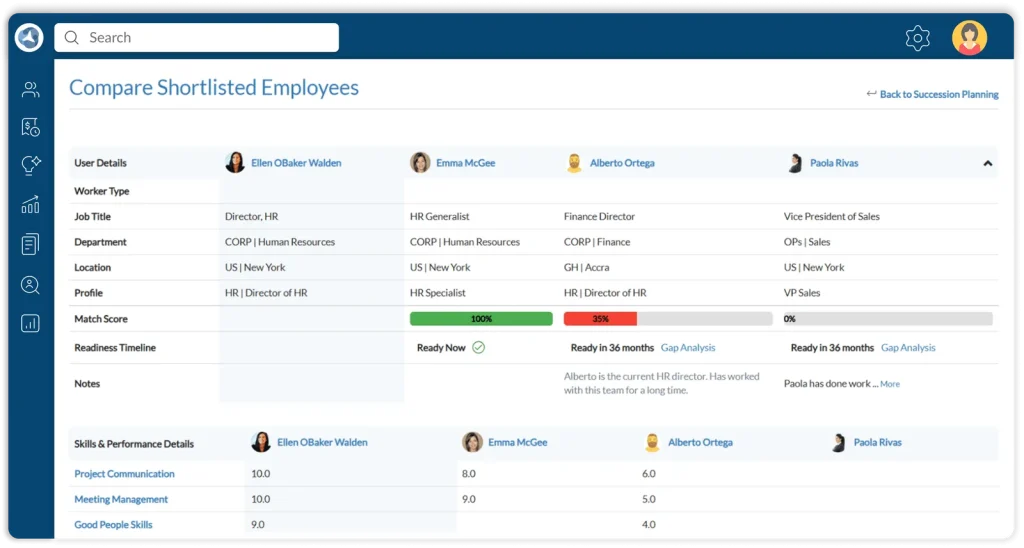
ClayHR uses AI-assisted workforce insights to detect potential role-gaps, track successor-readiness, recognize top performers, and highlight predictive HR risks.
The platform includes AskHR automation and built-in self-review assessments to support talent-planning participation.
ClayHR also provides forecasting on hiring-effectiveness, performance margins, and long-term workforce planning. It is ideal for companies exploring conversational-AI enabled HR intelligence.
| Pros | Cons |
| AI AskHR support | Premium licensing costs |
| Self assessments | Need early setup |
| Workforce forecasting | Heavy for small teams |
7. Empxtrack
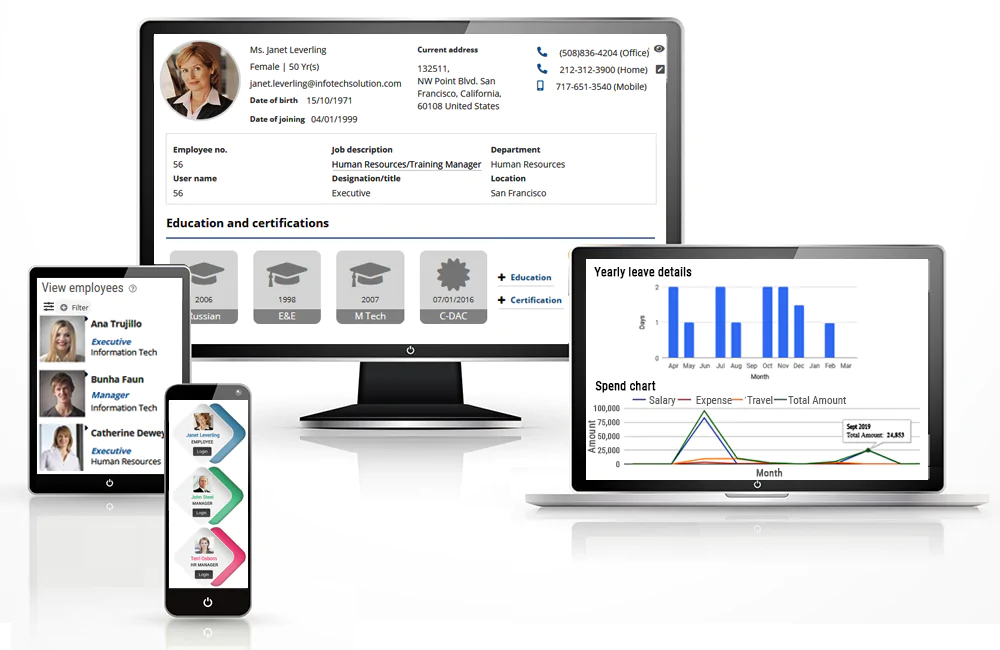
Empxtrack is a cloud-based HR analytics and workforce-tracking system that helps companies manage promotion-readiness, retention risks, performance insights, and succession workflows with customizable matrices.
Its system provides real-time successor tracking, employee analytics, and collaboration-exports, helping organizations reduce dependency on external hiring.
The platform also supports performance trend-analysis, workforce-conversion record and unified HR integration for growing organizations. It serves flexibility-focused workforce planning.
| Pros | Cons |
| Real-time analytics | Needs technical setup |
| Custom workflow | Cost for premium features |
| Internal readiness | Not beginner-friendly |
8. ChartHop
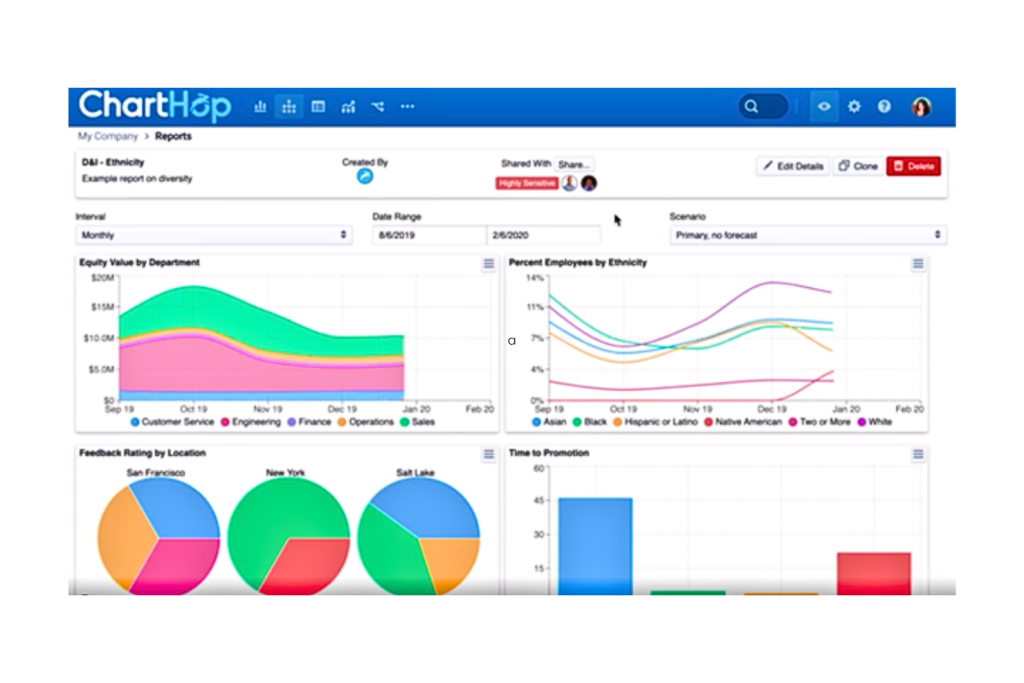
ChartHop takes a visual-structure-first approach by embedding people-insights directly into interactive organizational charts.
It integrated HR data into workforce-hierarchies, compensations, org-movements, and headcount planning to help HR teams identify structural gaps, plan internal mobility, and visualize role-readiness clearly.
ChartHop also provides hiring-budgeting, DEI sheets, skill-data tracking, and live organizational restructuring analysis.
It supports companies that want analytics shown in hierarchy-context for clearer workforce design.
| Pros | Cons |
| Visual org-based analytics | Initially overwhelming |
| Workforce movement insights | Limited advanced analytics |
| DEI tracking | Full features on premium plan |
9. Crunchr
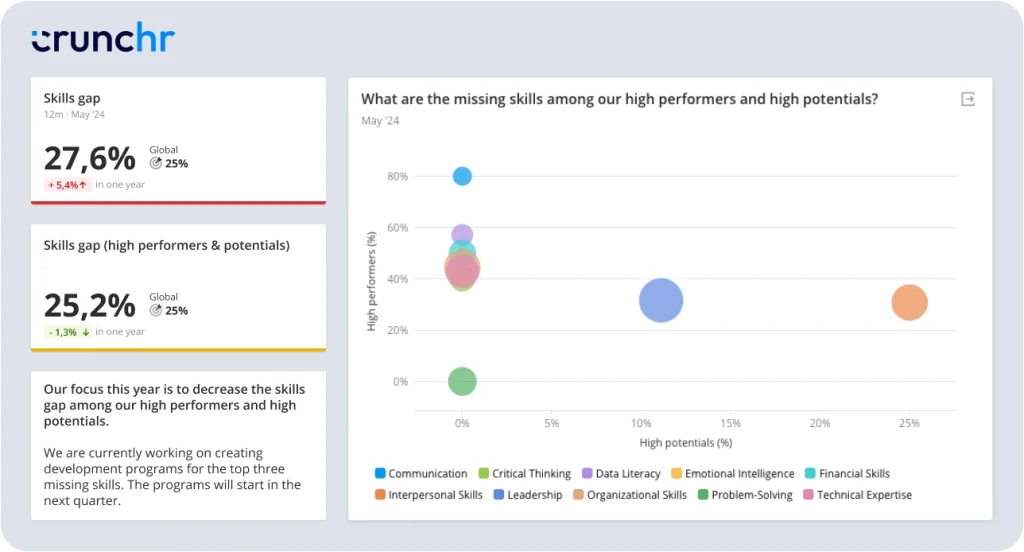
Crunchr is an HR analytics dashboard platform that prioritizes simplicity, data-transparency, and self-service reporting for HR teams.
It helps HR unify data from different internal HR applications such as recruitment, payroll, and performance then convert them into instant and customizable visual dashboards that reveal trends in attrition, DEI records, engagement outcomes, and performance ratings.
With collaboration-friendly exports and fast report-generation, Crunchr enables HR leaders to share insights easily with stakeholders without technical barriers. It is ideal for companies seeking clear HR performance-visibility, not heavy IT intervention.
| Pros | Cons |
| Self-service dashboards | Premium pricing |
| Fast HR visualization | Limited predictive AI |
| Accurate reports | Needs accurate input data |
10. Visier
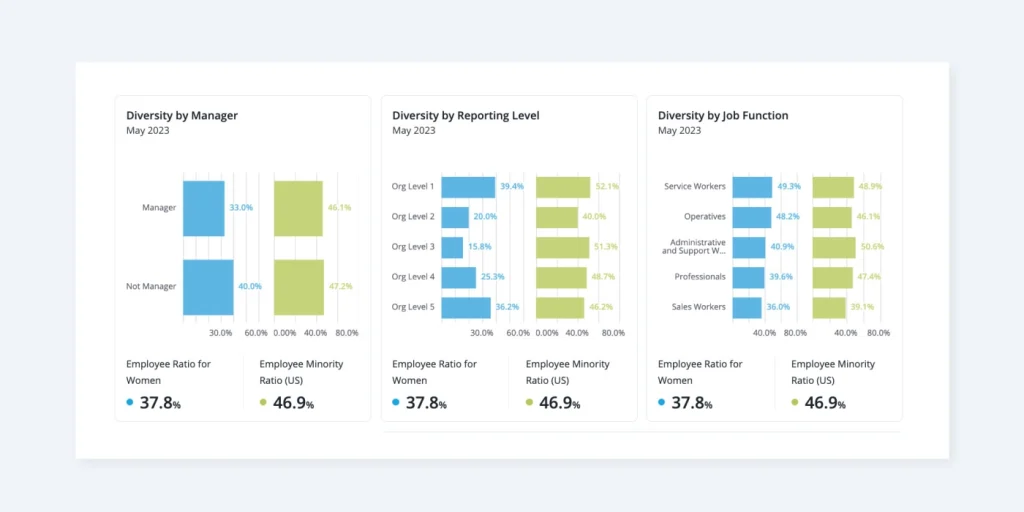
Visier is a global-grade workforce analytics and people-intelligence platform that allows organizations to connect HR and business data from multiple internal applications into one system of record.
Equipped with an AI analytics-assistant called Vee, the platform translates complex datasets into practical HR insights, helping leaders and executives analyze attrition, engagement, program effectiveness, workforce behavior, and hiring performance.
Visier provides pre-built templates including turnover-analysis, diversity-tracking, headcount-planning, and workforce-risk prediction, offering strong enterprise-scalability and data-governance infrastructure.
It serves large organizations that require deeper statistical modeling and strategic BI-grade analytics.
| Pros | Cons |
| Strong enterprise data-integration | High price point |
| Predictive AI workforce insights | Needs analytics expertise |
| Ready-made dashboards | Complex initial setup |
Empower Data-Driven HR Decisions with LinovHR HR Analytics
HR teams must move beyond manual reporting and intuition-led talent decisions. The companies leading workforce planning success in 2025 are those backed by structured analytics, predictive intelligence, and execution-linked development.
LinovHR HR Analytics delivers real-time, localized compliance-based insights through its analytics dashboard, helping companies unify recruitment, succession, performance, and learning data into strategic workforce decisions.
It equips HR teams to identify potential gaps early, automate talent-reviews, and invest in development actions that build long-term leadership sustainability.
Make smarter HR decisions with LinovHR Analytics. Request a free demo today!