In today’s fast moving hiring landscape, companies need faster, smarter, and more efficient ways to find the right talent.
That’s why many organizations are turning to recruitment automation software, tools designed to streamline repetitive tasks, reduce manual errors, and help recruiters focus on what matters most: selecting the best candidates.
In this guide, you’ll learn how recruitment automation works, the key features to look for, and the best software options to consider in 2025.
Understanding Recruitment Automation Software
Recruitment automation software is a digital solution designed to help HR teams automate and optimize key steps in the hiring process.
Powered by AI and machine learning, it streamlines repetitive tasks such as posting job listings, screening resumes, scheduling interviews, and communicating with candidates.
By reducing manual workloads, recruitment automation tools enable recruiters to focus on strategic activities, like engaging top talent and improving the overall candidate experience.
The software also provides data driven insights that support faster, smarter, and more accurate hiring decisions.
Key Features of Recruitment Automation Software
Modern recruitment automation software is built to streamline complex hiring workflows by automating repetitive, time consuming tasks, without replacing the role of recruiters.
Below are the core features that define today’s most effective automation tools:
1. Automated Job Posting
Distribute job openings to multiple job boards, career sites, and social media platforms instantly, ensuring wider reach with minimal effort.
2. Resume Screening & Parsing
AI and NLP technologies scan, analyze, and rank resumes based on skills, experience, and relevance, allowing recruiters to focus only on top matched candidates.
3. Automated Candidate Communication
Automatically send application confirmations, interview updates, reminders, and rejection messages to maintain timely, consistent communication.
4. AI Chatbots for Early Screening
Chatbots engage candidates 24/7 by answering common questions, collecting pre-screening information, and guiding applicants throughout the process.
5. Smart Interview Scheduling
Sync with recruiter calendars and let candidates self select interview times, eliminating back-and-forth coordination and saving valuable time.
6. Post Interview Automation
Automate follow-up steps such as collecting feedback, conducting reference checks, and sending digital offer letters to accelerate final hiring decisions.
Why Recruitment Automation Software Matters
Implementing recruitment automation software offers significant advantages that help organizations hire faster, smarter, and with greater efficiency.
Here are the key reasons why recruitment automation tools are essential in today’s hiring landscape:
1. Faster Time-to-Hire
Automation speeds up the entire recruitment cycle by removing manual tasks, allowing companies to fill open roles more quickly.
2. Lower Recruitment Costs
Reducing manual work and streamlining workflows leads to better operational efficiency and improved return on investment.
3. Higher-Quality Candidates
AI powered screening evaluates skills, experience, and relevance, ensuring the most qualified candidates move forward in the hiring process.
4. Better Candidate Experience
Automated communication keeps applicants informed with timely updates, making the hiring journey smoother and more engaging.
5. Scalable Hiring for Growing Teams
Recruitment automation software can easily handle large applicant volumes, supporting business growth without needing additional HR staff.
6. Data-Driven Decision-Making
Built in analytics give HR teams valuable insights into recruitment performance, enabling continuous improvement and more informed hiring decisions.
7. Fewer Human Errors
Automated workflows minimize data entry mistakes and compliance risks, ensuring greater accuracy and consistency.
Tips for Selecting the Best Recruitment Automation Software
Choosing the best recruitment automation software starts with understanding your organization’s hiring goals, challenges, and workflows. Here are key tips to help you make the best choice:
1. Identify the Problems You Want to Solve
Clarify your priorities, whether it’s reducing time-to-hire, improving sourcing, or automating candidate communication. This helps determine which features your software must have.
2. Consider Who Will Use the Platform
Evaluate how recruiters, hiring managers, and HR leaders will interact with the system. Choose a tool that suits their daily workflow and is easy for all users to adopt.
3. Check Integration Requirements
Select recruitment automation software that integrates smoothly with your existing tools, such as your ATS, HRIS, CRM, or assessment platforms. Good integration prevents data silos and improves efficiency.
4. Define Your Success Metrics
Set clear expectations, like faster hiring cycles, improved candidate quality, or better analytics, so you can measure whether the software delivers real results.
5. Ensure It Fits Your Current Workflow
The best recruitment automation software should enhance your existing process, not force major operational changes. Look for a solution that adapts to how your team already works.
15 Best Recruitment Automation Software for 2025
With so many tools on the market, finding the right recruitment automation software can feel overwhelming.
To help you make a confident and informed choice, here are the 15 best platforms for 2025, complete with features, pros, and cons:
1. LinovHR
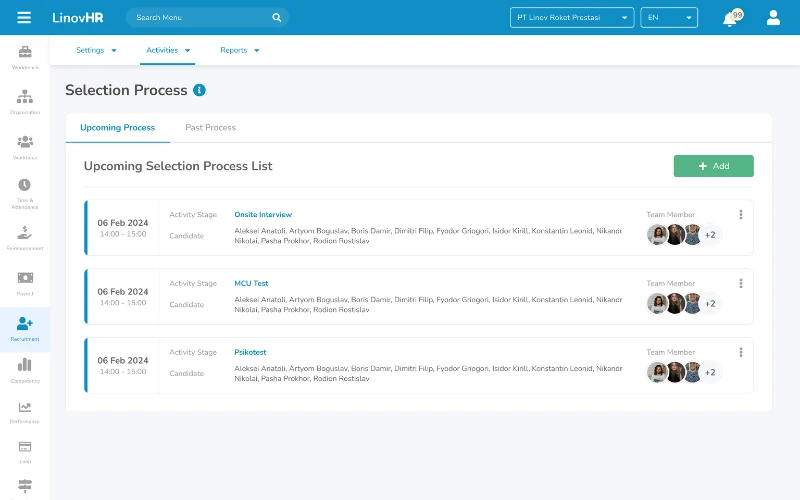
LinovHR is a complete HRIS platform built to help organizations digitize and automate end to end HR operations, including a powerful AI driven recruitment automation module.
Its Recruitment Module streamlines hiring workflows, improves accuracy in candidate evaluation, and enhances the overall candidate experience.
One of its standout innovations is Interview AI, a virtual interviewer that automatically generates job based questions, assesses candidate responses in real time, and produces objective scoring across soft skills, technical abilities, and cultural fit.
Beyond interviewing, LinovHR centralizes job postings, candidate screening, communication, and onboarding into a fully connected, data driven recruitment ecosystem.
With customizable dashboards, advanced analytics, and seamless integrations, the system delivers faster, more transparent, and more measurable hiring outcomes, perfect for organizations that want smarter and scalable recruitment automation.
Key Features
- Interview AI: Conducts automated interviews, evaluates responses, and generates objective scoring reports.
- Recruitment Dashboard: Real-time visualization of hiring progress and performance metrics.
- Applicant Tracking System (ATS): Centralized applications, resume parsing, interview notes, and hiring decisions.
- Career Website: Branded job listing portal connected directly to the recruitment database.
- Stage Management: Customizable recruitment stages with automated email notifications.
- Candidate Database: Centralized talent pool with resumes, profiles, and compatibility ratings.
- Library Module: Stores job profiles, competencies, and recruitment templates.
- Comprehensive Reporting: Export detailed reports in PDF or Excel for deeper analysis.
Pros & Cons
| Pros | Cons |
| • AI powered interview automation for consistent, unbiased assessments • Faster hiring through automated screening, scheduling, and evaluation • Excellent for large scale or mass recruitment needs • Real time dashboards for better decision making • Branded career website for improved candidate experience • Seamless data flow from recruitment to onboarding | • Primarily focused on the Indonesian market • Advanced features may require initial training for HR teams |
2. Jobvite
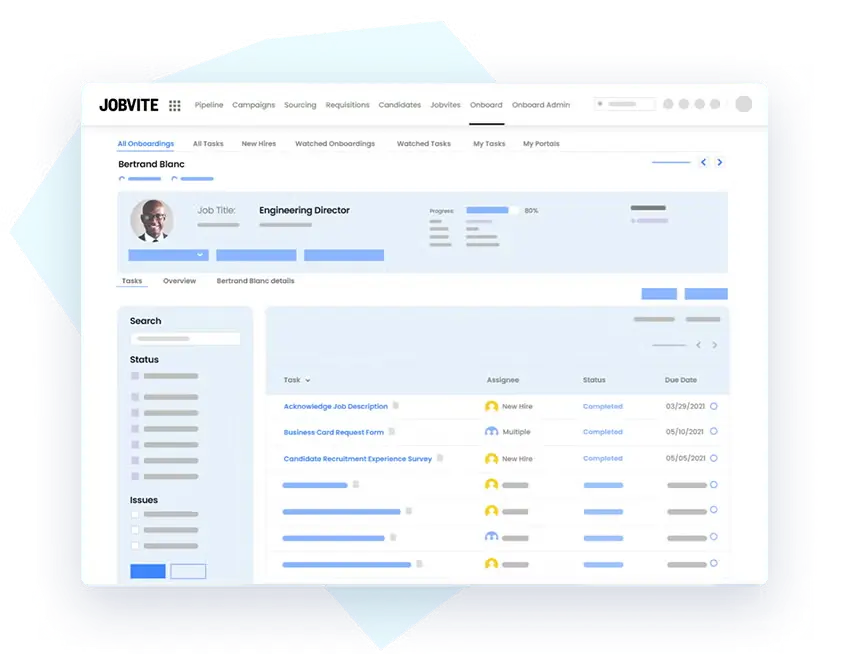
Jobvite is an AI driven recruitment automation software that unifies applicant tracking, recruitment marketing, CRM, and onboarding in one integrated platform.
Designed for mid sized to large enterprises, it helps recruiters source, engage, and hire top talent more efficiently.
Key Features
- AI Interview Companion: Standardizes interviews and reduces bias
- Recruitment Marketing Tools: Build targeted campaigns and branded job postings
- Onboarding Automation: Simplifies new-hire processes for faster productivity
Pros & Cons
| Pros | Cons |
| • AI powered automation enhances sourcing, screening, and interviewing accuracy • Unified system combining ATS, CRM, and onboarding tools • Advanced analytics and dashboards for data driven hiring | • Pricing lacks transparency and may be costly for small teams • Broad feature set may require training for new users • Best suited for larger organizations |
3. BambooHR
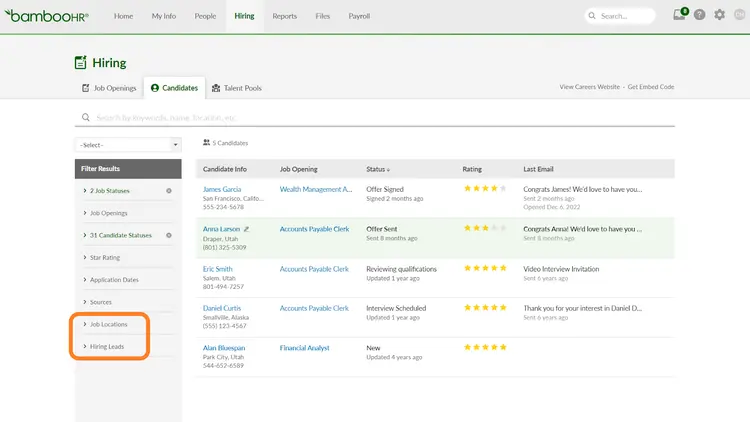
BambooHR is an intuitive recruitment automation software that combines applicant tracking, AI driven candidate screening, and onboarding automation within one seamless HR platform.
Built for small and mid sized businesses, it helps HR teams save time through intelligent automation and centralized workflows.
Key Features
- Applicant Tracking System (ATS): Distributes job postings and centralizes candidate pipelines
- Recruitment Workflow Automation: Automates scheduling, communication, and offer letter creation
- Onboarding Automation: Digital checklists and document workflows for smoother new-hire setup
Pros & Cons
| Pros | Cons |
| • AI powered resume screening and matching significantly reduce manual effort • User friendly interface within a complete HR management ecosystem • Integrates with 150+ third-party tools for flexible workflows | • Limited advanced customization for enterprise needs • Reporting is less robust than specialized analytics platforms • Custom based pricing may complicate budgeting |
4. JazzHR
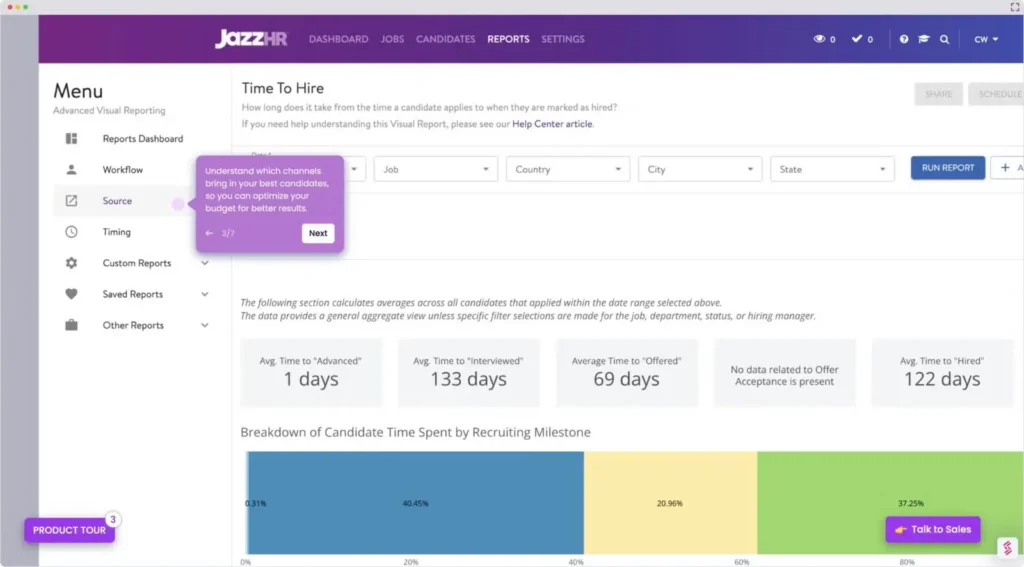
JazzHR is a user friendly recruitment automation software built to help small and mid sized companies streamline their hiring processes.
It offers an intuitive interface, customizable workflows, and AI powered candidate matching that makes hiring faster, more organized, and more accurate.
Key Features
- Applicant Tracking System (ATS): Centralizes job postings, resumes, and hiring stages
- Workflow Automation: Automates communication, tasks, and candidate status updates
- Syndicated Job Posting: Automatically publishes job openings across multiple job boards
Pros & Cons
| Pros | Cons |
| • Budget friendly pricing ideal for smaller companies • Simple, intuitive dashboard with customizable workflows • AI driven candidate matching improves screening accuracy | • Limited integrations with more advanced HR systems • Reporting and analytics are basic for enterprise demands • Customer support response times may vary |
5. Manatal
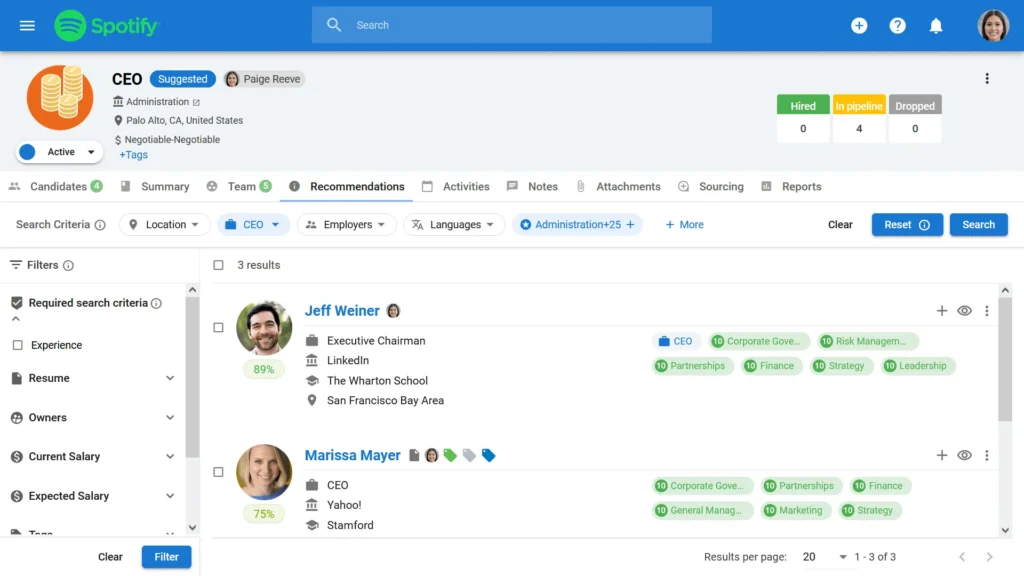
Manatal is a cloud based recruitment automation software that combines ATS and CRM capabilities to simplify hiring for small and mid sized businesses.
Powered by AI, it automates resume screening, improves sourcing through job boards and social media, and supports seamless team collaboration.
Key Features
- AI-Driven Resume Screening & Scoring: Ranks and filters candidates automatically
- Social Media Enrichment: Pulls data from platforms like LinkedIn and GitHub
- Job Board Integrations: Enables one-click posting to multiple job boards
Pros & Cons
| Pros | Cons |
| • Simple, user friendly interface ideal for growing teams • Affordable solution with solid automation capabilities • AI tools accelerate candidate evaluation and shortlisting | • Limited customization compared to enterprise platforms • Reporting and analytics lack depth for complex operations • Some role specific permissions and features are minimal |
6. Zoho Recruit
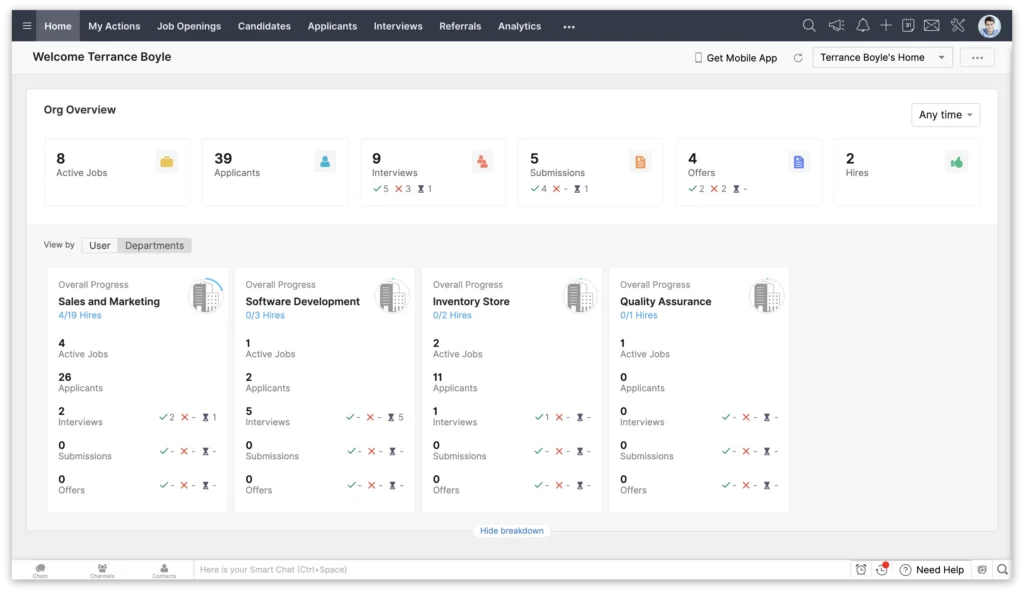
Zoho Recruit is an all in one recruitment automation software that combines powerful applicant tracking and candidate relationship management (CRM) into a single platform.
It streamlines the entire hiring process, from sourcing and screening to communication and onboarding, through intelligent automation and AI powered scoring
Key Features
- Candidate Sourcing & Management: Multichannel sourcing, resume parsing, and customizable pipeline tracking
- AI Powered Screening: Automated resume screening and scoring to surface best fit candidates
- Workflow Automation: Automates scheduling, emails, notifications, and status updates
Pros & Cons
| Pros | Cons |
| • Comprehensive automation features minimize manual work • Combines ATS and CRM in one scalable solution • User friendly interface with strong customization | • Some integrations require additional configuration • Advanced reporting offers limited flexibility • Initial setup may feel complex for smaller teams |
7. Lever
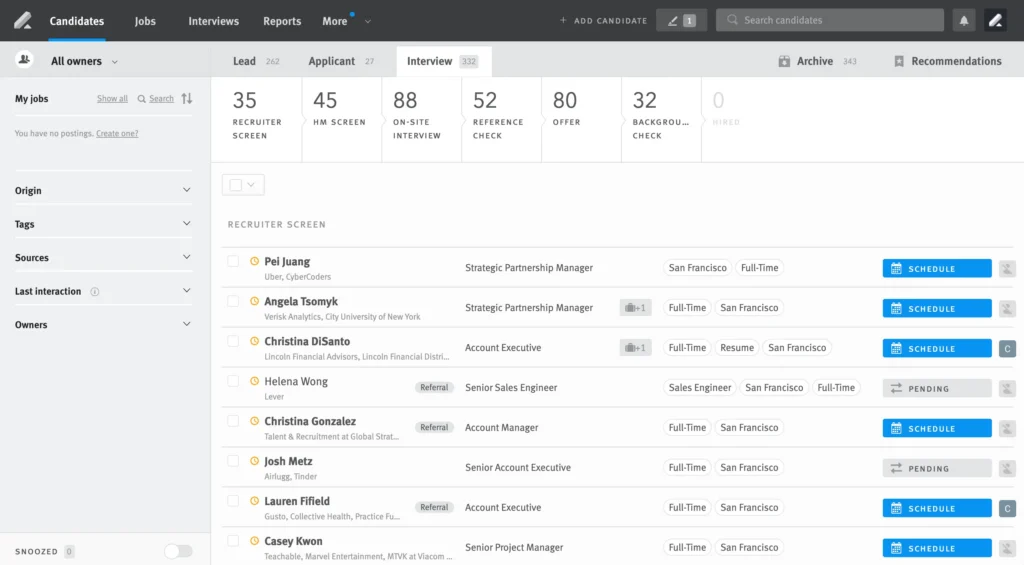
Lever is a robust recruitment automation software that unifies ATS and CRM capabilities into a single platform.
Designed for mid sized organizations, it helps teams attract, engage, and hire top talent through automation, data driven insights, and collaborative hiring tools.
Key Features
- Automation Hub: Automates candidate tagging, archiving, and communication workflows
- DEI Reporting: Offers demographic insights to support inclusive hiring efforts
- Nurture Campaigns: Enables personalized engagement through targeted messaging
Pros & Cons
| Pros | Cons |
| • Combines ATS and CRM in one integrated solution • Strong analytics and DEI reporting for fair, data driven hiring • Powerful automation tools ideal for high volume recruitment | • May feel complex for small businesses • Requires onboarding and training due to extensive capabilities • Premium pricing may challenge smaller HR budgets |
8. JobAdder
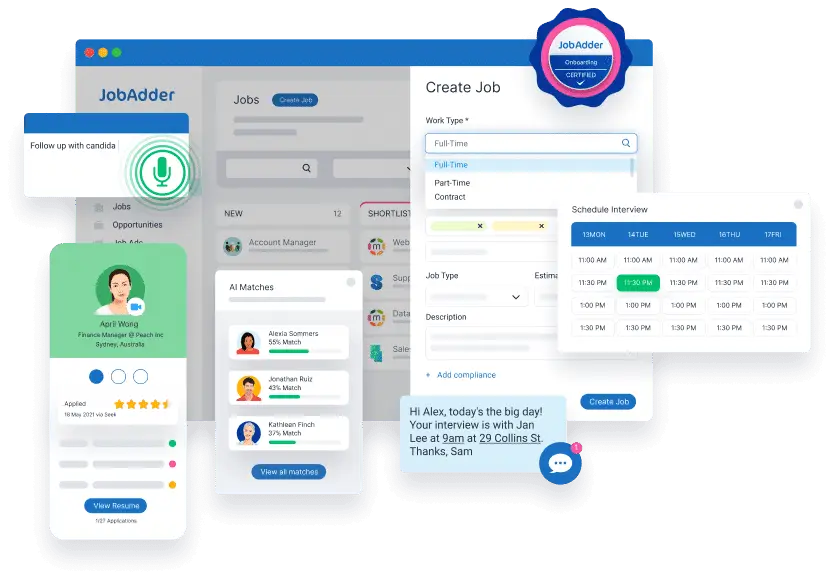
JobAdder is a versatile recruitment automation software built to simplify hiring for recruitment agencies, staffing firms, and internal HR teams.
It combines ATS, CRM, and recruitment marketing tools into one unified platform, enabling smoother collaboration and more efficient hiring.
Key Features
- Applicant Tracking System (ATS): Resume parsing, screening, scorecards, and hiring manager portals
- Recruitment CRM: Centralized communication, contact management, and relationship tracking
- Job Posting Automation: Publishes job ads to multiple job boards, including LinkedIn
Pros & Cons
| Pros | Cons |
| • Streamlined recruitment with automation and strong integration options • User friendly interface with customizable workflows • Excellent mobile accessibility for on the go productivity | • Custom pricing may be costly for smaller teams • Advanced features require training to master • Reporting depth may be limited for complex analytics |
9. Boon
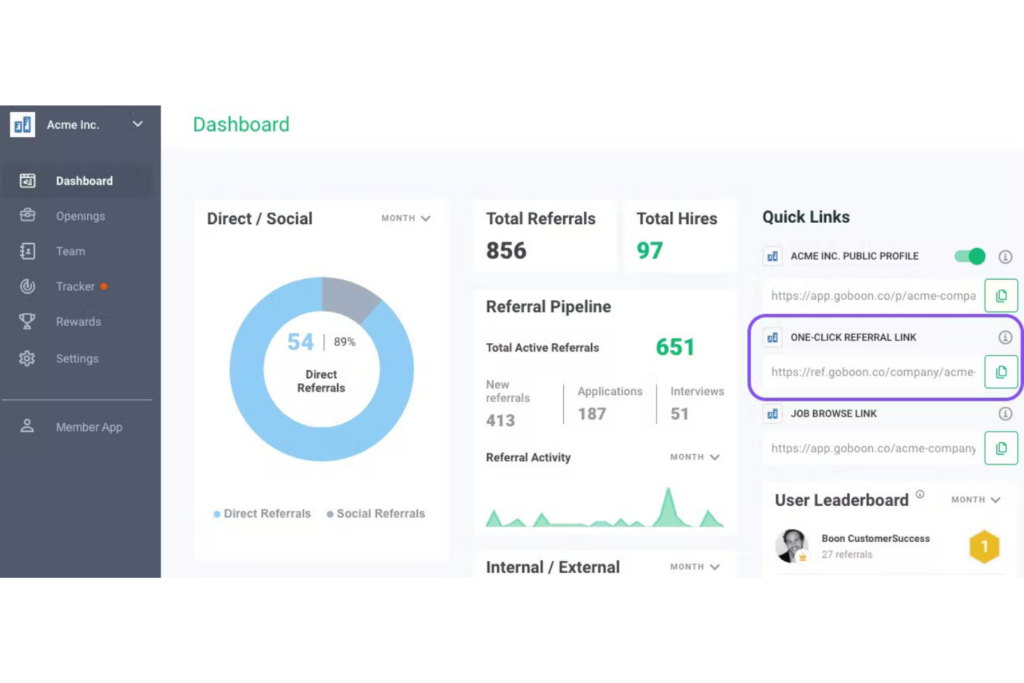
Boon is a referral focused recruitment automation software that helps companies accelerate hiring through employee networks.
By combining AI driven recommendations, gamification, and automated reward management, it transforms referrals into a scalable, high quality sourcing channel.
Key Features
- Referral Hiring Automation: Instantly converts every job post into a referral opportunity with automated notifications
- AI Driven Candidate Recommendations: Surfaces qualified candidates from referral networks based on skills, not just connections
- Gamification & Engagement: Uses challenges, badges, and leaderboards to boost employee participation
Pros & Cons
| Pros | Cons |
| • Strong automation and AI enhance referral sourcing quality • Gamified features significantly increase employee engagement • Automated reward management reduces HR and finance workload | • Focuses mainly on referrals, not end to end recruitment • ROI may be limited for small teams with small networks • Some customization needed to match company culture |
10. Greenhouse
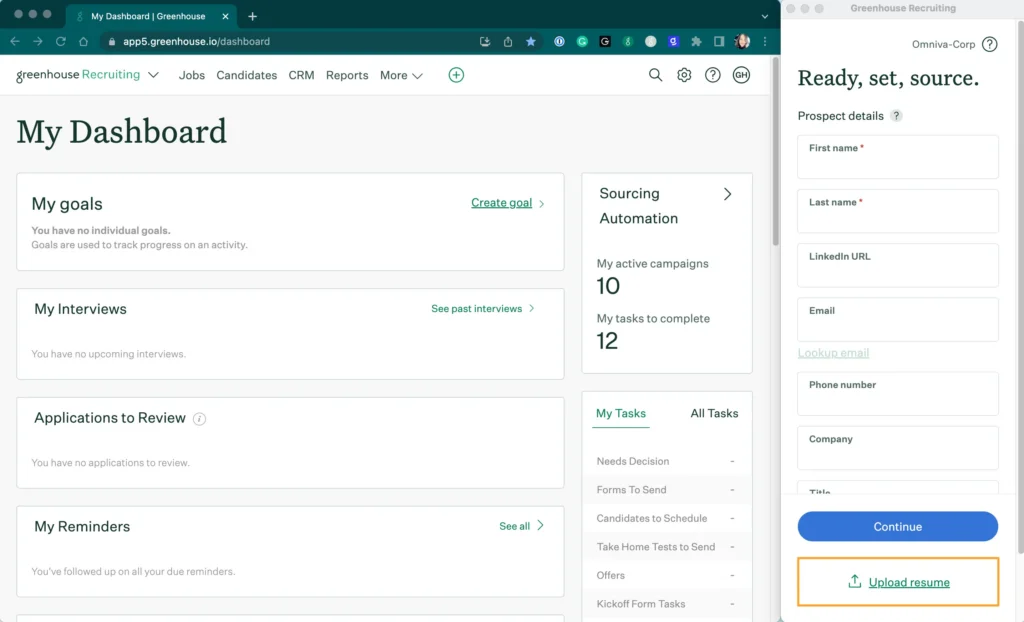
Greenhouse is a powerful and scalable recruitment automation software built to help organizations hire efficiently through AI driven sourcing, structured workflows, and data backed decision making.
Designed with a strong focus on candidate experience and inclusive hiring practices, it enables teams to evaluate candidates consistently and collaboratively
Key Features
- AI Driven Sourcing & CRM: Builds proactive talent pipelines and nurtures candidates with targeted campaigns
- Structured Hiring Workflows: Standardized scorecards, interview kits, and competency based evaluations
- Candidate Experience Tools: Custom career pages, mobile friendly applications, inclusive forms, and pronoun recognition
Pros & Cons
| Pros | Cons |
| • Reduces hiring bias through structured and consistent evaluation • Enhances candidate experience with accessible, inclusive features • Offers deep analytics and 500+ integrations for scalable recruitment | • Pricing may be too high for smaller organizations • Advanced features require training and setup time • Interface can feel overwhelming for new users |
11. Wizehire
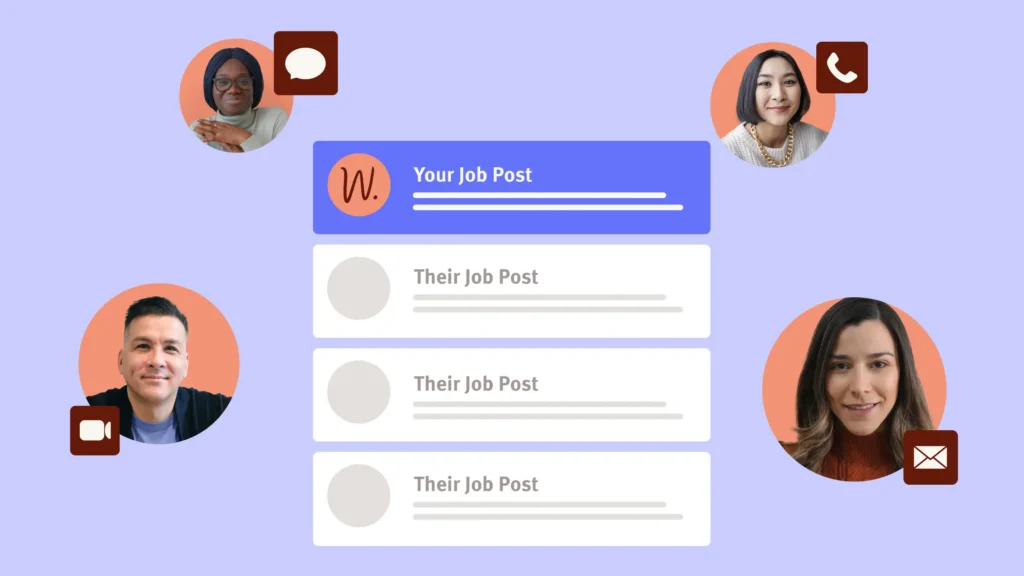
Wizehire is an easy to use recruitment automation software designed for small and mid sized businesses.
It combines automation, personality assessments, and expert hiring guidance to improve candidate quality and simplify the entire hiring process.
Key Features
- Applicant Tracking System (ATS): Centralizes applications, resumes, and interview notes with automated resume parsing
- Customizable Hiring Workflows: Drag and drop pipeline builder tailored to each organization’s recruitment process
- Job Posting Syndication: One click distribution to multiple free and paid job boards
Pros & Cons
| Pros | Cons |
| • Simple, affordable solution ideal for small and mid sized teams • Personality based insights improve cultural fit and retention • Dedicated hiring coach support helps guide recruitment decisions | • Limited advanced integrations compared to enterprise level platforms • Reporting and analytics may lack depth for complex needs • Initial setup may take time to fully customize workflows |
12. TalentLyft
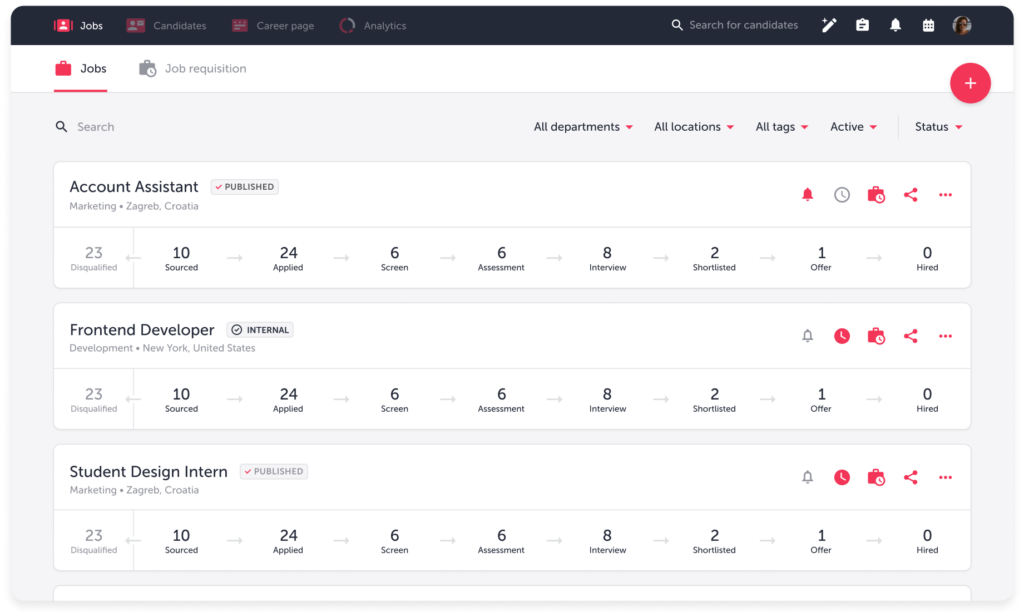
TalentLyft is an all in one recruitment automation software that combines ATS and CRM capabilities to optimize sourcing, hiring, and candidate engagement.
With AI driven screening, automated communication, and customizable hiring pipelines, it helps growing teams build stronger talent pools and make smarter, data driven recruitment decisions.
Key Features
- Applicant Tracking System (ATS): Custom hiring pipelines, smart resume parsing, and duplicate detection
- Candidate Sourcing & Job Posting: Multichannel postings plus branded career pages
- AI Powered Screening: Fast application reviews with AI matching and personalized application views
Pros & Cons
| Pros | Cons |
| • Intuitive interface that’s easy for all recruiters to navigate • Strong AI capabilities enhance screening accuracy and speed • Wide integration support for seamless recruitment workflows | • Some advanced analytics require manual setup • Limited customization for very complex hiring structures • Mobile version offers fewer features than desktop |
13. Jobsoid
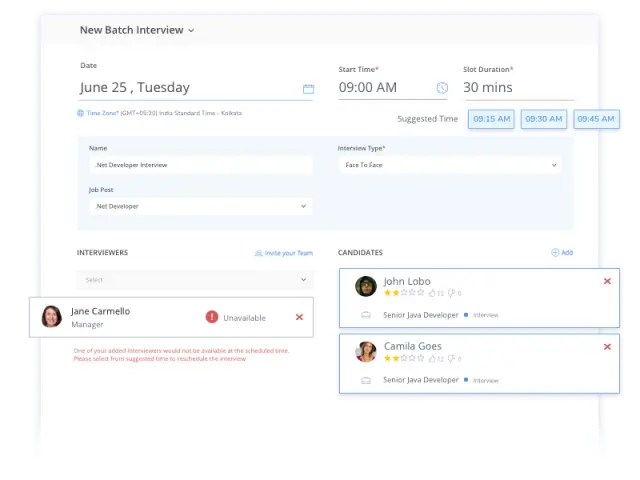
Jobsoid is a user friendly recruitment automation software designed to simplify hiring from sourcing to onboarding.
It allows recruiters to post jobs across multiple platforms, manage candidates in a centralized database, and automate communication throughout the process.
Key Features
- Candidate Management: Automated filtering and intelligent shortlisting based on predefined criteria
- Automated Job Posting: One click distribution to 20+ job boards, social media, and branded career pages
- Collaboration Tools: Shared candidate profiles, notes, and feedback to align hiring teams
Pros & Cons
| Pros | Cons |
| • Intuitive interface with a minimal learning curve • Strong collaboration support through shared notes and workflows • Cost effective solution ideal for growing companies | • Limited analytics compared to enterprise grade platforms • Some constraints in complex or highly customized workflows • Fewer integrations than larger recruitment software providers |
14. Bullhorn
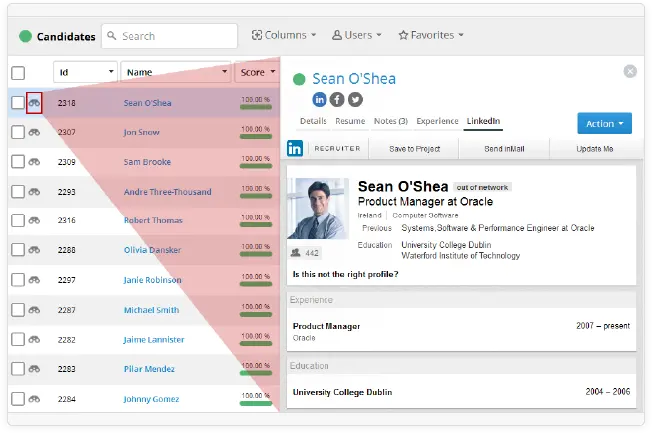
Bullhorn is a powerful cloud based recruitment automation software designed for staffing firms, recruitment agencies, and corporate HR teams.
It combines ATS, CRM, and onboarding capabilities to automate hiring workflows, enhance collaboration, and strengthen client relationships.
Key Features
- Recruitment Automation: Automates resume parsing, candidate tracking, and interview scheduling
- Candidate Sourcing: AI powered talent search, job board integrations, and passive sourcing tools
- Collaborative Hiring: Real time updates, shared profiles, and automated workflows for aligned decision-making
Pros & Cons
| Pros | Cons |
| • Unified recruitment and client management in one platform • Scalable and highly customizable for different business needs • Strong AI tools that boost sourcing efficiency and hiring speed | • Higher pricing that typically requires a custom quote • Steeper learning curve for smaller or newer teams • Some users note complexity in navigation and setup |
15. Workable
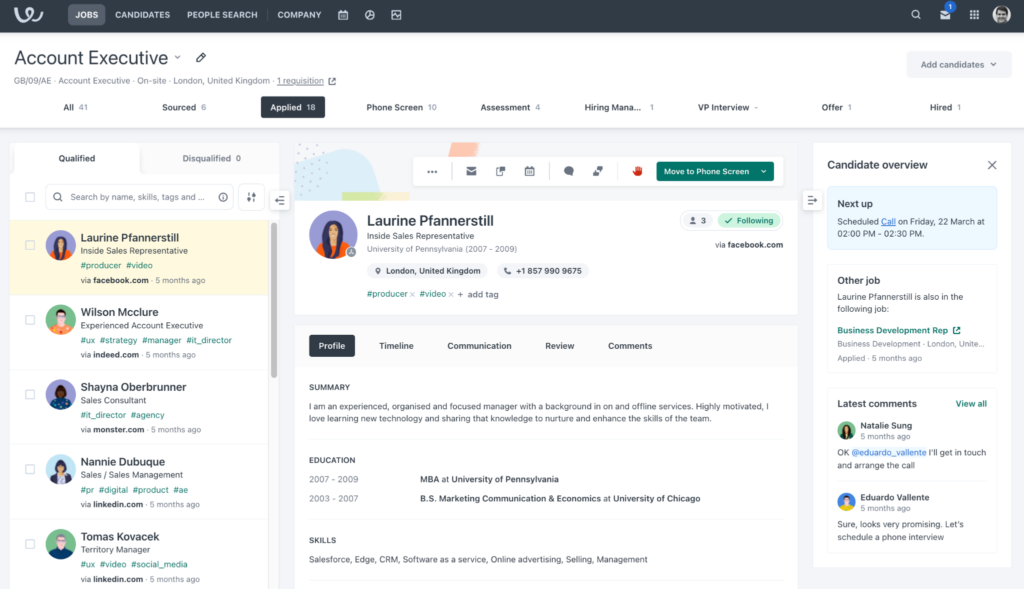
Workable is a feature rich recruitment automation software that supports businesses of all sizes in managing the entire hiring cycle, from sourcing and screening to collaboration and onboarding.
With powerful AI tools, customizable workflows, and extensive integrations, it simplifies candidate evaluation while enhancing recruiter efficiency and overall candidate experience
Key Features
- Applicant Tracking System (ATS): Centralized ATS with customizable pipelines, resume parsing, and collaboration features
- AI Powered Screening: AI driven scoring, resume screening, and auto-generated candidate summaries
- Built in Sourcing Tools: Access to a large talent database, job posting to 200+ job boards, multilingual hiring, and a no code career page builder
Pros & Cons
| Pros | Cons |
| • Intuitive platform with strong AI and automation features • Extensive job board integrations for broader candidate reach • Robust collaboration tools that keep hiring teams aligned | • Pricing may be high for smaller businesses • Setup can feel complex due to the wide feature set • Advanced analytics may require external BI integrations |
Why LinovHR Is the Smartest Choice for Modern Hiring Teams
Modern hiring teams need more than just automation, they need accuracy, speed, consistency, and a platform that adapts to evolving recruitment challenges.
LinovHR delivers all of these through an AI driven recruitment ecosystem designed to streamline every stage of hiring, from sourcing to onboarding.
Powered by Interview AI, smart workflow automation, and real time analytics, LinovHR helps recruiters eliminate repetitive tasks, reduce bias, and make faster, data backed decisions.
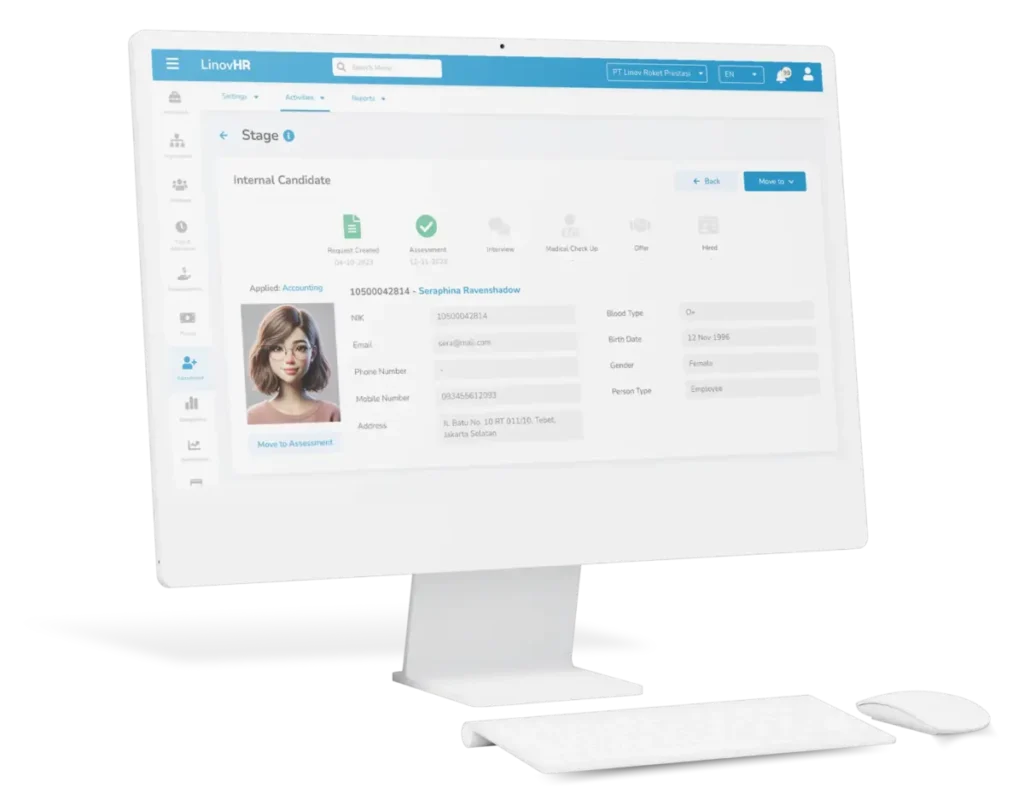
Its centralized Applicant Tracking System, customizable recruitment stages, and integrated career website create a seamless experience for both recruiters and candidates.
Because it is part of a larger HRIS ecosystem, LinovHR also ensures smooth data continuity, meaning all candidate information flows directly into onboarding and employee management systems without manual work.
This makes hiring not just faster, but also more organized, efficient, and scalable for growing teams.
Whether handling high volume recruitment or filling specialized roles, LinovHR provides the flexibility, intelligence, and automation modern hiring teams need to stay ahead.
If your organization wants to hire smarter, LinovHR is the clear choice.
Ready to modernize your hiring process? Request a free demo today and experience LinovHR in action.