


Human Resource Information Systems or HRIS have become essential for companies aiming to improve the efficiency and accuracy of HR operations.
By automating payroll, organizing employee data, and supporting strategic HR decisions, HRIS applications help businesses manage their workforce more effectively. For companies seeking to enhance HR processes, selecting the right HRIS is a critical step.
This article explains the concept of HRIS, highlights 10 top HRIS applications for your company, and provides practical guidance on choosing the most suitable solution for your company.
Definition of HRIS Application
A Human Resource Information System is a software platform that enables companies to manage and automate various HR activities, including employee records, payroll, benefits, recruitment, and performance evaluations.
By consolidating HR data into a single digital system, HRIS applications reduce administrative workload and minimize human error. They also allow HR professionals to shift their focus toward strategic tasks, such as improving employee engagement and fostering workforce development.
Modern HRIS solutions often combine cloud or on-premise technology with artificial intelligence and analytics to deliver real-time insights into performance trends, productivity, and workforce health.
10 Best HRIS Applications
Below are 10 recommended HRIS applications for your company, each offering unique strengths for different business needs.
1. LinovHR
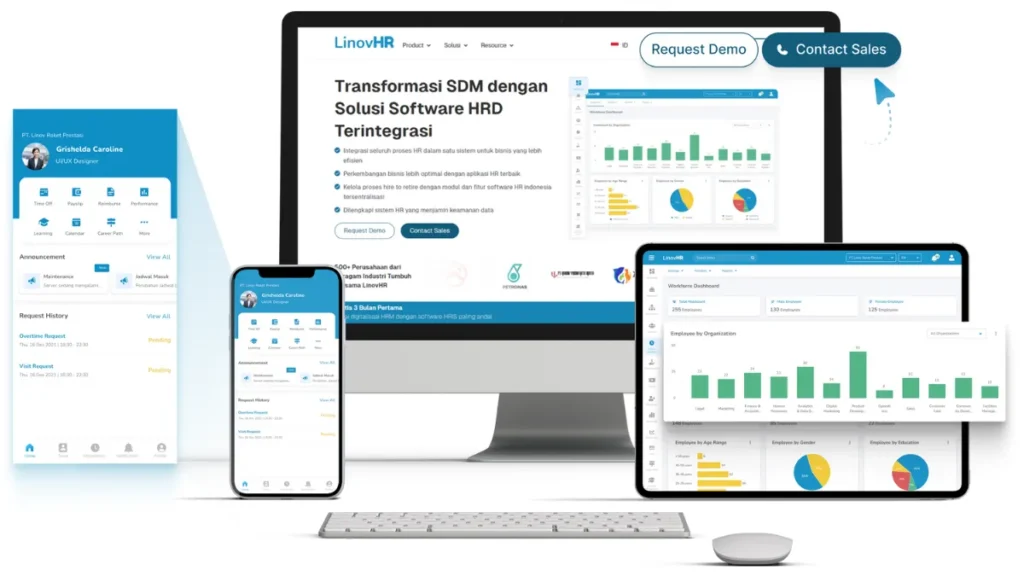
The LinovHR HRIS application is a leading Indonesia-based HRIS designed to automate end-to-end HR activities. Built around local regulations and HR practices, LinovHR helps companies manage payroll, attendance, recruitment, and performance with ease.
The system is suitable for both small companies and large enterprises due to its flexible deployment options, whether cloud-based or on-premise. LinovHR unifies various HR modules into one intuitive dashboard and offers strong analytics to support data-informed HR decisions.
Key features of HRIS application LinovHR:
- Organization Management: Allows HR and managers to have a clear overview of the company’s structure, ensuring that roles and responsibilities correspond to the actual organizational setup.
- Personnel Management: Manages all employee personal and job-related data including personal details, employment status, contracts, employment history, and updates.
- Time Management: Oversees attendance, working hours, overtime, leave, and other time-related information, enabling precise tracking of hours worked, tardiness, and absences.
- Employee Self-Service: Gives employees the ability to handle their own HR tasks such as updating their personal information, requesting leave, accessing payslips, and promoting transparency.
- Performance Management: Facilitates setting goals or KPIs, gathering 360-degree feedback, using balanced scorecards, and conducting performance evaluations.
- Reimbursement: Allows employees to submit expense reports and provides a process for managers to review and approve or deny these claims.
- Loan: Administers employee loan programs like salary advances or internal loans, tracking balances, repayments, and conditions.
- Payroll: Automates salary calculations including deductions, taxes, bonuses, and generates payslips, while ensuring compliance with local laws to reduce errors and speed up the payroll process.
- Recruitment: Handles hiring workflows such as posting vacancies, screening applicants, monitoring application progress, and managing candidate pools.
- Career Path: Enables companies to create and display employee career development paths to show growth opportunities within the organization.
- Learning Management System: Supports planning and delivery of training sessions, testing, and automatic certification issuance.
- Succession Management: Helps identify and prepare for key roles, enabling HR to recognize high-potential staff and develop clear succession strategies.
- Competency Management: Supports defining competency frameworks, categorizing skills, analyzing skill gaps, and linking them with employee performance reviews.
- Mobile Attendance: Enables employees to record attendance via mobile devices, which is especially useful for remote or field staff.
| No. | Pros | Cons |
| 1. | Localized for Indonesian tax and labor rules | Requires onboarding training |
| 2. | Complete HR modules | Large module set requires a learning curve |
| 3. | Cloud and on-premise deployment options | |
| 4. | Employee self-service portal | |
| 5. | Real-time analytics | |
| 6. | Scalable for SMEs and enterprise | |
| 7. | Free demo for first 6 months |
2. Leapsome
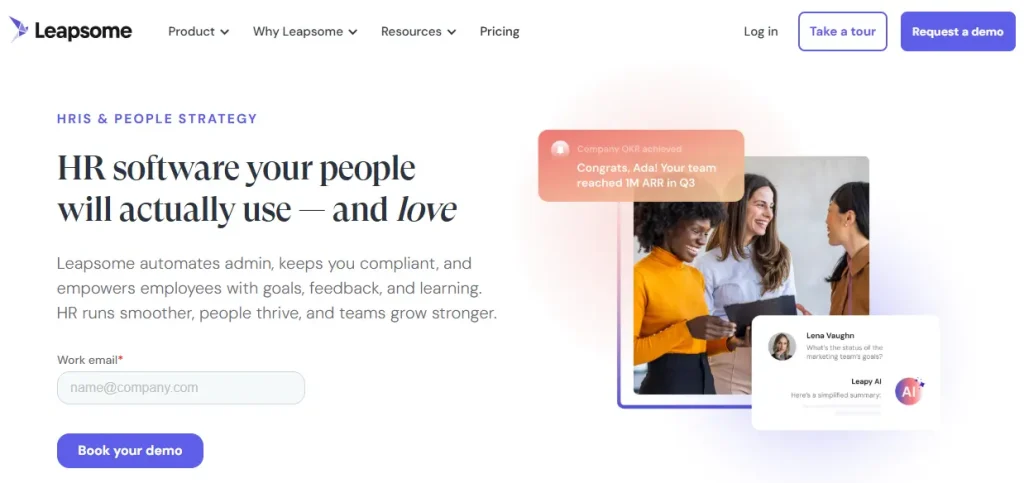
Leapsome is an all-in-one people enablement and HRIS solution designed to help companies build high-performing, engaged, and future-ready teams. Known for its modern interface and strong focus on talent development, Leapsome integrates performance management, learning, employee engagement, and HR data into a single, unified platform.
The platform is suitable for fast-growing startups, mid-sized companies, and global enterprises seeking a data-driven HR ecosystem. With its modular structure, Leapsome allows organizations to activate only the features they need—whether it’s performance reviews, OKRs, engagement surveys, onboarding, or competency development. Its analytics and automation capabilities also help HR teams streamline workflows and make smarter workforce decisions.
Key features of HRIS application Leapsome:
- Organization Management: Centralizes company structure, teams, reporting lines, and HR data for clear visibility and seamless workforce planning.
- Performance Management: Supports 360° reviews, manager/peer evaluations, goal tracking, and real-time feedback loops to foster continuous improvement.
- Learning & Development: Provides personalized learning paths, curated content libraries, automated training workflows, and skill-based development programs.
- Employee Engagement: Includes customizable engagement surveys, pulse checks, and sentiment analysis to measure employee satisfaction and identify improvement areas.
- Goal & OKR Management: Helps teams set, align, and track individual and company-wide OKRs, ensuring transparency and accountability across departments.
- Compensation Management: Offers structured compensation cycles, benchmarking support, pay reviews, and raises based on performance and skill progression.
- Onboarding & Offboarding: Automates onboarding workflows, training sequences, and documentation to ensure consistent and engaging employee experiences.
- Competency Frameworks: Allows HR to create and manage competency models, assess skill gaps, and design development plans tied to performance outcomes.
- Succession Planning: Identifies high-potential employees, maps future leadership roles, and supports long-term talent planning strategies.
- Employee Self-Service: Gives employees access to their goals, feedback, reviews, training, and personal data, improving transparency and autonomy.
- Analytics & Reporting: Provides visual dashboards with insights on performance trends, engagement scores, skill development, and workforce health.
- Integrations: Connects seamlessly with tools like Slack, Microsoft Teams, BambooHR, Personio, and major HRIS/payroll systems.
| No. | Pros | Cons |
| 1. | Excellent for performance and engagement management | Pricing may be high for small businesses |
| 2. | Highly intuitive and modern user interface | Requires setup time to fully tailor modules |
| 3. | Modern anModular system—pay only for what you need | Some advanced analytics require higher-tier plans |
| 4. | Automation for workflows, reviews, and learning | Can feel feature-heavy for simple HR needs |
| 5. | Strong L&D and competency tools | Limited offline functionality |
| 6. | Integrates with many HR systems | Fewer features for payroll or core HR admin |
| 7. | Built for global, remote, and hybrid teams | Admin configuration can be complex initially |
3. Talenta by Mekari
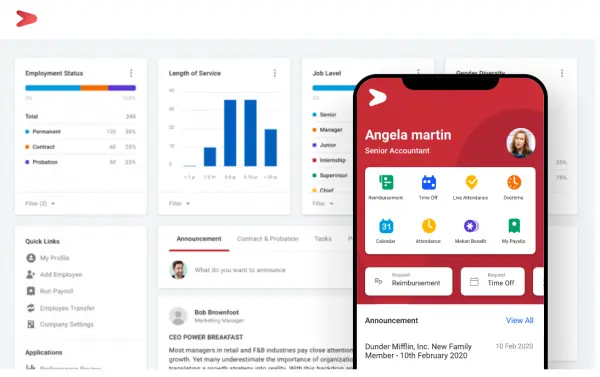
Talenta by Mekari is a widely used Indonesian HRIS application designed to simplify HR processes while supporting full compliance with local labor regulations. It helps HR teams minimize manual work and administrative errors.
Key features of HRIS application Talenta’s:
- Payroll Automation
- Mobile Attendance System
- Employee Self-Service
| No. | Pros | Cons |
| 1. | Cloud-based and easy to use | Limited scalability for very large enterprises |
| 2. | Excellent local support | Fewer advanced analytics capabilities |
| 3. | Built for Indonesian regulatory needs | Integration options are more limited |
4. SAP SuccessFactors
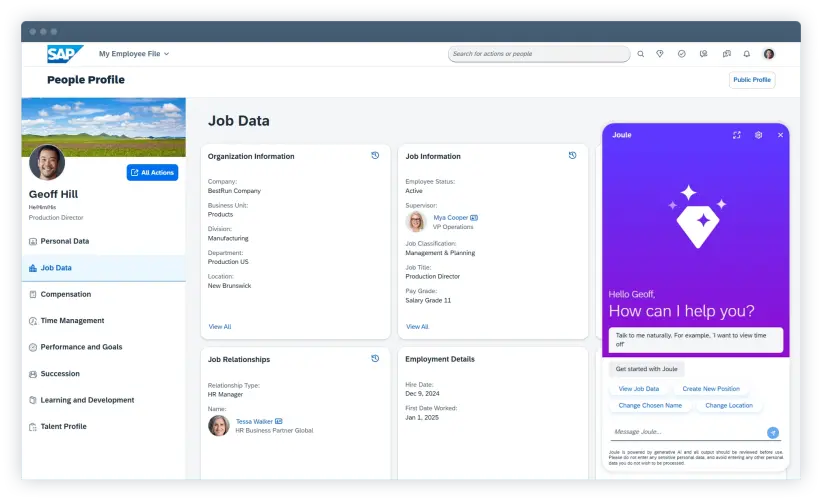
SAP SuccessFactors is one of the most powerful enterprise-level HRIS solutions available. It provides an end-to-end suite covering recruitment, learning, succession planning, and workforce management. Its strong integration with other SAP modules makes it ideal for large companies seeking a unified business ecosystem with advanced analytics and AI-powered insights.
Key features of HRIS application SAP SuccessFactors’s :
- Succession & Development Planning
- Payroll & Benefits Integration
- Talent Management
- Workforce Management
| No. | Pros | Cons |
| 1. | Global coverage and compliance | High implementation cost |
| 2. | AI-powered analytics | Requires expert setup |
| 3. | Seamless integration with SAP ecosystem | Not suitable for small companies |
5. HashMicro
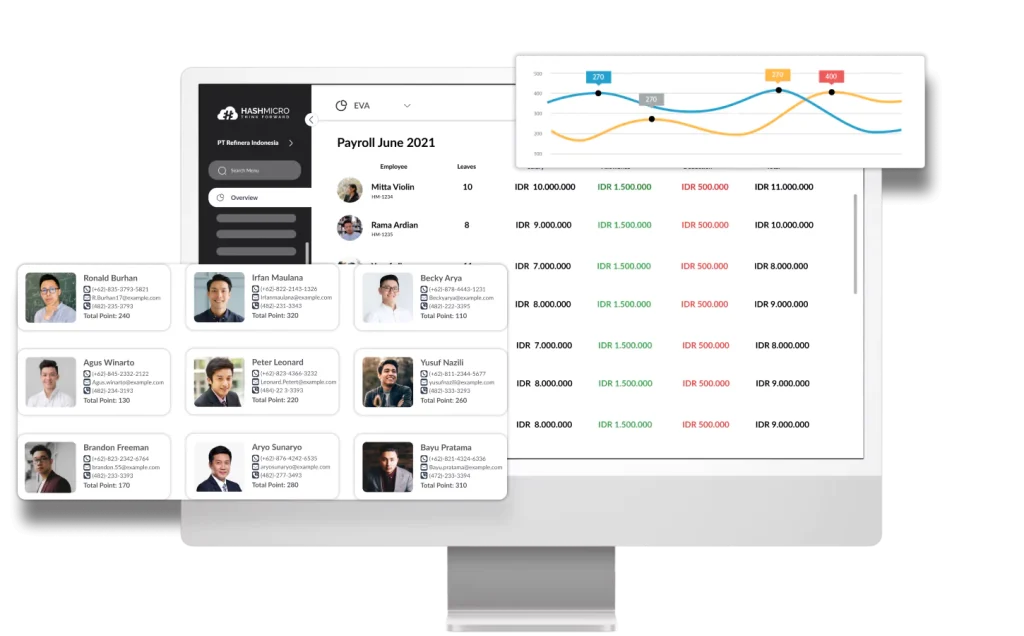
HashMicro offers HRIS capabilities within its larger ERP ecosystem, giving companies a more unified approach to HR and business operations. Its HRIS module supports payroll, attendance, and talent-related processes, all running on a secure cloud infrastructure. Automation significantly reduces administrative work and minimizes errors.
Key features of HRIS application HashMicro’s:
- Employee Attendance Tracking
- Payroll Automation
- Recruitment Management
- Integrated ERP Modules
| No. | Pros | Cons |
| 1. | Complete ERP integration | Too complex for smaller companies |
| 2. | Strong customization options | Higher pricing tiers |
| 3. | Real-time reporting | Setup may require IT support |
6. Gadjian
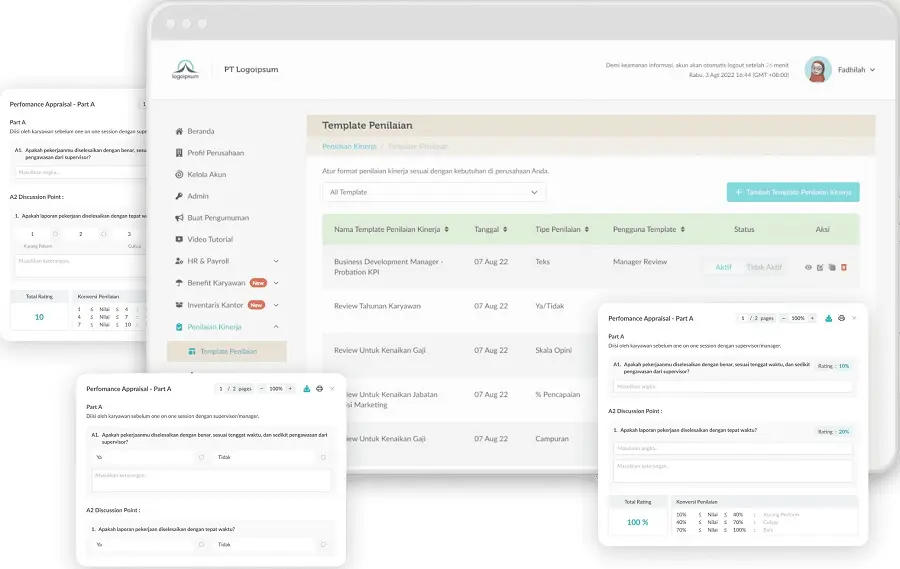
Gadjian is another Indonesian HRIS platform focusing primarily on payroll and employee data management. Built for SMEs, its system automates routine HR tasks while supporting local compliance requirements, including tax calculations and BPJS integration. It is also cost-effective for small growing businesses.
Key features of HRIS application Gadjian’s:
- Payroll
- Attendance & Leave Monitoring
- Employee Database Management
| No. | Pros | Cons |
| 1. | Very affordable | Not designed for enterprise-level companies |
| 2. | Easy setup and simple interface | Limited customization |
| 3. | Strong compliance with local regulations | Basic analytics capabilities |
7. UKG Ready
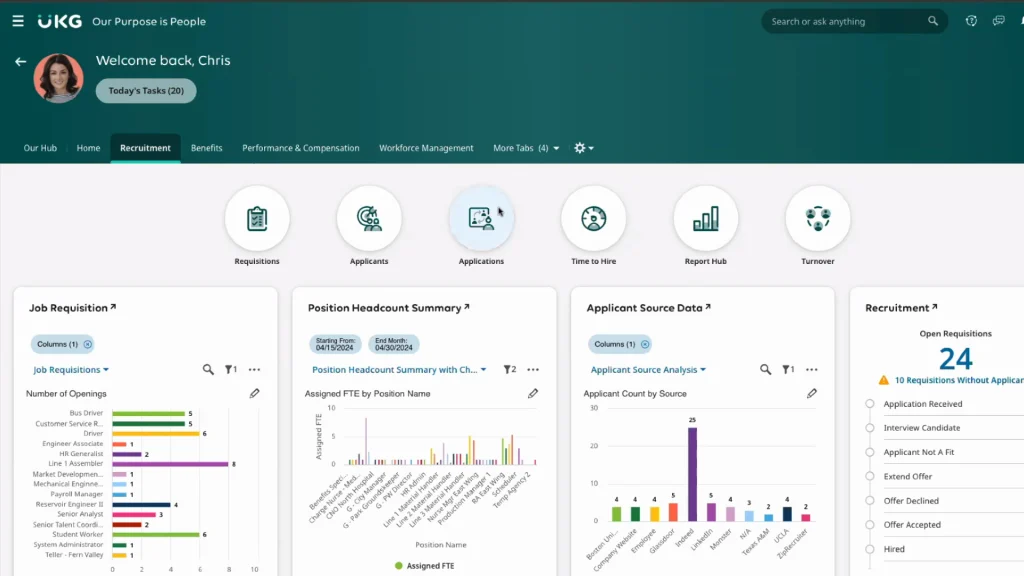
UKG Ready is a globally trusted HRIS platform that merges workforce management with human capital management solutions. Commonly adopted by mid-sized to large companies, it helps streamline essential HR processes such as time tracking, payroll, and workforce analytics.
Key features of HRIS application UKG Ready’s:
- Time & Attendance Management
- Payroll & Benefits Integration
- Compliance Tracking
- Employee Engagement Analytics
| No. | Pros | Cons |
| 1. | User-friendly interface | Higher cost for small businesses |
| 2. | Scalable for enterprise needs | Complex setup process |
| 3. | AI-driven workforce analytics | Requires advanced configuration |
8. BambooHR

BambooHR is an all-in-one HRIS platform built with simplicity and user experience in mind, making it ideal for small and mid-sized companies. It centralizes employee information while automating time-off tracking and performance management.
Key features of HRIS application BambooHR’s:
- Employee Records Management
- Payroll & Benefits Administration
- Performance Management
- Time & Attendance
| No. | Pros | Cons |
| 1. | Intuitive and clean interface | Limited payroll support outside the U.S. |
| 2. | Easy integration with external tools | Does not support Indonesian labor compliance |
| 3. | Excellent customer support | Can be expensive for smaller firms |
9. ADP Workforce Now
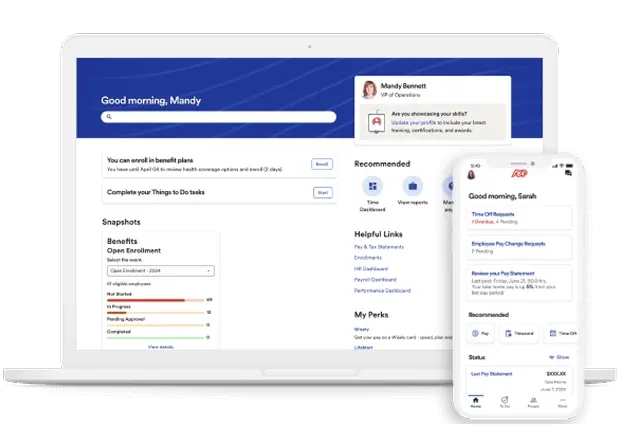
ADP Workforce Now is a globally recognized HRIS solution known for its exceptional payroll and compliance capabilities. Designed for mid-sized to large companies, it consolidates HR, payroll, tax, and benefits management into a single system.
Key features of HRIS application ADP Workforce Now’s:
- Benefits Administration
- Time & Attendance Tracking
- Compliance Management
| No. | Pros | Cons |
| 1. | Industry-leading payroll system | Steeper learning curve |
| 2. | Highly scalable for large enterprises | Expensive for small businesses |
| 3. | Trusted global provider | Interface may feel outdated |
10. Zoho People
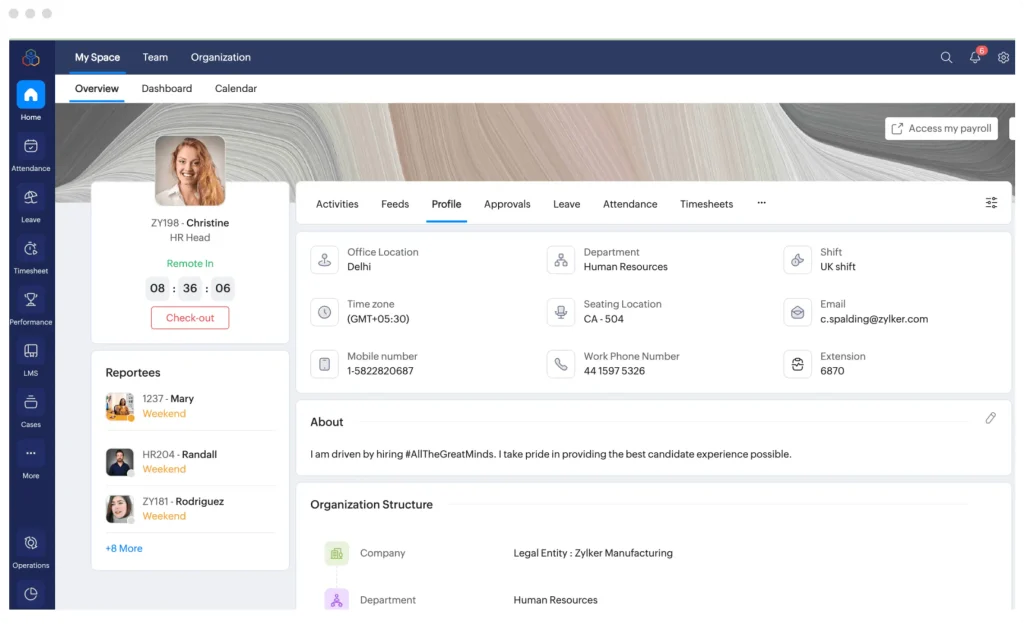
Zoho People is a practical and budget-friendly HRIS solution designed for small to mid-sized companies. It includes essential HR functionalities such as leave management, attendance tracking, and performance monitoring.
Key features of HRIS application Zoho People’s:
- Leave & Attendance Management
- Performance Tracking
- Document Management
- Mobile App Access
| No. | Pros | Cons |
| 1. | Affordable for smaller companies | Limited advanced analytics |
| 2. | Strong integrations within the Zoho suite | Less Intuitive user interface |
| 3. | Easy to scale as the company grows | Limited payroll support for Indonesia |
Key Tips for Picking the Best HRIS Application
Selecting an HRIS application can be difficult due to the numerous options available. Below are key tips to help you make an informed choice.
1. Clarify Your Company’s HR Needs
Before selecting any HRIS platform, it’s essential to identify the specific HR challenges your company faces. Some businesses struggle with payroll accuracy, while others need better attendance tracking, employee data visibility, or performance evaluation tools.
2. Choose a System with Strong Integration & Scalability
A reliable HRIS should integrate smoothly with the systems your company already uses such as accounting tools, attendance devices, project management platforms, or ERP systems. Strong integration reduces manual data entry, minimizes errors, and creates a more unified digital ecosystem.
3. Prioritize Compliance & Security
Data security is one of the most critical elements in choosing an HRIS, as the system handles sensitive employee information such as payroll data, contracts, and performance records. Ensure the provider complies with global data protection standards and offers robust security measures, including encryption and access controls.
4. Evaluate User Experience
An HRIS system should be easy for both HR teams and employees to use. A complex or confusing interface often slows adoption, increases training time, and leads to avoidable errors. Look for a platform with intuitive navigation, clear workflows, and responsive support.
Transform Your HR Management with LinovHR
Choosing the right HRIS application ultimately comes down to understanding your company’s needs and selecting a system that provides long-term value, not just short-term convenience.
By focusing on the essential factors such as core HR requirements, strong integration, compliance, security, and user-friendly design, companies can ensure they adopt a solution that genuinely improves HR operations.
With Software HRIS LinovHR’s HR teams can work more efficiently, employees gain easier access to their information, and the company benefits from more accurate, organized, and data-driven processes.
Request a free demo now! LinovHR offers a modern and dependable solution that can elevate HR management across all levels of the organization.


